
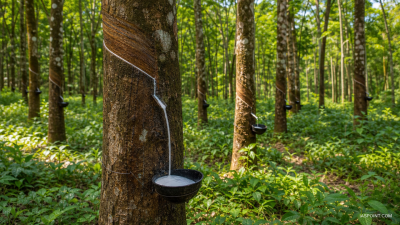
By 15–16 July 2026 Project INROAD had established 1.8 lakh hectares of rubber plantations against a 2.0 lakh hectare target across 113 districts in North‑East India and West Bengal.
Project INROAD: Scope & Funding
- Launch & outlay: Launched in FY 2021–22 with an approved outlay of Rs 1,100 crore.
- Implementing agency: Rubber Board of India (statutory body under the Ministry of Commerce & Industry).
- Private support: Financial and technical backing from tyre makers via the Automotive Tyre Manufacturers’ Association (Apollo, CEAT, JK Tyre, MRF).
- Geographic coverage: Target area includes 113 districts in North‑East states and West Bengal.
Planting Material & Beneficiaries
- Planting stock: Over 8.3 crore high‑quality planting materials supplied; more than 200 nurseries producing improved clones.
- Beneficiaries: Exceeds 2 lakh farmers, largely smallholders, for new plantations and replanting of low‑yielding stands.
Technical & Production Parameters
- Species: Hevea brasiliensis — the principal commercial rubber tree for latex extraction.
- Projected output: ~3 lakh tonnes at full realisation; North‑East share expected to rise from ~15% to 40–45% of national output.
- Post‑harvest drive: iSPEED (Rs 145 crore) includes model smokehouses, post‑harvest infrastructure and technical training.
Trade & Agro‑ecology Linkages
- Import dependence: India imports a substantial portion of natural rubber; domestic acreage expansion targets supply augmentation for the tyre sector.
- Agro‑climatic fit: Expansion focuses on zones with suitable rainfall, humidity and temperature for rubber cultivation.
IASPOINT Booster Facts
- Rubber Act basis: Rubber Board functions derive from the Rubber Act, 1947 (amended) covering research, development and regulation.
- Achievement date: Progress reported as on 15–16 July 2026: 1.8 lakh ha planted against 2.0 lakh ha target.