
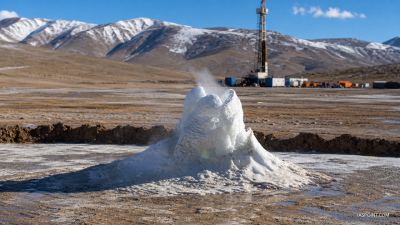
India commissioned its first geothermal wells in Puga Valley, Ladakh on 17 July 2026; two wells were drilled to 1,000 metres each at altitudes above 14,000 feet.
Project snapshot
- Commissioning: 17 July 2026; two wells, each 1,000 m deep, altitude >14,000 ft.
- Location: Puga Valley, Union Territory of Ladakh; historically recognised geothermal field.
Technical findings
- Measured temperature: Maximum 135°C recorded at 400 m depth.
- Reservoir assessment: Ongoing tests for deeper temperatures, flow rates and reservoir permeability.
Pilot power project
- Capacity: Linked to a 1 MW pilot geothermal power plant to validate site viability.
- Test aims: Validate drilling methods, fluid chemistry, heat-in-place and power-conversion options.
Institutions & administration
- Operator: ONGC Energy Centre executed drilling; functions as ONGC’s R&D arm for subsurface energy.
- Agreements: Memorandum between Ladakh administration, LAHDC‑Leh and ONGC Energy Centre renewed for five years (June 2026).
IASPOINT Booster Facts
- Classification: Geothermal is a renewable, non‑conventional energy source used for electricity and direct heating.
- Indian resource zones: Identified in Ladakh, Himachal Pradesh, Uttarakhand, Gujarat and Andaman & Nicobar Islands.
- Technology thresholds: Binary-cycle plants operate ~80–150°C; flash-steam plants typically require >150°C.
- Regulatory: Projects require land access, environmental clearances and coordination between central and UT agencies.