
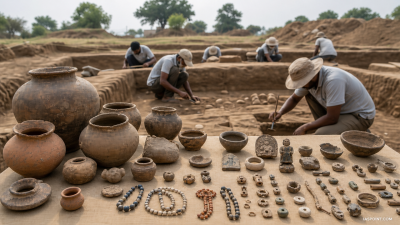
The Tamil Nadu State Department of Archaeology (TNSDA) unearthed over 1,000 artefacts from the Noyyal river bed at Vellalore, Coimbatore; material dates to early historical and historical periods, with key items between 1st century BC and 3rd century AD.
Site & Chronology
- Location: Vellalore, southern bank of the Noyyal river, Coimbatore district.
- Settlement extent: Excavation revealed occupation spread over about 100 acres across multiple trenches.
- Periodisation: Assemblage spans early historical (c. 1st century BC–3rd century AD), medieval centuries and colonial layers.
Material Culture
- Metal & Coinage: Roman copper coins present, dated to early historic horizon.
- Craft production: Evidence for bead-making, shell ornament manufacture, pottery production, weaving tools, and iron/steel working.
- Built features: Stone structures, water channels, floor deposits and a lime-plastered pit were recorded.
Trade and Settlement Links
- Inter-regional trade: Roman coins signal long-distance maritime or coastal-exchange networks in peninsular India.
- Route connectivity: Finds are consistent with inland trade nodes linking western and eastern coasts via riverine corridors.
IASPOINT Booster Facts
- TNSDA: State archaeology agency responsible for excavations and documentation in Tamil Nadu.
- Noyyal river: Part of the Cauvery basin river system in Tamil Nadu.
- Archaeological indicator: Roman copper coins are standard proxies for Indo-Roman trade contacts in peninsular contexts.