
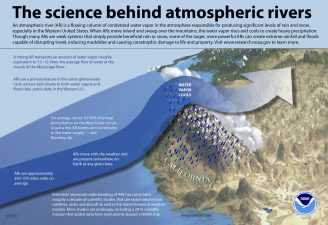
Atmospheric rivers have gained attention due to their increasing intensity and frequency, especially in light of climate change. Recently, the United States experienced severe weather linked to these phenomena, which are essentially narrow bands of moisture in the atmosphere. They can lead to rainfall and severe weather conditions, resembling hurricanes in their impact.
What Are Atmospheric Rivers?
Atmospheric rivers are long, narrow corridors of concentrated moisture in the atmosphere. They transport vast amounts of water vapour across regions. These phenomena can be hundreds of kilometres wide and over a thousand kilometres long. They form over warm ocean waters and are guided by jet streams. While they provide essential rainfall, they can also cause flooding and landslides.
Formation and Characteristics
Atmospheric rivers typically develop when large-scale weather patterns create channels of moisture. They are most common in mid-latitude regions. The moisture usually originates from tropical oceans. The interaction between warm ocean air and cold fronts leads to the formation of these rivers.
Examples of Atmospheric Rivers
One notable atmospheric river is the Pineapple Express, which transports moisture from the tropical Pacific to the West Coasts of the US and Canada. Other atmospheric rivers can originate from different areas, such as the Caribbean. The recent storms in the US were linked to a Caribbean-origin atmospheric river.
Impact on Weather Patterns
Atmospheric rivers can lead to extreme weather events. They can bring intense rainfall, strong winds, and increased wave heights. These conditions can cause property damage, loss of life, and environmental degradation. The severity of these storms can be comparable to hurricanes.
Climate Change and Atmospheric Rivers
Climate change is affecting atmospheric rivers. Higher global temperatures increase the atmosphere’s capacity to hold moisture. For every degree Celsius rise in temperature, the air can hold approximately 7% more water vapour. This leads to more intense storms, increasing the risk of severe flooding.
Future Projections
Studies indicate that atmospheric rivers will become longer and wider due to climate change. The frequency of the most intense atmospheric rivers is expected to double. This could lead to more severe weather patterns in areas already prone to flooding.
Questions for UPSC:
- Examine the relationship between climate change and extreme weather events.
- Discuss the role of ocean temperatures in influencing atmospheric conditions.
- What are the implications of increased rainfall intensity on urban planning and infrastructure?
- Critically discuss the impact of atmospheric rivers on agriculture in vulnerable regions.
Answer Hints:
1. Examine the relationship between climate change and extreme weather events.
- Climate change leads to increased global temperatures, affecting weather patterns.
- Warmer air holds more moisture, resulting in intense precipitation and storms.
- Extreme weather events, such as hurricanes and floods, are becoming more frequent and severe.
- Studies indicate that atmospheric conditions are shifting, causing unpredictable weather changes.
- Overall, climate change amplifies the severity and frequency of extreme weather events globally.
2. Discuss the role of ocean temperatures in influencing atmospheric conditions.
- Ocean temperatures affect evaporation rates, influencing humidity and precipitation patterns.
- Warm ocean waters contribute to the formation of atmospheric rivers and storm systems.
- Temperature variations can lead to changes in jet stream patterns, affecting weather systems.
- Higher ocean temperatures can enhance the intensity of storms, leading to severe weather events.
- Monitoring ocean temperatures is crucial for predicting weather patterns and potential disasters.
3. What are the implications of increased rainfall intensity on urban planning and infrastructure?
- Increased rainfall intensity can overwhelm drainage systems, leading to urban flooding.
- Urban planning must incorporate resilient infrastructure to manage severe weather impacts.
- Investment in green spaces and permeable surfaces can mitigate flooding risks.
- Building codes and land use policies need to adapt to changing rainfall patterns.
- Emergency preparedness and response strategies are essential for urban resilience.
4. Critically discuss the impact of atmospheric rivers on agriculture in vulnerable regions.
- Atmospheric rivers can lead to excessive rainfall, causing soil erosion and crop damage.
- Flooding from intense storms can disrupt planting and harvesting schedules.
- Increased moisture can also promote pests and diseases, threatening crop yields.
- Farmers in vulnerable regions may need to adopt adaptive practices to cope with changing conditions.
- Long-term impacts include economic challenges and food security risks for affected communities.