
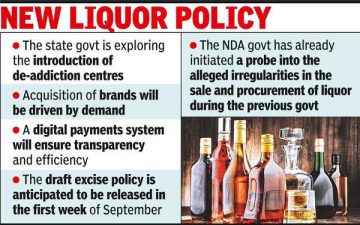
On October 1, 2024, Andhra Pradesh introduced a new excise policy aimed at revitalising its liquor revenue, which has dwindled in recent years. The policy allows private retailers to sell liquor, a departure from the previous government-controlled model. This shift comes in response to a stark revenue gap with neighbouring Telangana, where liquor sales have flourished post-bifurcation in 2014. The new initiative is not just about revenue generation; it also supports various welfare schemes promised by Chief Minister Chandrababu Naidu.
The Revenue Gap: A Historical Overview
Following the bifurcation of Andhra Pradesh and Telangana in 2014, the latter has consistently outperformed its predecessor in liquor sales. Between 2014 and 2019, Andhra Pradesh lost approximately ₹4,186 crore in liquor revenue compared to Telangana. The situation worsened from 2019 to 2024, during which the revenue gap ballooned to an alarming ₹42,762 crore. This exponential increase prompted the Andhra Pradesh government to rethink its liquor policy, recognising the need for a more sustainable revenue model.
Policy Shift: From Control to Privatisation
The previous government, led by Y S Jagan Mohan Reddy, attempted to curb liquor consumption by taking over the trade. However, this strategy did not yield the desired results, leading to a decline in sales and a surge in illegal liquor trade. The new excise policy reverses this trend by allowing private retailers to operate, thereby increasing competition and expected sales. This approach mirrors successful models from other states, such as Haryana, where private retail has been beneficial.
Combating Illegal Liquor Trade
Illegal liquor trade has been an important challenge for Andhra Pradesh, with an estimated 1.78 crore litres seized over the past five years. However, officials estimate that this represents only 10% to 20% of the actual illegal inflow. By reintroducing private retailers and allowing a variety of brands to operate, the state aims to reduce the appeal of illegal liquor. The introduction of low-cost brands, priced at ₹99 per quarter bottle, is particularly aimed at preventing the public from resorting to adulterated options.
Financial Implications and Revenue Generation
The new excise policy has already shown promising financial returns. As of the latest reports, the state has collected ₹1,800 crore in application fees and ₹2,000 crore in licence fees. These figures suggest a robust start to the new policy, indicating that the state may soon match the revenue generated by Telangana. The excise department anticipates that the new retail model will boost overall revenue, supporting the government’s welfare initiatives.
Future Outlook: A Balanced Approach
Looking ahead, the Andhra Pradesh government is optimistic about the new liquor policy’s potential to not only close the revenue gap with Telangana but also to encourage responsible consumption. By inviting well-known brands and establishing liquor malls for premium products, the state aims to create a more regulated and safer drinking environment. This balanced approach could set a precedent for other states grappling with similar challenges.
Last Modified: October 22, 2024