
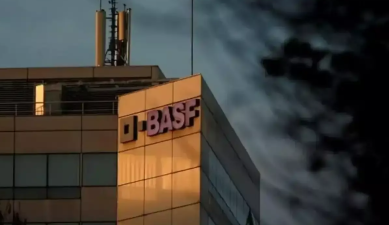
BASF, a German multinational chemical company established in 1865, finalized a deal on 5 May 2026 to set up twin global hubs in Hyderabad, Telangana. The expansion includes a Global Digital Hub operating under BASF Digital Solutions Private Limited, which joined existing networks in Germany, Spain, and Malaysia, alongside a newly announced Global Service Hub under BASF Global Business Services Private Limited. These centers consolidate critical backend workflows like finance, human resources, supply chain management, and digital operations to standardize services and improve cross-regional cost efficiency. The twin hubs will create nearly 3,000 highly skilled jobs, positioning Hyderabad as a primary location in BASF’s international shared services network and supporting its 2030 global workforce optimization plan.
Twin Hub Architecture and Operations
The establishment of the twin centers in Hyderabad marks a dual-track strategy by BASF to integrate its IT infrastructure and core enterprise processes in a single geographical ecosystem.
1. Global Digital Hub
- Corporate Entity: Operated by BASF Digital Solutions Private Limited.
- Core Functions: Delivers standardized digital services, cloud architecture management, cybersecurity monitoring, and enterprise software scaling for global business units.
- Global Network Integration: Operates alongside BASF’s established international digital centers in Ludwigshafen (Germany), Madrid (Spain), and Kuala Lumpur (Malaysia).
2. Global Service Hub
- Corporate Entity: Operated by BASF Global Business Services Private Limited.
- Core Functions: Centralizes transactional and analytical capabilities across vital enabling functions, primarily corporate finance, accounting, and global human resources management. It also supports secondary workflows including supply chain logistics, procurement, intellectual property (IP) management, and internal business consulting.
- Global Network Integration: Connects with existing shared service hubs in Berlin (Germany), Kuala Lumpur (Malaysia), and Montevideo (Uruguay).
Strategic Drivers for Selecting Hyderabad
BASF selected Hyderabad following an extensive multi-city global evaluation, driven by the city’s mature industrial and technological framework.
| Factor | Strategic Advantages for Global Hubs |
| Ecosystem Depth | Hyderabad hosts one of the world’s largest pharmaceutical, vaccine, and chemical clusters, offering a strong foundation for life sciences and material sciences enterprises. |
| Talent Availability | The city provides a vast, highly skilled professional base proficient in advanced computing, corporate finance, international accounting standard practices, and multilingual HR operations. |
| Tech and AI Infrastructure | The presence of established IT corridors (HITEC City) and focused state-level artificial intelligence frameworks allows for rapid deployment of automation in shared services. |
| Co-location Advantages | Operating both the Digital and Service hubs from the same urban area allows the company to share resources, reduce administrative overhead, and run joint innovation trials. |
Corporate Strategy and Global Workforce Transformation
The creation of the Hyderabad hubs aligns with a broader structural reorganization within BASF SE to maintain long-term cost competitiveness amidst shifting global economic dynamics.
Optimization of Workforce by 2030
BASF’s Global Digital Services division has implemented a long-term goal to reduce its workforce and operational complexity across legacy sites in Europe by 2030. The transition involves shifting high-volume, standardized administrative tasks away from high-cost manufacturing headquarters to cost-competitive, capability-rich destination hubs.
Structural De-risking and Process Standardization
By bundling support workflows into centralized centers of excellence, the company reduces redundant regional variations in finance and accounting. This model acts as an internal landing pad for short-term international assignments, enabling smooth knowledge transfers between European units and the emerging South Asian operations.
IASPOINT Booster Facts for UPSC
- Global Capability Centers (GCCs): GCCs, formerly known as captive centers, are offshore operations built by multinational corporations to handle specialized processes internally rather than outsourcing them to third-party vendors. India accounts for over 50% of the global GCC market, with engineering, research and development (ER&D), and digital analytics driving recent growth.
- Historical Profile of BASF: Badische Anilin- und Sodafabrik (BASF) was founded in 1865 in Mannheim, Germany, originally focusing on synthetic coal-tar dyes. Today, it ranks as one of the largest chemical producers globally, operating six highly integrated production sites known as Verbund sites, with the central headquarters located in Ludwigshafen, Germany.
- Foreign Direct Investment (FDI) Regulations: In India, brownfield and greenfield investments in the technology, shared services, and non-financial business consulting segments fall under the 100% automatic route. This eliminates the requirement for prior approval from the Reserve Bank of India (RBI) or the Ministry of Commerce and Industry.
- Telangana’s Sectoral Dominance: Telangana contributes significantly to India’s bulk drug production and export market. The state government has expanded its Life Sciences and IT policy framework to actively attract global engineering and business service centers, directly competing with established tech hubs like Bengaluru and Pune.
- Corporate Identification Number (CIN) Structure: The corporate entities created by BASF carry a unique 21-digit alphanumeric code issued by the Registrar of Companies (RoC). The CIN indicates whether the company is listed, its industry code, state of origin, year of incorporation, and foreign ownership status (e.g., FTC indicates a subsidiary of a foreign company).