
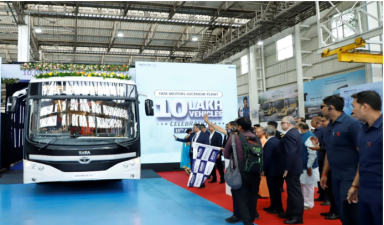
Tata Motors has rolled out its 10th lakh vehicle, a zero-emission electric bus, from its 600-acre plant in Lucknow. The milestone marks the growth of India’s electric mobility sector and the role of Uttar Pradesh in industrial expansion. The event also reflects the state’s push to position itself as a global manufacturing hub through infrastructure, skills and investment.
Milestone in Electric Mobility
The 10th lakh unit marks production achievement for Tata Motors. The bus is part of the company’s electric vehicle portfolio and supports the shift towards cleaner public transport. Such milestones are important for India’s broader transition to low-emission mobility and sustainable industrial growth.
Lucknow Plant’s Industrial Significance
The Lucknow facility has been operational since 1992 and has developed into a major manufacturing base. Over the years, it has contributed to vehicle production, technology adoption and employment generation. The plant’s long operational history shows the importance of stable industrial ecosystems in building manufacturing capacity.
Employment and Skill Development
The plant employs more than 5,600 workers and supports the livelihoods of around 6,000 families. It has also become a centre for skill development and training of youth. Such industrial units are important for linking local manpower with modern production needs and market-ready skills.
Uttar Pradesh’s Manufacturing Push
The development fits into Uttar Pradesh’s wider strategy to attract investment and strengthen infrastructure. Improved connectivity, law and order, and industrial policy support have been central to this push. The state aims to convert human resources into a skilled workforce and expand its role in India’s manufacturing growth.
Last Modified: April 27, 2026