
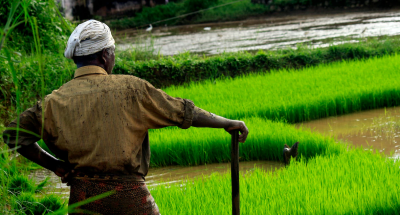
The Union Cabinet, chaired by Prime Minister Narendra Modi, approved higher Minimum Support Prices (MSP) for 14 Kharif crops for the 2026-27 marketing season. The pricing decision aligns with the Union Budget 2018-19 directive to fix support prices at a minimum of 1.5 times the all-India weighted average cost of production. Sunflower seed recorded the highest absolute increase at ₹622 per quintal, while medium-staple cotton rose by ₹557 and common paddy by ₹72. This revision targets agricultural stability, domestic crop diversification, and an estimated institutional payout of ₹2.60 lakh crore.
Minimum Support Price Structure for 2026-27
The Commission for Agricultural Costs and Prices (CACP) recommends the pricing structure based on comprehensive input variables, which the Cabinet Committee on Economic Affairs (CCEA) subsequently approves.
Approved Prices and Absolute Growth Metrics
The newly approved price matrix outlines distinct returns across foodgrains, oilseeds, and commercial categories:
| Crop Category | Specific Crop | Approved MSP 2026-27 (₹ per Quintal) | Absolute Increase over 2025-26 (₹ per Quintal) | Return Margin Over Production Cost (%) |
| Cereals | Paddy (Common) | 2,441 | 72 | 50 |
| Paddy (Grade A) | 2,461 | 72 | 50 | |
| Jowar (Hybrid) | 4,023 | 324 | 50 | |
| Jowar (Maldandi) | 4,073 | 324 | 50 | |
| Bajra | 2,900 | 125 | 56 | |
| Ragi | 5,205 | 319 | 50 | |
| Maize | 2,410 | 10 | 56 | |
| Pulses | Tur / Arhar | 8,450 | 450 | 54 |
| Moong | 8,780 | 12 | 61 | |
| Urad | 8,200 | 400 | 51 | |
| Oilseeds | Groundnut | 7,517 | 254 | 50 |
| Sunflower Seed | 8,343 | 622 | 50 | |
| Soybean (Yellow) | 5,708 | 380 | 50 | |
| Sesamum | 10,346 | 500 | 50 | |
| Nigerseed | 10,052 | 515 | 50 | |
| Commercial | Cotton (Medium Staple) | 8,267 | 557 | 50 |
| Cotton (Long Staple) | 8,667 | 557 | 50 |
Financial and Procurement Projections
The policy framework dictates an enhanced institutional role to absorb rural production and handle price shocks.
Targeted Procurement Volumes
Central agencies project the total annual procurement across the 14 designated Kharif crops at 824.41 lakh metric tonnes (LMT) for the 2026-27 marketing cycle.
Budgetary Allocation and Payouts
The total estimated financial payout directly to farmers stands at ₹2.60 lakh crore. Long-term trends indicate that cumulative MSP payments across these 14 crops reached ₹18.99 lakh crore between 2014-15 and 2025-26, rising from ₹4.75 lakh crore in the preceding decade.
Conceptual Underpinnings of Cost Calculations
The determination of support pricing rests on clear accounting definitions that measure farming expenses differently.
The Three Cost Classifications
- A2 Cost: Represents explicit cash outlays. It covers direct expenditures on seeds, chemical fertilizers, pesticides, hired labor, leased-in land rent, fuel, and irrigation.
- A2 + FL Cost: Combines the actual paid-out A2 expenses with the imputed monetary value of unpaid family labor (FL). The Central Government uses this specific index as the baseline cost to calculate the promised 50% profit margin.
- C2 Cost: Reflects a comprehensive economic cost model. It adds the rental value of owned land and interest on fixed capital assets to the baseline A2 + FL variables.
Agrarian Policy Divergence
Several prominent farm unions challenge the official pricing baseline. These organizations seek a legally mandated support price calculated specifically on the broader C2 cost formula plus a 50% margin (C2 + 50%), rather than the current A2 + FL formula.
Strategic Objectives of the Price Revision
The modified pricing structure responds directly to long-term macroeconomic challenges in Indian agriculture.
Mitigation of Import Reliance
The steep targeted price hikes for sunflower seeds (₹622), nigerseed (₹515), and sesamum (₹500) serve to lower India’s massive vegetable oil import bills. By improving the financial returns on oilseeds, the policy aims to transition acreage away from water-intensive cereals.
Promotion of Climate-Resilient Agriculture
Offering high margins for bajra (56%) and jowar encourages the growth of nutri-cereals or “Shree Anna.” These crops require less water, possess high nutritional profiles, and tolerate erratic weather variations during the southwest monsoon better than paddy.
IASPOINT Booster Facts for UPSC
- CACP Status: The Commission for Agricultural Costs and Prices is an attached office of the Ministry of Agriculture and Farmers Welfare. It functions as an advisory body whose policy recommendations do not legally bind the Union Cabinet.
- Statutory Minimum Price: While 22 crops receive standard statutory backing under the MSP framework, Sugarcane is treated under a distinct statutory regime that mandates a Fair and Remunerative Price (FRP) under the Essential Commodities Act.
- Nodal Procurement Entities: The Food Corporation of India (FCI) remains the primary central organ for grain procurement, supplemented by NAFED and SFAC for pulses and oilseeds.