
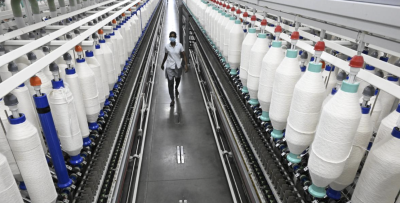
The Cotton Textiles Export Promotion Council (TEXPROCIL) has officially submitted a rebuttal to the United States Trade Representative (USTR) regarding allegations of “structural excess capacity” and “forced labour” in India’s textile industry. In its submission dated 15 April 2026, the council dismissed these claims as factually incorrect and urged the US government to refrain from initiating punitive actions under Section 301 of the Trade Act of 1974.
Refutation of Structural Excess Capacity
TEXPROCIL highlighted that India is not an export-surplus economy in the cotton textile segment. Data indicates that production levels for cotton yarn and fabrics have been either stagnant or declining over recent years, contradicting the claim of “excess capacity.” The industry remains predominantly domestic-oriented, with the majority of production consumed within the Indian market rather than being pushed into global markets through overproduction.
Labour Standards and Section 301
The industry body strongly rejected allegations of forced labour, asserting that the sector operates under stringent regulatory frameworks and transparent labour practices. TEXPROCIL argued that the USTR’s use of Section 301—a provision typically used to investigate “unfair” trade practices—is inappropriate for these claims. The council suggested that any labour or trade-related concerns should be resolved through bilateral diplomatic channels rather than unilateral trade investigations.
Key Facts for UPSC Prelims
- TEXPROCIL: Established in 1954, it is the first Export Promotion Council set up by the Government of India under the Ministry of Textiles.
- Section 301: A provision of the US Trade Act of 1974 that authorises the USTR to investigate and take action against foreign trade practices that are deemed “unreasonable” or “discriminatory” to US commerce.
- Cotton Production: India is one of the world’s largest producers of cotton; the sector is a major provider of employment, second only to agriculture.
- Major Export Markets: The United States remains a primary destination for Indian home textiles and readymade garments.
The textile industry is a vital component of India’s economy, contributing significantly to industrial production and export earnings. Any restrictive measures by the US could impact the livelihoods of millions of workers. TEXPROCIL’s response seeks to safeguard the industry’s reputation and ensure the continuity of trade under the “Neighbourhood First” and “Act East” economic synergies by maintaining stable global supply chains.
Last Modified: April 27, 2026