
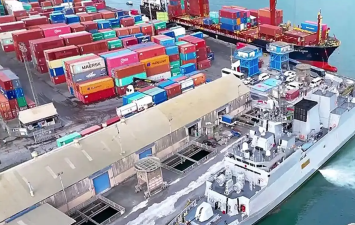
Union Minister for Commerce and Industry Piyush Goyal announced India’s immediate export target of $1 trillion for the current fiscal year (FY27), with a long-term goal of reaching $2 trillion within the next five years. This declaration came during the website launch of the upcoming Bharatiya Vyapar Mahotsav in New Delhi. Despite economic pressures from global geopolitical conflicts and tariff-related uncertainties, India’s total exports of goods and services hit a record $863 billion in the previous fiscal year (FY26), representing a 5% year-on-year growth. The targeted export growth serves as a pillar for achieving comprehensive economic self-reliance.
Core Pillars of India’s Export Strategy
The trade blueprint shifts emphasis from short-term fiscal incentives to structural changes in domestic manufacturing and international integration.
Expansion of Free Trade Agreements (FTAs)
India has systematically engaged with global partners, concluding or negotiating preferential trade pacts with nearly 38 developed and developing countries. These agreements are designed to reduce inbound tariffs on Indian goods and secure easier market access for the service sector. A prime example is the Comprehensive Economic Partnership Agreement (CEPA) with Oman, scheduled to become operational on June 1, 2026, granting duty-free access to 98.08% of Indian goods, including textiles, electronics, and machinery.
Import Substitution and Swadeshi Ecosystem
The Ministry of Commerce and Industry is urging domestic enterprises to utilize its official trade portal to analyze inbound cargo flows. By systematically mapping imported goods, industrial clusters can pinpoint areas to initiate domestic alternatives.
- Focus Sectors: Special emphasis is placed on heavily import-dependent sectors such as heavy capital goods, medical equipment, and advanced machinery components.
- Target Clusters: Existing manufacturing hubs like Rajkot, Jalandhar, Ludhiana, Batala, and Pune are tasked with upgrading their infrastructure to manufacture high-value components locally.
Upgrading Quality Standards and Infrastructure
Capturing market share in developed nations requires an upgrade in product quality, manufacturing productivity, and standardization. The government is directly linking export competitiveness to compliance with international sanitary and phytosanitary standards, superior packaging solutions, and reduced logistical overheads.
Trade Composition and Sectoral Performance
India’s record $863 billion trade performance reflects distinct growth paths for both visible goods and intangible services.
| Export Category | Value (FY26 Performance) | Major Drivers & Emerging Growth Pockets |
| Merchandise Exports | $441.78 billion | Engineering goods, petroleum products, pharmaceuticals, electronic hardware, and gems & jewelry. |
| Services Exports | $421.32 billion | IT and enabled services, Global Capability Centers (GCCs), business consulting, and specialized engineering services. |
| Agricultural Exports | ~Rs 5 lakh crore | Marine products, basmati rice, spices, and fresh fruits; currently possesses a low baseline of value-added processing. |
Bharatiya Vyapar Mahotsav 2026
The Bharatiya Vyapar Mahotsav (BVM) is scheduled to be held from August 12 to August 15, 2026, at Bharat Mandapam, Pragati Maidan, New Delhi. Co-organized by the Confederation of All India Traders (CAIT) and supported by the India Trade Promotion Organisation (ITPO), this event acts as a primary catalyst for the domestic business environment.
Key Objectives of the Mahotsav
- MSME Integration: Providing a nationwide marketing and B2B matchmaking platform for Micro, Small, and Medium Enterprises to access global supply chains.
- Investor Mobilization: Constructing dedicated investment zones to link domestic startups and rural enterprises with institutional finance, Venture Capitalists (VCs), and Non-Resident Indian (NRI) investors.
- Showcasing Swadeshi Innovation: Creating a multi-sectoral exhibition space featuring more than 2,000 exhibitors across 25 high-growth fields including drone tech, defense components, and textiles.
IASPOINT Booster Facts for UPSC
- Foreign Trade Policy (FTP) 2023: Unlike previous policies that carried a fixed five-year validity, FTP 2023 remains open-ended and dynamically updated. It emphasizes moving away from incentive-based schemes to a remission-based regime (e.g., RoDTEP) and encourages the usage of the Indian Rupee in international trade settlements.
- Trade Balance Dynamics: Historically, India experiences a merchandise trade deficit that is partially offset by a structural surplus in its services trade account. Reaching the $2 trillion export target requires narrowing this merchandise deficit through domestic manufacturing plans like the Production Linked Incentive (PLI) scheme.
- Towns of Export Excellence (TEE): Selected industrial pockets producing goods exceeding a specified threshold receive priority financial support under the Market Access Initiative (MAI) scheme to upgrade common cluster infrastructure.
- Services Component Shifts: The rapid proliferation of Global Capability Centers (GCCs) across major Indian urban centers has diversified India’s services exports away from pure-play software maintenance toward high-end research, design, and analytics.