
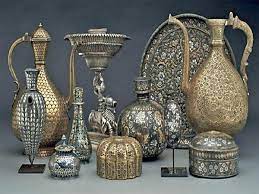
Prime Minister of India presented South African President Cyril Ramaphosa with a pair of intricate ‘Surahi’ containers crafted in Bidriware, a traditional metal handicraft. Bidriware, originating from Karnataka’s Bidar district, blends Persian and local influences, with a history tracing back to the Bahamani Sultans. The craft involves copper-zinc alloy casting, etching designs, silver inlaying, and a distinctive blackening process using specialized soil. Bidriware has obtained Geographical Indications (GI) recognition and thrives in centers like Bidar and Hyderabad. This gift exchange reflects the cultural diplomacy between India and South Africa.
Facts/Terms for UPSC Prelims
- Bidriware: A metal handicraft known for its Persian-inspired intricate designs. Crafted from a copper-zinc alloy, it undergoes etching, silver inlay, and a unique blackening process. Originating in Karnataka’s Bidar district, it carries a Geographical Indications (GI) tag.
- Cyril Ramaphosa: The President of South Africa, who received the Bidriware ‘Surahi’ containers from the Indian Prime Minister as a diplomatic gift.
- Khwaja Moinuddin Hasan Chisti: A noted Sufi who introduced Bidriware to India in the form of utensils. The craft’s development fused Turkish, Persian, Arabic influences with local styles, creating a distinctive art form.
- Geographical Indications (GI): A recognition that certifies the origin and authenticity of a product linked to a particular geographical area, like Bidriware from Bidar and Hyderabad.
- Blackening Process: A crucial step in Bidriware production. A paste of specialized soil, ammonium chloride, and water is applied to the heated Bidri surface, darkening the alloy body while sparing the silver inlay. This process is responsible for the characteristic black color of Bidriware.