
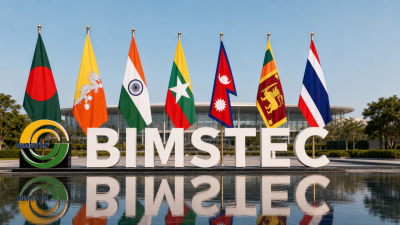
India is scheduled to host the 5th BIMSTEC National Security Advisers’ Meeting in New Delhi on 16 July 2026. Bangladesh, the current rotating chair, will lead a delegation headed by the Prime Minister’s Defence Adviser, Brig. Gen. (Retd.) Dr. A.K.M. Shamsul Islam. The meeting will review regional security cooperation, including cyber, counter‑terrorism, trafficking and satellite collaboration.
What is current and why it matters
The 5th BIMSTEC NSA meeting is a routine security dialogue among seven Bay of Bengal states: Bangladesh, Bhutan, India, Myanmar, Nepal, Sri Lanka and Thailand. The meeting consolidates operational cooperation on non‑traditional and conventional security issues and advances India’s regional policy priorities. Security coordination in BIMSTEC affects governance, trade continuity, maritime safety, digital resilience and disaster response across a densely trafficked littoral. Effective outcomes reduce risks to critical infrastructure, supply chains and maritime communications in South and South‑East Asia.
Geopolitical alignment with India’s regional policy
Bridge between South and South‑East Asia: BIMSTEC links countries across the Bay of Bengal and provides India a platform to integrate ‘Neighbourhood First’ with ‘Act East’ priorities. Alternative to SAARC: With SAARC inactive because of India–Pakistan tensions, BIMSTEC offers a neutral multilateral space for cooperative initiatives without bilateral vetoes. Maritime and strategic balance: Security cooperation secures sea lines of communication, protects fisheries and offshore energy assets, and moderates external naval presence through cooperative surveillance and information sharing.
Cyber security cooperation
Action Plan and mechanisms
India hosted the First BIMSTEC Experts Group Meeting on Cyber Security in 2022 and the Second Meeting in New Delhi on 21 January 2025. The Expert Group is advancing a five‑year Action Plan that prioritises CERT‑to‑CERT cooperation, a cybercrime coordination framework and protection of critical digital infrastructure.
Key components
- CERT‑to‑CERT links: Timely exchange of indicators of compromise, joint incident response protocols and trusted channels for operational alerts.
- Cybercrime coordination: Shared procedures for evidence collection, mutual legal assistance and joint training for law enforcement.
- Capacity building: Technical assistance, joint exercises, and standard operating procedures for threat intelligence and vulnerability assessment.
Institutional barriers
Different legal regimes, uneven digital maturity, limited forensic capabilities, and reluctance to share sensitive data impede rapid operationalisation. Trust deficits complicate real‑time information exchange.
| Barrier | Remedial measure |
|---|---|
| Heterogeneous cyber laws and evidence rules | Model legal templates and multilateral MLATs customised for cyber cases |
| Capability gap among CERTs | Regional training centres, funded exchange programmes and equipment grants |
| Trust and information sensitivity | Tiered information‑sharing protocols, secure communications and confidence‑building exercises |
Balancing bilateral tensions and maintaining institutional continuity
NSA meetings provide a routine, institutionalised contact point that decouples immediate bilateral disagreements from collective security tasks. Bangladesh’s confirmation to chair and lead the delegation to New Delhi shows adherence to institutional commitments despite diplomatic frictions. Such forums permit quiet diplomacy and incremental problem‑solving on counter‑terrorism, trafficking and border management while preserving the multilateral agenda. Protocol adherence and predictable procedures by hosts reduce the risk of procedural disputes disrupting outcomes.
Non‑traditional security threats in the Bay of Bengal
Maritime security: Risks include illegal fishing, trafficking, smuggling and asymmetric threats to merchant shipping. Cooperative maritime domain awareness, joint patrols and information fusion are core responses. The Information Fusion Centre and coast guard collaborations serve as practical models for shared surveillance. Transnational organised crime and trafficking: Human trafficking, narcotics and illicit finance exploit porous maritime and land borders. Effective responses require extradition arrangements, MLATs, joint investigations and harmonised border protocols. Counter‑terrorism and satellite cooperation: Intelligence sharing, joint training and use of satellite imagery for sea‑lane monitoring and disaster response strengthen operational reach. Satellite data can assist search and rescue, anti‑smuggling and environmental monitoring. Youth and societal engagement: India organised the BIMSTEC Youth Leadership Exchange Programme from 25 to 30 April 2026 with more than 70 emerging leaders. People‑to‑people links reduce long‑term friction and build networks supportive of regional stability.
Operational gaps and recommended measures
- Formalise legal instruments: Negotiate BIMSTEC MLATs, extradition protocols and data‑sharing agreements for cyber and criminal investigations.
- Implement CERT‑to‑CERT framework: Create a regional node, standard operating procedures, and a shared incident response playbook with a secure communication backbone.
- Enhance maritime cooperation: Standardise patrol patterns, share AIS and radar data, and expand joint exercises for coast guards and navies.
- Scale capacity building: Establish a BIMSTEC cyber training centre, funded technical exchanges and donor‑supported equipment pools for smaller members.
- Operational financing: Set up a small, predictable BIMSTEC security fund to underwrite joint operations, training and shared assets.
- Institutionalise continuity: Fix annual NSA and experts’ meetings with rotating chair responsibilities and clear follow‑up mechanisms for agreed deliverables.
- Integrate private sector: Include telecom, cloud and maritime service providers in incident response planning and infrastructure protection.
Model Questions
1. Analyse the strategic utility of BIMSTEC as a vehicle for India’s ‘Neighbourhood First’ and ‘Act East’ policies. How does security cooperation within BIMSTEC address the gap left by SAARC? [GS‑II: International Relations]
India uses BIMSTEC to link South and South‑East Asia and to operationalise neighbourhood engagement without bilateral vetoes. Security cooperation—through NSA dialogues, maritime domain awareness and joint exercises—secures trade corridors, counters external strategic presence and promotes information sharing. BIMSTEC’s regional projects bypass SAARC paralysis by offering actionable platforms for counter‑terrorism, disaster response and connectivity that align India’s Neighbourhood First and Act East objectives.
2. Evaluate the BIMSTEC cyber security Action Plan and identify institutional barriers to its implementation. Suggest practical measures to overcome these barriers. [GS‑III: Science & Technology]
The Action Plan focuses on CERT‑to‑CERT links, cybercrime coordination and capacity building. Barriers include uneven legal frameworks, capability gaps among CERTs, and trust shortfalls on sharing operational data. Remedies: adopt model cyber legislation and MLAT templates; create a regional cyber training centre; establish secure, tiered information‑sharing protocols; run joint incident response exercises and technical assistance to raise forensic standards.
3. Discuss how BIMSTEC NSA meetings help sustain institutional continuity during bilateral frictions, with reference to recent India–Bangladesh diplomatic challenges. [GS‑II: Governance]
NSA meetings institutionalise routine contact and technical cooperation that persist despite political tensions. Bangladesh’s role as BIMSTEC chair and its delegation led by Brig. Gen. (Retd.) Dr. A.K.M. Shamsul Islam to the New Delhi meeting demonstrates procedural adherence. Such forums enable operational coordination on trafficking, terrorism and border management while providing low‑visibility diplomatic channels to de‑escalate disputes without derailing collective security work.
4. Assess BIMSTEC’s capacity to tackle non‑traditional security threats in the Bay of Bengal and recommend priority steps to strengthen regional response. [GS‑III: Internal & External Security]
BIMSTEC offers a platform for maritime surveillance, intelligence sharing and joint law enforcement but is limited by asset shortfalls, uneven legal regimes and differing priorities. Priority steps: operationalise maritime domain awareness with shared AIS and satellite data, formalise extradition/MLATs, fund joint patrols and training, implement the CERT‑to‑CERT framework, and institutionalise regular joint exercises to harmonise procedures and build trust.
Last Modified: July 15, 2026