
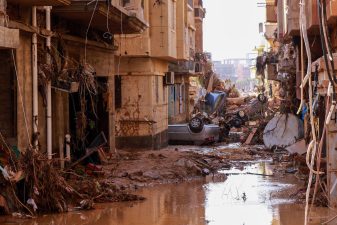
In September 2023, Derna, Libya, experienced a catastrophic flood disaster. This was largely due to extreme rainfall linked to climate change and the poor condition of local infrastructure. A recent study by the United Nations University Institute for Water, Environment and Health revealed critical vital information about this tragedy. It brought into light the vulnerability of Libya’s infrastructure to severe weather events.
Extreme Weather Events
Storm Daniel struck Derna, bringing record rainfall of 400 millimetres in just 24 hours. This was an unprecedented deluge that overwhelmed existing infrastructure. The storm exhibited characteristics typical of tropical cyclones, intensifying the rainfall and subsequent flooding.
Infrastructure Failure
The disaster was exacerbated by the collapse of two aging dams – the Bu Mansour and Elbilad. These dams were over 50 years old and had suffered from structural issues. Both dams failed due to inadequate maintenance and structural weaknesses. The Bu Mansour dam, standing at 75 metres, and the Elbilad dam, at 40 metres, could not withstand the extreme weather.
Structural Vulnerabilities
Research using advanced satellite imaging revealed that both dams exhibited signs of differential settlement. This means parts of their foundations were sinking at different rates, leading to instability. The dams showed an uneven sinking rate of about 1.8 mm per year, indicating progressive failure.
Impact of Climate Change
The study linked climate change to the intensification of extreme rainfall. This change has made Libya’s aging infrastructure even more vulnerable. Political instability has also hindered necessary maintenance efforts. The lack of governance has contributed to the deterioration of critical infrastructure, making the region more susceptible to disasters.
Urbanisation and Risk
Human settlements have increasingly encroached on flood-prone areas. In Derna, over 8,570 buildings were severely affected by the floods. The worst damage occurred in the Wadi Derna River valley, particularly in the old city. Poor urban planning has exacerbated the risks faced by communities.
Need for Disaster Risk Management
The findings emphasise the urgent need for improved disaster risk management. Regular maintenance of infrastructure is crucial. Political stability is also necessary for effective governance and planning. Community engagement in risk assessment and emergency preparedness can enhance resilience.
Proactive Measures
The study advocates for better monitoring of infrastructure, the implementation of early warning systems, and community resilience programmes. These measures are essential to mitigate future risks and protect vulnerable populations.
Questions for UPSC:
- Examine the role of climate change in intensifying natural disasters. Provide suitable examples.
- Discuss the importance of infrastructure maintenance in disaster prevention. How does political stability influence this?
- Analyse the impact of urbanisation on flood risk in developing countries. What measures can mitigate these risks?
- Critically discuss the significance of community engagement in disaster risk management. What strategies can enhance this involvement?
Answer Hints:
1. Examine the role of climate change in intensifying natural disasters. Provide suitable examples.
- Climate change leads to increased frequency and intensity of extreme weather events, such as hurricanes and heavy rainfall.
- Examples include Hurricane Harvey (2017) and the 2023 Derna floods, both of which caused damage and loss of life.
- Rising global temperatures contribute to changes in weather patterns, resulting in unpredictable and severe storms.
- Climate change also affects sea levels, leading to coastal flooding and erosion.
- Mitigation strategies include reducing greenhouse gas emissions and enhancing climate resilience through adaptive infrastructure.
2. Discuss the importance of infrastructure maintenance in disaster prevention. How does political stability influence this?
- Regular maintenance of infrastructure prevents deterioration and enhances resilience against natural disasters.
- Inadequate maintenance can lead to catastrophic failures, as seen with the aging dams in Derna.
- Political stability encourages effective governance, enabling timely maintenance and upgrades to critical infrastructure.
- Instability can divert resources away from essential services, exacerbating vulnerabilities.
- Investment in infrastructure maintenance is crucial for disaster preparedness and community safety.
3. Analyse the impact of urbanisation on flood risk in developing countries. What measures can mitigate these risks?
- Rapid urbanisation often leads to encroachment into flood-prone areas, increasing vulnerability to flooding.
- In developing countries, inadequate urban planning exacerbates risks, as seen in Derna with over 8,570 buildings affected.
- Mitigation measures include implementing zoning laws, constructing flood defenses, and improving drainage systems.
- Community awareness and education about flood risks can enhance resilience in urban areas.
- Investment in sustainable urban planning and infrastructure can reduce flood risks in the long term.
4. Critically discuss the significance of community engagement in disaster risk management. What strategies can enhance this involvement?
- Community engagement encourages local ownership of disaster risk management initiatives, enhancing effectiveness.
- Involvement in risk assessment and emergency planning increases awareness and preparedness among residents.
- Strategies include establishing community disaster response teams and conducting regular drills and training sessions.
- Utilizing local knowledge in planning can lead to better-tailored disaster management strategies.
- Collaboration with local governments and NGOs can strengthen community capacity and resilience.