
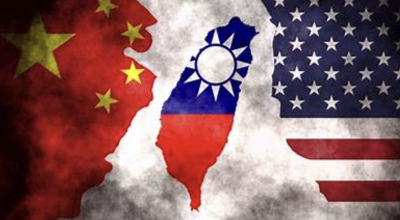
The China-US rivalry has escalated over Taiwan and Indo-Pacific geopolitics, involving military, economic, and diplomatic dimensions. The US increased naval patrols near Taiwan and expanded defence cooperation with regional allies. China conducted military drills around Taiwan and reinforced its claims over the island. Both nations intensified strategic posturing in the Indo-Pacific region, impacting regional security dynamics.
Military Developments around Taiwan
China conducted multiple live-fire exercises near Taiwan, including missile launches and air incursions into Taiwan’s Air Defence Identification Zone (ADIZ). The US Navy increased Freedom of Navigation Operations (FONOPs) through the Taiwan Strait and deployed advanced warships. Taiwan upgraded its defence systems with US-supplied weaponry and enhanced joint exercises with US forces. Both sides maintained high alert levels during key anniversaries and diplomatic visits.
Diplomatic and Economic Measures
The US reinforced diplomatic ties with Taiwan by approving arms sales worth over $1.5 billion. It also engaged Quad members (India, Japan, Australia) to counterbalance China’s influence. China imposed economic sanctions on entities supporting Taiwan and expanded Belt and Road Initiative projects in neighbouring countries. Both nations intensified trade restrictions and technology competition, particularly in semiconductors and 5G infrastructure.
Indo-Pacific Strategic Alignments
The US strengthened alliances with Japan, South Korea, Australia, and India through joint military exercises and intelligence sharing. China expanded its naval presence in the South China Sea and increased port investments in the Indian Ocean region. The Indo-Pacific Economic Framework (IPEF) led by the US aims to create trade rules excluding China. Both countries compete for influence over smaller states like the Philippines, Vietnam, and Indonesia.
International Responses and Security Impact
ASEAN countries called for peaceful resolution of Taiwan issues and adherence to international law. The UN Security Council discussed tensions but took no direct action. Global markets showed volatility due to geopolitical uncertainty. Defence spending in the region increased by an average of 5% in 2023. Cybersecurity incidents linked to China-US rivalry rose by 30% in the Indo-Pacific.
What to Study for UPSC Exams?
- Indo-Pacific Security Architecture
- Maritime Disputes in South China Sea
- US-China Technology Competition
- Regional Alliances and Defence Cooperation
Indo-Pacific Security Architecture
The Indo-Pacific Security Architecture involves multilateral frameworks like the Quad and ASEAN-led mechanisms aimed at regional stability. It integrates naval patrols, intelligence sharing, and joint military exercises among member states. The architecture counters strategic influence primarily from China, emphasizing freedom of navigation and open sea lanes across critical maritime routes.
Maritime Disputes in South China Sea
The South China Sea disputes involve overlapping territorial claims by China, Vietnam, the Philippines, Malaysia, Brunei, and Taiwan. China’s “nine-dash line” claim covers nearly 90% of the sea, contested internationally. The region holds vital shipping lanes, rich fisheries, and potential hydrocarbon reserves, making it a hotspot for military and diplomatic tensions.
US-China Technology Competition
The US-China technology rivalry centers on semiconductors, 5G, AI, and quantum computing. The US imposed export controls on advanced chips to China, aiming to curb its tech advancements. China invests heavily in domestic innovation to reduce dependence on foreign technology, seeking leadership in next-generation tech sectors.
Regional Alliances and Defence Cooperation
Regional alliances like the Quad (US, Japan, Australia, India) and AUKUS (Australia, UK, US) enhance defence collaboration through joint exercises and intelligence sharing. These partnerships focus on maritime security, cyber defence, and countering China’s military expansion. Defence cooperation also includes arms sales and technology transfers to bolster partner countries’ capabilities.
Last Modified: April 15, 2026