
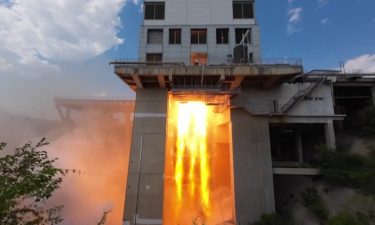
China’s Institute 165 has made notable strides in rocket technology. Recently, it successfully completed three tests of a liquid oxygen-kerosene engine within a single day. This achievement puts stress on China’s commitment to developing efficient and cost-effective space launch systems. The use of liquid oxygen and kerosene is very important in enhancing rocket performance while reducing operational costs.
Significance of Liquid Oxygen-Kerosene Engines
Liquid oxygen-kerosene engines are essential for modern rocketry. They provide a powerful thrust while being relatively inexpensive. The oxidiser, liquid oxygen, supports combustion with kerosene fuel. This combination allows for improved efficiency and performance in space missions. Both components are easily storable and manageable, making them ideal for launch vehicles.
China’s Space Ambitions
China aims to develop the Long March 9 spacecraft, which is comparable to SpaceX’s Starship. This spacecraft is designed to carry payloads into space, with a capacity of up to 500 tons. The Long March 9 will play important role in China’s lunar exploration plans, including the goal of landing astronauts on the Moon by 2030.
Technological Innovations and Cost Reduction
China is actively pursuing innovations to reduce the costs associated with space launches. The recent tests of the liquid oxygen-kerosene engine are part of this broader strategy. By refining engine technology, China can achieve more frequent launches at lower costs. This approach aligns with China’s ongoing efforts to enhance its space capabilities.
Collaboration Between Government and Private Sector
China’s space programme benefits from collaboration between government agencies and private companies. This partnership encourages innovation and accelerates technological advancements. The involvement of private firms complements governmental research, driving down costs and increasing efficiency in space missions.
Recent Achievements in Space Exploration
China has achieved milestones in space exploration. The nation has successfully reached the far side of the Moon, retrieved lunar samples, and deployed a rover on Mars. These accomplishments highlight China’s growing capabilities in space technology and exploration. Experts view the goal of landing astronauts on the Moon by 2030 as realistic, given these advancements.
Future Prospects
The successful testing of the liquid oxygen-kerosene engine marks a very important moment for China’s space programme. As the nation continues to refine its rocket technology, the potential for future missions expands. China’s ambitions in space exploration are set to increase, with the development of innovative technologies and spacecraft.
Questions for UPSC:
- Examine the significance of liquid oxygen-kerosene engines in modern rocketry.
- Discuss the role of government and private sector collaboration in advancing space technology in China.
- Analyse the implications of China’s lunar exploration plans on global space exploration efforts.
- Critically discuss the technological advancements made by China in space exploration and their potential impact on international relations.
Answer Hints:
1. Examine the significance of liquid oxygen-kerosene engines in modern rocketry.
- Liquid oxygen acts as an oxidiser, essential for combustion in rocket engines.
- The combination with kerosene provides a powerful thrust while being cost-effective.
- These engines offer improved efficiency and performance for space missions.
- Both components are easily storable and manageable, ideal for launch vehicles.
- Advancements in this technology enhance China’s rocket capabilities and reduce operational costs.
2. Discuss the role of government and private sector collaboration in advancing space technology in China.
- Collaboration encourages innovation and accelerates technological advancements in space exploration.
- Government agencies provide funding and infrastructure, while private companies contribute expertise.
- This partnership drives down costs and increases efficiency in space missions.
- Joint efforts facilitate the development of advanced technologies, such as the Long March 9 spacecraft.
- Such collaboration positions China as a competitive player in the global space industry.
3. Analyse the implications of China’s lunar exploration plans on global space exploration efforts.
- China’s goal to land astronauts on the Moon by 2030 could lead to increased international competition.
- Successful lunar missions may inspire other nations to enhance their own space programs.
- China’s advancements in lunar technology could shift the balance of power in space exploration.
- Collaborative opportunities may arise, encouraging partnerships for joint missions and research.
- China’s achievements could also influence global policies on space exploration and resource utilization.
4. Critically discuss the technological advancements made by China in space exploration and their potential impact on international relations.
- China’s successful tests of liquid oxygen-kerosene engines signify progress in rocket technology.
- Achievements like lunar sample retrieval and Mars rover deployment enhance China’s global standing.
- Technological advancements may lead to strategic partnerships or tensions with other space-faring nations.
- China’s ambitions could prompt responses from countries like the US, affecting geopolitical dynamics.
- The growing capabilities in space exploration may influence global discussions on space governance and treaties.