
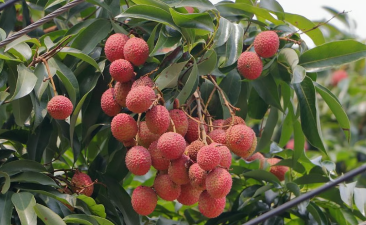
Litchi plantations across Bihar, especially in the major production hub of Muzaffarpur and neighboring districts, have suffered crop losses reaching up to 70% during the current harvest season. Data from the ICAR-National Research Centre on Litchi indicates that extreme climate stress, marked by inadequate winter chilling followed by untimely pre-monsoon precipitation and abrupt spring heatwaves, heavily disrupted the fruit lifecycle. The severe yield reduction threatens the domestic litchi supply network and directly compromises the commercial output of the famous geographical indication (GI) tagged Shahi Litchi.
Climate Anomalies Disrupting Litchi Phenology
Inadequate Winter Chilling
Litchi (Litchi chinensis) requires a distinct, cool, and dry winter period to successfully undergo vegetative dormancy and trigger flower bud differentiation. Between November 2025 and December 2025, minimum temperatures across north Bihar remained 1.8°C higher than long-term historical base levels. This lack of cold exposure caused the trees to bypass flowering and generate fresh green vegetative leaves instead, directly reducing the total initial flower panicle formation.
Erratic Pre-Monsoon Weather and Fruit Drop
The developmental phases of flowering, fruit setting, and fruit fruit swelling occurred during a highly volatile climatic window between February and April 2026. Abrupt microclimatic shifts caused heavy damage through distinct stages:
- February–March: High humidity, unexpected cloudy days, and untimely rainfall severely impacted pollination and reduced initial fruit setting success.
- April–May: Sudden shifts toward extreme maximum temperatures exceeding 38°C, paired with frequent dry thunderstorms and heavy westerly winds, triggered widespread premature fruit drop and caused skin blackening and pulp desiccation.
Emerging Biological Threats and Pest Surge
The Flower Webber Menace
The combination of cloudy skies and unexpected moisture levels during the early spring bloom created a favorable environment for secondary pest outbreaks. The flower webber (Statherotis leucaspis) emerged as a major threat to the crop yield. The larvae web together the sensitive inflorescences, feeding internally on the blossoms and tunneling into developing green fruits, causing extensive structural damage across orchards.
Proliferation of the Litchi Stink Bug
Alongside the flower webber, populations of the litchi stink bug (Tessaratoma javanica) spiked across several operational blocks. These pests pierce tender shoots, fruit stems, and young fruits to suck sap, leading to the rapid shedding of early-stage fruits. The persistent warmth in early spring has accelerated the breeding cycles of these destructive insects.
Socio-Economic Profile of Bihar’s Litchi Sector
Production and Spatial Distribution
Bihar holds the leading position in India’s commercial horticulture matrix for litchi production. The structural footprint of the crop is outlined below:
| Parameter | Metric / Description |
| National Production Share | Approximately 43% of India’s total litchi volume |
| Total Cultivation Area (Bihar) | Around 32,000 hectares |
| Muzaffarpur District Core Area | Hosts nearly 12,000 hectares of dedicated litchi orchards |
| Major Cultivars | Shahi Litchi (Famous for high juice content and distinct aroma) and China Litchi |
| Primary Producing Districts | Muzaffarpur, Vaishali, East Champaran, West Champaran, and Samastipur |
The Significance of the Shahi Litchi GI Tag
The Shahi Litchi variety grown in Muzaffarpur secured its Geographical Indication (GI) tag in 2018 due to its unique flavor profile, high pulp-to-stone ratio, and specific organoleptic qualities linked to the local calcium-rich alluvial soil. The ongoing climate variations modify the underlying microclimate, altering the precise harvesting window and causing variations in the size, color intensity, and sugar-acid balance of the fruit.
Scientific Interventions and Mitigation Roadmaps
Expert Task Force Deployment
In response to the severe agricultural crisis, the Union Ministry of Agriculture and Farmers’ Welfare constituted a dedicated expert task force in May 2026. Led by the ICAR-National Research Centre on Litchi, this panel includes entomologists, plant protection specialists, and scientists from the Rajendra Prasad Central Agricultural University and Bihar Agricultural University. The team is tasked with assessing localized crop losses, providing immediate pesticide management protocols, and drafting policy recommendations.
Technical Adaptation Strategies
Horticultural scientists are actively training farmers to implement specific physical and chemical adaptation measures to protect vulnerable orchards:
- Bunch Bagging (Thailikaran): Wrapping developing litchi clusters in specialized non-woven bags during April to shield the fruit skin from direct heat radiation, reduce cracking, and minimize pest access.
- Canopy Management: Applying structured pruning and rejuvenation techniques, pioneered by agricultural scientists, to optimize sunlight penetration and improve the resilience of aging orchards.
- Biological Barriers: Utilizing clear polythene bands wrapped tightly around tree trunks in January to physically block soil-dwelling pests like mealybugs from climbing into the productive upper canopy.
IASPOINT Booster Facts for UPSC
Key Institutions, Agricultural Classification, and Schemes
- ICAR-NRCL: The National Research Centre on Litchi is a premier institute under the Indian Council of Agricultural Research, established on June 6, 2001, at Mushahari, Muzaffarpur, Bihar, dedicated to advanced research on litchi crop management.
- Agro-Climatic Zone of Muzaffarpur: The core litchi-growing zone of Bihar falls under Zone I (North West Alluvial Plain), characterized by a subtropical climate, high humidity, deep alluvial soil, and substantial groundwater tables.
- Botanical Characteristics: Litchi belongs to the soapberry family (Sapindaceae). It is a moisture-sensitive, evergreen tree that thrives best in deep, well-drained loamy soils rich in organic matter.
- Mission for Integrated Development of Horticulture (MIDH): A Centrally Sponsored Scheme implemented for the holistic growth of the horticulture sector, covering fruits, vegetables, root and tuber crops, mushrooms, spices, and aromatic plants.
- Geographical Indications of Goods (Registration and Protection) Act, 1999: The legal framework governing the grant of GI tags in India. It is administered by the Controller General of Patents, Designs and Trade Marks, under the Department for Promotion of Industry and Internal Trade (DPIIT), Ministry of Commerce and Industry.