
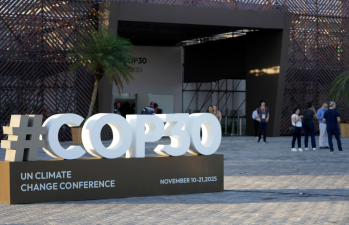
The World Meteorological Organisation (WMO) has warned of a 70% chance that global temperatures will exceed 1.5°C above pre-industrial levels in the next five years. This short-term spike marks the growing climate emergency. It puts stress on the urgent need for stronger climate action worldwide. COP30, held in Belém, Brazil, brings nations together to review and advance their commitments under the Paris Agreement. The focus is on Nationally Determined Contributions (NDCs), which set targets for emission reduction and energy transition. The event reveals gap between current efforts and what is needed to prevent catastrophic climate impacts.
WMO Temperature Projections and Climate Urgency
The WMO projects a high probability of average global warming surpassing 1.5°C in the near term. This is alarming because the 1.5°C limit is critical to avoiding severe environmental damage. The forecast signals accelerating climate change and the narrowing window to act. It stresses the urgency to enhance climate policies and implementation worldwide.
Role and Importance of Nationally Determined Contributions (NDCs)
NDCs are national plans under the Paris Agreement that outline emission reduction goals. They serve as accountability tools to measure progress. Countries are expected to “ratchet up” ambitions periodically. At COP30, many nations submitted updated NDCs for post-2030 action, but several, including India, have yet to do so. Stronger NDCs are vital to closing the gap between current policies and climate targets.
Geopolitical Challenges and Global Responsibilities
The withdrawal of the United States from the Paris Agreement under the previous administration has complicated global climate efforts. The US is a major emitter both per capita and in total. Its exit shifted more responsibility to other nations to compensate for its emissions. Meanwhile, fractured geopolitics challenge unified climate action. Cooperation and commitment remain essential to achieving global goals.
India’s Climate Role and Expectations
India is emitter but also highly vulnerable to climate impacts. It has made progress on earlier NDCs but faces pressure to enhance its commitments. A revised NDC would provide clearer policy direction, especially in renewable energy and climate technology sectors. India, alongside China and the EU, is expected to lead global climate efforts while advocating for increased climate finance from richer nations.
Climate Finance and Accountability at COP30
Developing nations stress the need for greater financial support from wealthy countries to implement climate actions effectively. Many rich countries’ NDCs fall short of their responsibilities, denoting the need for accountability. COP30 aims to hold all nations to their commitments and encourage more ambitious climate funding and action.
Questions for UPSC:
- Discuss in the light of the Paris Agreement, the role of Nationally Determined Contributions (NDCs) in global climate governance and their challenges.
- Critically examine the impact of geopolitical shifts on international climate negotiations and cooperation, with examples from recent COP summits.
- Explain the concept of climate finance. With suitable examples, discuss its significance for developing countries in combating climate change.
- Comment on the vulnerability of large developing countries like India to climate change and how this shapes their climate policy and international stance.
Answer Hints:
1. Discuss in the light of the Paris Agreement, the role of Nationally Determined Contributions (NDCs) in global climate governance and their challenges.
- NDCs are country-specific emission reduction targets under the Paris Agreement to limit global warming to well below 2°C, preferably 1.5°C.
- They serve as accountability tools, making climate action measurable and enabling progress tracking at global and national levels.
- NDCs must be updated periodically (ratcheted up) to increase ambition in response to worsening climate scenarios.
- Challenges include varying national capabilities, incomplete submissions, and gaps between pledged and required actions.
- Political will, economic constraints, and lack of clear policy frameworks hinder timely and effective implementation.
- Geopolitical tensions and withdrawal of major emitters (e.g., US under Trump) weaken collective commitment and burden sharing.
2. Critically examine the impact of geopolitical shifts on international climate negotiations and cooperation, with examples from recent COP summits.
- Geopolitical tensions often stall consensus, as seen with the US withdrawal from the Paris Agreement under Trump, reducing global unity.
- Fractured geopolitics complicate burden sharing, with some countries unwilling to increase commitments without others doing so first.
- Emerging powers like China and India have gained prominence, balancing development needs with climate responsibilities.
- Recent COPs show mixed progress; some countries delay or dilute commitments due to domestic political or economic priorities.
- Geopolitical alliances and rivalries influence climate finance negotiations and technology transfer agreements.
- Despite challenges, forums like COP30 aim to rebuild trust and push for collective action amid shifting global power dynamics.
3. Explain the concept of climate finance. With suitable examples, discuss its significance for developing countries in combating climate change.
- Climate finance refers to funding from developed to developing countries to support mitigation and adaptation efforts.
- It includes grants, loans, and investments for renewable energy, resilience building, and technology transfer.
- Examples – Green Climate Fund, Global Environment Facility, and bilateral aid programs.
- Developing countries rely on climate finance to overcome resource constraints and implement ambitious NDCs.
- Insufficient and delayed funding limits their capacity to adapt to climate impacts and transition to low-carbon economies.
- Climate finance is crucial for equity, recognizing historical emissions and enabling inclusive global climate action.
4. Comment on the vulnerability of large developing countries like India to climate change and how this shapes their climate policy and international stance.
- India faces high climate vulnerability due to dependence on agriculture, large population, and exposure to extreme weather events.
- This vulnerability drives India to prioritize adaptation alongside mitigation in its climate policies.
- India balances development needs with emission reduction, focusing on renewable energy expansion and energy efficiency.
- Its international stance emphasizes climate justice, demanding greater finance and technology support from developed nations.
- India’s pending updated NDC is expected to reflect stronger commitments aligned with its leadership role and vulnerability concerns.
- Domestic policy clarity on renewables and climate tech is vital for sustainable growth and global credibility.