
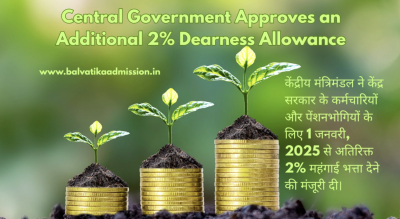
The Government of India approved a 2% increase in Dearness Allowance (DA) for central government employees and pensioners, effective from July 1, 2024. The decision affects over 50 lakh central government employees and 65 lakh pensioners. The DA hike is based on the rise in the All India Consumer Price Index (AICPI) for Industrial Workers.
Revised Dearness Allowance Rates
The DA rate increased from 42% to 44% of the basic pay for central government employees. Pensioners will receive the same 2% increase on their basic pension. The DA is revised biannually in January and July, linked to inflation measured by the AICPI.
Financial Impact and Budgetary Provisions
The DA hike is estimated to cost the government approximately ₹8,000 crore annually. The expenditure is accounted for under the Union Budget’s salary and pension head. The increase aims to offset inflationary pressures on government employees and pensioners.
Implementation and Payment Schedule
The revised DA will be included in the salary and pension disbursed in July 2024. State governments are expected to follow suit, as many link their DA revisions to central government rates. The Department of Expenditure issued the formal order for the DA revision.
Historical Context and Previous Revisions
Since January 2024, the DA stood at 42%. The DA formula is based on the average AICPI for the previous 12 months. The government has revised DA 11 times since 2020, reflecting inflation trends. The last 2% increase was implemented in January 2024.
What to Study for UPSC Exams?
- Consumer Price Index Mechanisms
- Public Sector Employee Benefits
- Union Budget and Expenditure
- Inflation Measurement and Impact
Consumer Price Index Mechanisms
The Consumer Price Index (CPI) measures average price changes over time for a basket of goods and services. India uses multiple CPIs, including CPI-Industrial Workers and CPI-Rural. CPI data collection involves thousands of retail outlets and markets, updated monthly. Weightages in CPI baskets are revised periodically to reflect changing consumption patterns.
Public Sector Employee Benefits
Public sector employee benefits often include pensions, gratuity, medical allowances, and housing subsidies. In India, benefits are governed by pay commissions and government orders. Dearness Allowance is a key inflation-linked benefit, revised biannually. Some benefits are tax-exempt up to specified limits.
Union Budget and Expenditure
The Union Budget is an annual financial statement presented by the Indian government detailing estimated receipts and expenditures. It has two parts: revenue and capital budgets. Salary and pension payments form a significant recurring expenditure. The budget process involves multiple stages including presentation, discussion, and approval by Parliament.
Inflation Measurement and Impact
Inflation is the rate at which general price levels rise, reducing purchasing power. It is measured by indices like CPI and Wholesale Price Index (WPI). Inflation impacts interest rates, wages, and government policies. Central banks use inflation targeting to maintain economic stability.
Last Modified: April 18, 2026