
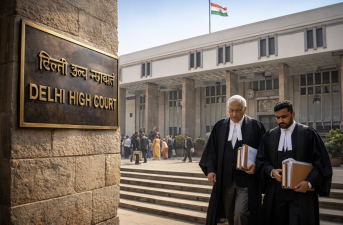
In April 2026, the Delhi High Court delivered a landmark ruling reinforcing the “Deep Roots” principle. This principle prioritizes the welfare of a child who has become integrated into Indian society over foreign court custody orders. The case involved an 11-year-old US-born child whose father sought repatriation based on a US court decree. The judgment marks India’s judicial approach – while foreign judgments are respected, the child’s best interests remain paramount.
About the ‘Deep Roots’ Principle
The “Deep Roots” principle helps courts decide if uprooting a child from their settled environment would harm their emotional and psychological well-being.
- Shift from Habitual Residence: International law, such as the Hague Convention, typically focuses on the child’s habitual residence before disputes arise. However, the Delhi High Court noted that if a child has spent crucial formative years in India—attending school, building friendships, and living with a natural guardian—they have established “deep roots” here.
- Fact-Centric Approach: Citizenship or past residence abroad alone cannot determine custody. The child in this case had lived in India for nearly four years, making social and educational integration the priority over foreign legal technicalities.
Jurisdictional Challenges in Indian Family Law
India’s decision not to sign the 1980 Hague Convention on International Child Abduction creates a unique legal landscape:
| Feature | Status in India (as of 2026) |
| Hague Convention | Not a signatory; India views “abduction” by a parent as a misnomer in domestic contexts. |
| Foreign Court Orders | Have persuasive value but are not automatically enforceable (non-conclusive under Section 13 of CPC). |
| Parens Patriae Jurisdiction | Indian courts act as the ultimate guardian of any child within their territory. |
| Habeas Corpus Limits | Custody with a natural guardian is not “illegal detention,” so Habeas Corpus petitions are often redirected to Family Courts. |
The “Best Interests” vs. “Comity of Courts” Conflict
The 2026 ruling marks a tension between respecting foreign court orders and prioritizing the child’s welfare:
- Comity of Courts: Indian courts should respect foreign orders to avoid forum shopping.
- Best Interests of the Child: A child is not property to be moved based solely on foreign decrees.
The court clarified that even if a parent’s act of bringing the child to India violates a foreign stay order, the child cannot be punished by forced repatriation to a country where they lack a support system.
UPSC Relevance – Implications for Private International Law
This case illustrates the evolution of Private International Law in India:
- Protection of Women: India argues that signing treaties like the Hague Convention could disadvantage Indian women fleeing domestic distress abroad, forcing them into costly foreign litigation without support.
- Judicial Sovereignty: Applying “Deep Roots” and “Social Integration” tests allows Indian courts to preserve local socio-cultural contexts when dealing with foreign judgments.
- Need for Domestic Law: Recurring transnational custody battles have sparked calls for a dedicated domestic law on International Parental Child Abduction balancing child rights and international cooperation.
Summary of the 2026 Verdict
The court ruled that since both parents were Indian citizens and the mother lacked a US work permit, forcing the child back would cause traumatic separation. The burden of proof now lies with the party seeking repatriation to show the child has not struck roots in India, rather than relying solely on foreign court orders. This judgment marks step in prioritizing a child’s welfare and social integration within India over automatic enforcement of foreign custody decrees. It reflects a sensitive, child-focused approach in international family law disputes.
Last Modified: April 4, 2026