
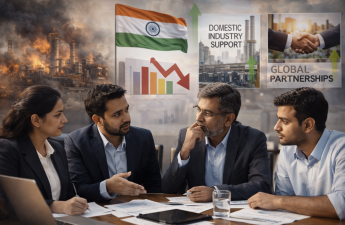
India is facing disruptions due to ongoing shocks in the global economy, especially from the West Asia crisis. The government has acted swiftly to stabilise energy supplies, support exports and protect vulnerable groups. However, industry’s role in sustaining stability is now crucial.
Government Measures and Industry Role
The government’s intervention has helped moderate fuel prices and ease logistics pressures. Industry must pass these benefits to consumers to control inflation and maintain demand. Protecting jobs is vital as disruptions are mostly temporary. Labour-intensive sectors need special focus to avoid permanent job losses. Firms should improve efficiency and flexibility to sustain employment. Supporting MSMEs is critical since they face cash flow and supply chain risks. Timely payments and clear order visibility from larger firms can help MSMEs survive.
Supply Chain Resilience and Strategic Reserves
The crisis has exposed the need for stronger supply chains. Diversifying suppliers, creating alternative routes and maintaining inventory buffers for critical inputs are essential. Stockpiling should no longer be only a government task. Industry must collaborate with government to build distributed reserves of key materials and fuels. This partnership will enhance national preparedness against future shocks.
Energy Efficiency and Risk Management
Industry must accelerate renewable energy investments and improve energy efficiency. Shifting from LPG to natural gas and increasing electrification can stabilise energy use. Small operational changes like efficient cooking systems add up at scale. Firms should strengthen risk management with better insurance, logistics planning and foreign exchange practices. Technology adoption in data analytics and supply chain monitoring can reduce response time to disruptions.
Industry-Government Collaboration
Continuous dialogue between industry and government is key. Real-time feedback on shortages and risks will help tailor policies effectively. Such cooperation ensures that government measures match ground realities and support economic stability.
Topics for Prelims:
Supply Chain Resilience
- Supply chain diversification reduces dependency on single sources.
- Inventory buffers help manage sudden disruptions.
- Strategic reserves traditionally managed by government, now industry involvement is rising.
- Alternative logistics corridors improve supply stability.
- Collaboration between government and industry enhances preparedness.
Energy Efficiency in Industry
- Renewable energy investments reduce long-term costs.
- Switch from LPG to natural gas lowers emissions and improves stability.
- Electrification of industrial processes enhances energy security.
- Energy-efficient cooking systems reduce consumption in institutions.
- Green hydrogen is an emerging alternative fuel source.
Micro, Small and Medium Enterprises (MSMEs)
- MSMEs have limited cash flow and face high disruption risk.
- Timely payments from larger firms sustain MSME operations.
- Better credit terms help MSMEs manage financial pressures.
- Clear order visibility reduces uncertainty in production planning.
- MSMEs form critical links in supply chains.
Questions for Mains:
- Critically analyse the role of industry in stabilising the economy during global supply chain disruptions with examples from India’s recent experiences. [GS-III-Economic Development]
- Point out the importance of strategic reserves and supply chain diversification in ensuring national security and economic resilience. [GS-III-Internal & External Security]
- With suitable examples, estimate how energy efficiency and renewable energy adoption can impact India’s industrial competitiveness and environmental goals. [GS-III-Science & Technology]
- Underline the challenges faced by Micro, Small and Medium Enterprises (MSMEs) in crisis times and critically analyse policy measures needed to support them. [GS-II-Governance]
Answer Hints:
1. Critically analyse the role of industry in stabilising the economy during global supply chain disruptions with examples from India’s recent experiences. [GS-III-Economic Development]
- Industry’s role in passing government-led fuel and logistics cost benefits to consumers to control inflation and sustain demand.
- Protecting livelihoods by maintaining employment, especially in labour-intensive sectors, through operational flexibility and internal efficiencies.
- Supporting MSMEs via timely payments, better credit terms, and clear order visibility to sustain supply chains.
- Enhancing supply chain resilience by diversifying sourcing, alternative logistics corridors, and maintaining inventory buffers.
- Adoption of technology for real-time supply chain monitoring and risk management to respond swiftly to shocks.
- Examples – India’s quick government-industry response during West Asia crisis; MSME support during COVID-19 disruptions.
2. Point out the importance of strategic reserves and supply chain diversification in ensuring national security and economic resilience. [GS-III-Internal & External Security]
- Strategic reserves reduce vulnerability to external shocks by maintaining buffer stocks of critical materials and fuels.
- Supply chain diversification lowers dependency on single sources or routes, preventing bottlenecks.
- Alternative logistics corridors enhance supply stability amid geopolitical or natural disruptions.
- Collaborative models between government and industry improve information sharing and infrastructure utilization.
- Strategic reserves and diversified supply chains contribute to economic continuity and national security preparedness.
- Examples – India’s push for distributed buffer systems and diversified sourcing post global disruptions.
3. With suitable examples, estimate how energy efficiency and renewable energy adoption can impact India’s industrial competitiveness and environmental goals. [GS-III-Science & Technology]
- Renewable energy investments reduce long-term energy costs and dependence on volatile fossil fuel markets.
- Switching from LPG to natural gas and electrification of industrial processes improve energy stability and lower emissions.
- Adoption of green hydrogen and energy-efficient technologies enhances sustainability and future readiness.
- Small-scale operational changes (e.g., efficient cooking systems) cumulatively reduce energy consumption nationally.
- Improved energy efficiency strengthens industrial competitiveness by lowering production costs and carbon footprint.
- Examples – Industrial units adopting solar power, use of natural gas pipelines, and government incentives for renewables.
4. Underline the challenges faced by Micro, Small and Medium Enterprises (MSMEs) in crisis times and critically analyse policy measures needed to support them. [GS-II-Governance]
- Challenges – Limited cash flow, vulnerability to supply chain disruptions, and high uncertainty in demand and orders.
- Delayed payments and restricted credit access exacerbate financial distress for MSMEs.
- Policy needs – Ensuring timely payments from larger firms, improved credit facilities, and clear order visibility.
- Government schemes to provide liquidity support, credit guarantees, and capacity building for resilience.
- Strengthening MSMEs is vital as they form critical supply chain links and employment providers.
- Examples – Emergency credit line guarantee scheme (ECLGS), MSME digitalization initiatives post-pandemic.