
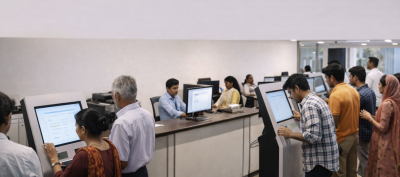
Delhi Chief Minister [“Rekha Gupta”,”delhi chief minister”] has launched the CM Jan Sunwai Portal and mobile app, positioning technology at the centre of citizen–government engagement. Alongside the grievance platform, the government unveiled upgraded e-District services and reforms in school admissions for economically weaker sections (EWS), disadvantaged groups (DG), and Children with Special Needs (CWSN). The initiative marks a renewed push toward transparency, accountability, and digital governance in the national capital.
What Is the CM Jan Sunwai Portal?
The CM Jan Sunwai Portal is an integrated grievance redressal platform allowing citizens to register complaints related to any government department.
Key features include:
- Multiple complaint channels — portal, mobile app, call centre (1902), and offline submission through the Chief Minister’s Office.
- Pre-mapped jurisdictions and departmental officers to avoid confusion.
- Unique reference ID for every complaint.
- SMS updates at each stage of redressal.
The Chief Minister noted that while digital complaint systems existed earlier, monitoring and accountability mechanisms were weak. The new portal aims to address these gaps through structured escalation and real-time tracking.
Three-Tier Accountability Mechanism
A defining feature of the system is its three-level grievance redressal structure:
- Grievance Redressal Officer.
- Appellate Authority.
- Final Appellate Authority.
If a citizen expresses dissatisfaction with the resolution, the complaint is automatically escalated to a higher authority. The system is described as “100% feedback-driven,” ensuring that officers remain accountable at every level.
Importantly, physical Jan Sunwai sessions will continue, ensuring digital systems complement rather than replace traditional public hearings.
Reforms in EWS/DG/CWSN School Admissions
The Delhi government has also replaced its earlier admission software with a secure, cloud-based system for EWS, DG, and CWSN categories.
To prevent fraud and duplication:
- Aadhaar-based identity verification is mandatory.
- Birth certificates are digitally verified.
- Income certificates are verified through an integrated online system.
These measures aim to enhance transparency and curb malpractice in school admissions under reserved categories.
Integration with CSC and e-District Services
The initiative integrates e-District services with the [“Common Service Centre”,”india digital governance network”] (CSC) network.
With over 7,000 CSC centres across Delhi, citizens can now access services locally without visiting multiple government offices.
The 75 existing e-District services include:
- Income, caste, and residence certificates.
- Birth and death certificates.
- Social welfare services.
- Food and civil supplies services.
- Labour and education-related services.
This decentralised model aligns with the broader Digital India framework by improving last-mile service delivery.
CM Pragati: Digital Asset Mapping
Another significant announcement was the launch of “CM Pragati,” a portal that creates a comprehensive digital record of government assets, including land and buildings.
Such asset digitisation supports:
- Improved transparency in public property management.
- Better utilisation of government resources.
- Reduced scope for encroachment and misuse.
Asset mapping also strengthens urban governance by enabling data-driven planning.
Why This Digital Push Matters
The initiatives reflect a broader shift toward:
- Technology-enabled public administration.
- Feedback-based accountability systems.
- Integration of digital platforms with grassroots service centres.
- Reducing bureaucratic delays and red tape.
If implemented effectively, such reforms can enhance trust in governance and improve service delivery efficiency in a densely populated urban setting like Delhi.
What to Note for Prelims?
- CM Jan Sunwai Portal: Integrated grievance redressal platform in Delhi.
- Four complaint modes: portal, app, call centre (1902), offline.
- Three-tier grievance mechanism.
- Aadhaar-based verification mandatory for EWS/DG/CWSN admissions.
- 75 e-District services linked with CSC network.
- CM Pragati portal for digital mapping of government assets.
What to Note for Mains?
- Discuss the role of digital governance in strengthening accountability.
- Examine challenges in implementing grievance redressal systems in urban administrations.
- Analyse how Aadhaar-based verification affects welfare delivery.
- Evaluate the importance of asset digitisation in public administration reforms.