
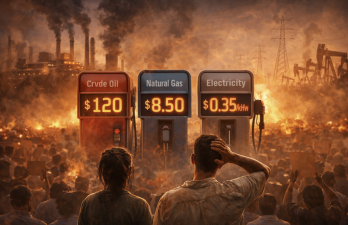
The ongoing war in the Middle East has triggered the most severe global energy security threat in history. This conflict has drastically reduced oil and gas supplies, causing prices to soar worldwide. The crisis exposes the vulnerability of countries dependent on fossil fuels, affecting food prices, household expenses, business costs, and entire economies. Asia is particularly impacted, importing 40% of its oil through the strategic Strait of Hormuz. The World Food Programme warns that global hunger could reach record levels due to this turmoil.
Fossil Fuel Dependency and Its Risks
Reliance on fossil fuels compromises national security and economic stability. Geopolitical conflicts disrupt supply chains, leading to inflation and economic shocks. Continuing this dependence means countries remain vulnerable to recurring crises. Moreover, fossil fuels contribute heavily to climate change, intensifying disasters like floods and droughts. Despite these risks, fossil fuels still receive trillions of dollars in subsidies worldwide.
Renewable Energy as a Solution
The shift to clean energy offers a way out of this crisis. Renewables like solar and wind are abundant, cheaper, and not subject to geopolitical risks. Clean energy systems backed by modern grids and storage technologies can stabilise economies and reduce pollution. Electric vehicles and other green technologies further support this transition. However, developing countries need financial and technical support to adopt these technologies effectively.
Global Climate Cooperation and Finance
International cooperation is crucial for accelerating clean energy adoption. Recently, over $2 trillion was invested in clean energy, double the amount for fossil fuels. Yet, vulnerable developing nations received limited funding. COP30 in Brazil secured $1 trillion for grids and storage, and COP31 in Türkiye aims to build on this progress. Climate cooperation not only combats environmental risks but also counters geopolitical instability by reducing fossil fuel dependence.
Topics for Prelims:
Strait of Hormuz
- Strategic oil transit chokepoint connecting Persian Gulf to open ocean.
- Handles about 20-30% of global oil trade.
- Geopolitical tensions here impact global energy prices.
- Security concerns affect supply chain stability.
- Critical for energy-importing countries, especially in Asia.
Renewable Energy
- Includes solar, wind, hydro, and geothermal sources.
- Cheaper and cleaner than fossil fuels.
- Reduces greenhouse gas emissions.
- Requires modern grids and storage for reliability.
- Key to energy security and climate goals.
UN Climate Change Conferences (COP)
- Annual global meetings to address climate issues.
- COP30 held in Brazil focused on clean energy finance.
- COP31 scheduled in Türkiye aims to enhance climate action.
- Facilitates international cooperation and commitments.
- Supports just transition for fossil fuel-dependent economies.
Questions for Mains:
- Critically analyse the impact of fossil fuel dependency on national security and economic stability in the context of recent global conflicts. [GS-III-Economic Development]
- With suitable examples, estimate the role of renewable energy in enhancing energy security and mitigating climate change risks. [GS-III-Environment & DM]
- Point out the challenges faced by developing countries in transitioning to clean energy and discuss the role of international finance in addressing these challenges. [GS-II-International Relations]
- Underline the significance of United Nations Climate Change Conferences (COP) in encouraging global cooperation and ensuring a just transition towards sustainable energy. [GS-II-Governance]
Answer Hints:
1. Critically analyse the impact of fossil fuel dependency on national security and economic stability in the context of recent global conflicts. [GS-III-Economic Development]
- Fossil fuel dependency creates geopolitical vulnerability—conflicts like Middle East war disrupt oil/gas supply, triggering global energy crises.
- Supply shocks cause soaring energy prices, leading to inflation affecting households, businesses, and entire economies.
- Dependency compromises national sovereignty as countries rely on unstable foreign sources (e.g., Strait of Hormuz chokepoint).
- Economic instability arises from volatile fossil fuel markets, disrupting food prices and supply chains globally.
- Continued reliance perpetuates cycle of crises and intensifies climate change, worsening disaster risks (floods, droughts).
- Despite risks, fossil fuels still receive massive subsidies, delaying transition and exacerbating vulnerabilities.
2. With suitable examples, estimate the role of renewable energy in enhancing energy security and mitigating climate change risks. [GS-III-Environment & DM]
- Renewables (solar, wind) are abundant, domestically available, and not subject to geopolitical conflicts—enhancing energy security.
- Examples – Asia’s vulnerability via Strait of Hormuz marks need for renewables to reduce import dependence.
- Renewables reduce greenhouse gas emissions, mitigating climate change and related disasters (e.g., 2025 floods in India/Nepal).
- Modern grids and storage technologies enable stable, reliable renewable power supply.
- Clean technologies (EVs) complement renewable energy, lowering pollution and costs.
- Renewable energy is now often the cheapest option, providing economic and environmental benefits simultaneously.
3. Point out the challenges faced by developing countries in transitioning to clean energy and discuss the role of international finance in addressing these challenges. [GS-II-International Relations]
- Developing countries face financial constraints, lack of technology, and infrastructure deficits for clean energy adoption.
- Limited access to affordable finance restricts investments in renewable projects and modern grids/storage.
- Need for capacity building, technical support, and policy frameworks to enable smooth transition.
- International finance (e.g., COP30’s $1 trillion commitment) crucial to bridge funding gaps and support vulnerable economies.
- Rich countries and financial institutions must ensure equitable, accessible climate finance flows to developing nations.
- Global cooperation ensures shared benefits, reducing climate risks and encouraging sustainable development worldwide.
4. Underline the significance of United Nations Climate Change Conferences (COP) in encouraging global cooperation and ensuring a just transition towards sustainable energy. [GS-II-Governance]
- COPs provide a global platform for countries to negotiate, commit, and coordinate climate action and energy transitions.
- COP30 (Brazil) secured major finance ($1 trillion) for grids and storage, accelerating clean energy deployment.
- COP31 (Türkiye) aims to build on progress, focusing on faster action and just transition for fossil fuel-dependent communities.
- Facilitate international cooperation to reduce fossil fuel dependence, enhancing global energy security and climate resilience.
- Promote equity and support for vulnerable nations, ensuring no one is left behind in the transition.
- COPs help translate climate commitments into tangible outcomes benefiting billions globally amid geopolitical instability.