
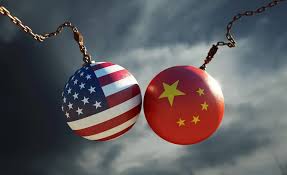
The year 2025 may be remembered as a turning point in the global trading order, but not for reasons of reform or renewal. Instead, it marks a phase where the world’s two dominant economic powers — the United States and China — have simultaneously retreated from the role of stabilising hegemons. Rather than supplying global public goods, both are exporting instability, leaving developing economies exposed in what can be described as a “G-Negative-Two” world.
From global leadership to mutual disruption
For decades, the global trading system functioned on the assumption that major powers would uphold openness, predictability and rule-based commerce. That assumption is now eroding. The United States has embraced aggressive protectionism, while China has doubled down on mercantilist practices. Instead of counterbalancing each other, these strategies reinforce global fragmentation.
This is why the current phase differs from a simple “G-Zero” order. The problem is not merely the absence of leadership, but the active imposition of negative spillovers by the very countries that once anchored the system.
Trump’s tariffs and the weaponisation of trade
Under Donald Trump, trade policy has been recast as a blunt political instrument. The so-called “Liberation Day” tariffs announced in April and repeatedly revised thereafter have transformed the US into one of the world’s most protectionist economies. Average tariffs on imports into the US have surged from just over 2 per cent to around 17 per cent — an extraordinary escalation in a short span.
Access to the US market has not only become costlier but deeply uncertain. Tariffs are now imposed or threatened for reasons extending far beyond economics, including political disagreements and diplomatic signalling. Judicial restraint, with courts reluctant to question executive claims of “national security”, has further entrenched this unpredictability.
Chinese mercantilism and export overreach
China’s response has not been to rebalance its growth model, but to intensify export-driven expansion. With reduced access to the US market and domestic demand still insufficient to absorb surplus capacity, Chinese firms have redirected exports aggressively toward developing regions, particularly South-East Asia, Africa and Latin America.
This behaviour reflects a long-standing import aversion. Despite rising wages, China continues to dominate global exports of low-value-added manufactures — sectors that historically provided the ladder for poorer countries to industrialise. Increasing evidence suggests this dominance is not purely market-driven but supported by policy, including an undervalued currency that boosts export competitiveness.
Why developing countries bear the brunt
The twin pressures of US protectionism and Chinese export saturation leave developing economies with shrinking policy space. Their traditional pathway to growth — exporting labour-intensive manufactures such as textiles, apparel and furniture — is being squeezed from both ends.
In response, some countries are turning inward. Mexico’s recent decision to impose tariffs on imports from China and India illustrates a broader trend. However, in an era of complex global value chains, selective protection is difficult. Once begun, protectionism tends to spread, raising costs and reducing opportunities across the board.
Stalling convergence and the reversal of globalisation
Recent research highlights a troubling pattern: the long process by which developing countries were converging toward advanced-economy living standards has stalled over the past decade. This slowdown coincides with the retreat from globalisation and the weakening of export-led growth engines.
When trade in low-value-added manufacturing falters, the immediate victims are the poorest workers in the poorest countries. Employment creation slows, wages stagnate and structural transformation is delayed — with long-term consequences for inequality and social stability.
A world economy without shock absorbers
In earlier eras, tensions between major powers were often cushioned by shared interests in preserving global stability. Today, both the US and China are prioritising domestic political or strategic goals, even at the cost of systemic damage. Their actions amplify uncertainty, distort markets and undermine confidence for everyone else.
Ironically, the two rivals share more similarities than either admits: both are reshaping the global economy in ways that narrow opportunities for others while externalising costs.
What to note for Prelims?
- Meaning of protectionism and mercantilism
- Recent trends in global tariffs and trade policy
- Role of exchange rates in export competitiveness
- Impact of global trade disruptions on developing countries
What to note for Mains?
- Critically examine the idea of a “G-Negative-Two” world order
- Impact of US–China trade policies on globalisation
- Challenges faced by developing countries in export-led growth
- Policy options for the Global South amid rising protectionism
The emerging global trade landscape is thus defined less by cooperation than by contestation. Unless major economies rethink the costs they impose on others, the promise of shared prosperity through trade may give way to a prolonged phase of fragmentation — one where those least responsible bear the heaviest burden.
Last Modified: December 29, 2025