
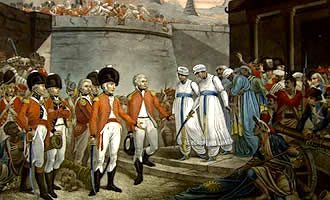

The Government of India Act 1858 was a very important piece of legislation passed by the British Parliament. It marked the end of the East India Company’s rule and established direct governance by the British Crown. This act was a response to the Indian Rebellion of 1857, denoting the need for a more effective administration in India.
Historical Context
The Revolt of 1857, also known as the First War of Indian Independence, revealed the flaws in the East India Company’s governance. The revolt stemmed from widespread discontent regarding oppressive policies. In light of these events, the British government sought to take direct control over India.
Key Provisions
The Government of India Act 1858 introduced several crucial provisions:
- Transfer of Power: Authority over Indian territories was transferred from the East India Company to the British Crown.
- Secretary of State for India: A new position was created to oversee Indian affairs, supported by a council of 15 members.
- Governor-General and Viceroy: The Governor-General was designated as Viceroy, representing the Crown in India.
- Abolishment of Dual Government: This act ended the dual governance established by the Pitt’s India Act of 1784.
- Indian Civil Services: The act instituted the Indian Civil Services, allowing some Indian participation in administration.
- Princely States: Indian princes retained their status if they accepted British suzerainty.
Queen Victoria’s Proclamation
Queen Victoria’s Proclamation of 1858 was . It officially transferred power from the East India Company to the British Crown. The proclamation promised to respect the rights of Indian princes and avoid interference in religious matters. It aimed to stabilise British rule after the rebellion.
Implementation Date
The Government of India Act 1858 received royal assent on August 2, 1858, and came into effect on November 1, 1858. This marked the beginning of a new era in Indian governance.
Significance of the Act
The Government of India Act 1858 had lasting implications:
- Establishment of the British Raj: It marked the beginning of the British Raj, a period of direct colonial rule in India.
- End of Company Rule: The act abolished the East India Company’s governance, centralising power in British hands.
- Foundation for Future Reforms: It set the stage for subsequent legislative reforms, including the Government of India Act of 1935.
Limitations of the Act
Despite its significance, the Government of India Act 1858 had notable limitations:
- Lack of Indian Representation: The act did not provide for meaningful Indian participation in governance.
- Centralisation of Power: It centralised authority, reducing the autonomy of Indian provinces.
- Continuation of Colonial Exploitation: The act did not address the economic exploitation that triggered the revolt.
- Failed Reforms: The act introduced some reforms but did not enhance Indian administrative opportunities.
First Secretary of State for India
The first Secretary of State for India was Lord Stanley. He played important role in implementing the provisions of the act. His position was instrumental in managing the British administration in India.
First Governor-General and Viceroy
Lord Canning was the first Governor-General and Viceroy of India under the new system. His leadership was vital during the transition from Company rule to Crown rule.
Administrative Changes
The act brought several administrative changes:
- Indian Civil Services (ICS): The ICS was established, allowing limited Indian participation through competitive exams.
- Legislative Councils: The act expanded legislative councils, enabling some local governance.
- Military Control: The Indian Army came under the direct control of the British Crown.
Impact on Princely States
The Government of India Act 1858 recognised the status of over 560 princely states. These states retained their independence as long as they accepted British suzerainty. This arrangement helped maintain stability in British-ruled territories.
Queen Victoria’s Role
Queen Victoria became Empress of India as a result of this act. Her title symbolised the British Crown’s authority over India. The proclamation aimed to reassure Indian subjects about their rights under British law.
Legacy of the Act
The Government of India Act 1858 laid the groundwork for the British Raj. It centralised control and established a framework for governance that would last until India’s independence in 1947. The act’s provisions influenced future legislative reforms.
Conclusion of Company Rule
The act marked the end of the East India Company’s rule, which had lasted for over a century. This transition was in reshaping India’s political landscape and governance structure.
Economic Policies
While the act reorganised governance, it did not address the economic grievances of the Indian populace. The British continued policies that favoured imperial interests, perpetuating economic exploitation.
Social Implications
The act did not improve social conditions for Indians. The lack of meaningful representation in governance meant that Indian voices were often ignored in decision-making processes.
Future Legislative Developments
The Government of India Act 1858 set the stage for subsequent reforms. The Government of India Act 1935 was a direct result of the changes initiated by this act, aiming to increase Indian representation in governance.
Summary of Changes
The Government of India Act 1858 introduced a new administrative framework. It abolished the East India Company, established the position of Secretary of State for India, and centralised power under the British Crown.
Administrative Challenges
Despite the changes, the British administration faced several challenges. Resistance from Indian leaders and the complexities of governing a diverse population complicated the implementation of policies.
Political Reactions
The act met with mixed reactions. Some British politicians supported direct rule, while others, like Prime Minister Benjamin Disraeli, expressed concerns about its implications for governance in India.
Educational Reforms
The act did not bring educational reforms. The British education system was imposed, often disregarding traditional Indian education and culture.
Role of Indian Leaders
Indian leaders began to emerge during this period, advocating for greater representation and rights. The limitations of the act spurred the growth of nationalist movements seeking independence.


