
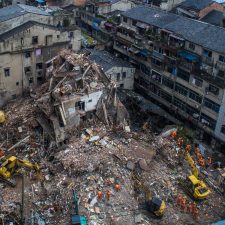
The Gujarat government initiated demolition campaign in Ahmedabad targeting alleged illegal settlements of Bangladeshi immigrants. This action followed a Supreme Court ruling on extra-judicial demolitions. The Gujarat High Court upheld the government’s actions, citing public safety and legality.
Context of the Demolition Drive
The demolition drive commenced after heightened security concerns arose from recent criminal activities linked to Bangladeshi immigrants. Following a terror attack in Pahalgam, the police intensified scrutiny of foreign nationals in the state. The government justified the demolitions as necessary for public order and national security.
Details of the Chandola Lake Demolitions
The drive specifically targeted the Chandola Lake area, where illegal structures had reportedly proliferated. The Ahmedabad Municipal Corporation claimed that over 4,000 structures, including homes and shops, were destroyed. Residents contested the legality of these demolitions, asserting long-term habitation.
High Court’s Rationale
The Gujarat High Court dismissed the residents’ urgent petition against the demolitions. It ruled that Chandola Lake is a designated water body, with no permissions granted for construction. The court stated that halting the demolitions would perpetuate illegal occupancy, contradicting legal principles.
Legal Framework and Supreme Court Guidelines
The Supreme Court’s 2024 ruling on demolitions established guidelines to ensure transparency and fair treatment for affected individuals. However, the court clarified that these guidelines do not apply to unauthorized constructions on public land. The Gujarat High Court referenced this ruling to justify the demolitions, noting that illegal structures cannot gain legitimacy over time.
Residents’ Claims and Court Findings
The petitioners argued they had not received demolition notices and deserved alternative housing. The court found no evidence of long-term occupancy or entitlement to resettlement. It encouraged residents to submit individual applications to seek recognition of their claims.
Implications of the Demolition Drive
The demolition drive raises critical questions about the balance between national security and residents’ rights. The actions taken by the Gujarat government reflect a growing trend of state-led demolitions under the guise of legality. This situation marks ongoing tensions surrounding immigration and urban development policies in India.
Future Considerations
The developments in Gujarat may set precedents for similar actions across the country. The legal and social implications of such demolitions warrant closer scrutiny. The intersection of law, security, and human rights remains a contentious issue in contemporary India.
Questions for UPSC:
- Critically analyse the implications of extra-judicial demolitions on urban governance in India.
- What are the legal frameworks governing property rights in India? How do they intersect with state actions?
- Estimate the impact of immigration policies on urban development in major Indian cities.
- Point out the challenges faced by the judiciary in balancing national security and individual rights in India.
Answer Hints:
1. Critically analyse the implications of extra-judicial demolitions on urban governance in India.
- Extra-judicial demolitions undermine legal processes and due process rights.
- They often lead to arbitrary state actions, eroding public trust in governance.
- Such demolitions can exacerbate social inequalities, displacing marginalized communities.
- They may set a precedent for future actions, normalizing state violence against civilians.
- Urban governance must balance development with human rights and legal frameworks.
2. What are the legal frameworks governing property rights in India? How do they intersect with state actions?
- Property rights in India are governed by laws such as the Transfer of Property Act and the Indian Easements Act.
- The Constitution of India provides for the right to property as a fundamental right (Article 300A).
- State actions, including demolitions, must comply with legal due process and cannot violate property rights without compensation.
- Land use regulations and zoning laws also dictate how property can be developed or used.
- Judicial precedents shape the interpretation and enforcement of property rights in the context of state actions.
3. Estimate the impact of immigration policies on urban development in major Indian cities.
- Immigration policies directly influence housing demand and urban infrastructure needs.
- They can lead to the proliferation of informal settlements as immigrants seek affordable housing.
- Stringent policies may result in increased surveillance and policing in urban areas.
- Urban development plans must adapt to the demographic changes brought by immigration.
- Conflicts over land use and resources can arise between local residents and immigrant populations.
4. Point out the challenges faced by the judiciary in balancing national security and individual rights in India.
- The judiciary must navigate complex legal frameworks while responding to security concerns.
- There is often pressure from the government to prioritize national security over individual rights.
- Judicial independence can be compromised by public sentiment and political influences.
- Balancing the need for security with the protection of civil liberties is an ongoing challenge.
- Judicial decisions can set precedents that either strengthen or weaken individual rights in the face of state actions.