
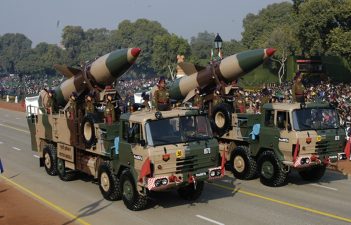
India is establishing an Integrated Rocket Force (IRF) as a tri-service command to manage conventional missile systems. The IRF will unify assets like BrahMos, Pralay, and Nirbhay missiles, currently split across the Army, Navy, and Air Force. This development follows similar commands in China and Pakistan. The IRF aims to reduce current inter-service strike authorisation time from 24–48 hours to a few hours. Proposed by Army Chief Gen Upendra Dwivedi, the force is considered “the need of the hour” to combat changing regional security dynamics.
Current Developments and Capabilities
The Indian Army has raised two rocket force units, extending artillery range from 150 km to 1,000 km. The Pralay missile, with a 500 km range, completed user evaluation trials in July 2025. A new 1,500 km range ballistic missile, BM-04, is under development for IRF use. Pakistan established its Army Rocket Force Command in August 2025 and tested the Fatah-4 cruise missile (750 km range), with plans to test Fatah-5 (1,000 km range) in 2026.
Structural and Command Differences
The IRF will control conventional missile systems only. Nuclear missile control remains with the Strategic Forces Command (SFC). This separation maintains a clear distinction between conventional warfare and nuclear deterrence. The IRF will centralise command over missiles like BrahMos, Pralay, Nirbhay, and Pinaka for rapid, precision strikes.
Operational Rationale
The IRF aims to improve strike speed and coordination among services. Operation Sindoor (May 2025) revealed coordination challenges during deep precision strikes. The IRF will enable rapid response against enemy airbases, logistics hubs, and radar stations without nuclear escalation. It addresses regional missile asymmetry, especially against China’s 5:1 missile advantage.
Institutional Resistance
The Indian Air Force (IAF) opposes IRF due to loss of control over deep-strike missions. The Navy and IAF argue their platform-based missiles are integral to their operational doctrines. Concerns include duplication of command structures and preference for investing in manned fighter jets over a new rocket force.
What to Study for UPSC Exams?
- Tri-Service Commands in India
- Conventional Missile Systems
- India-China-Pakistan Military Dynamics
- Strategic Forces Command Structure
Tri-Service Commands in India
Tri-service commands integrate the Army, Navy, and Air Force under unified leadership for joint operations. India currently has three such commands: Andaman and Nicobar, Strategic Forces Command, and the upcoming Integrated Rocket Force. These commands aim to enhance operational synergy and reduce inter-service coordination delays. The Andaman and Nicobar Command was the first tri-service command established in 2001.
Conventional Missile Systems
Conventional missile systems use non-nuclear warheads for battlefield and strategic targets. Examples include BrahMos (supersonic cruise missile), Pralay (ballistic missile with 500 km range), and Nirbhay (subsonic cruise missile). These systems prioritize precision strikes and rapid deployment. Unlike nuclear missiles, they are controlled separately to avoid escalation risks.
India-China-Pakistan Military Dynamics
India, China, and Pakistan maintain complex military postures marked by border disputes and missile development races. China holds a 5:1 missile advantage over India. Pakistan’s Army Rocket Force was established in 2025, focusing on cruise missiles like Fatah-4. India counters with expanding missile ranges and tri-service integration for rapid response.
Strategic Forces Command Structure
The Strategic Forces Command (SFC) of India manages the country’s nuclear arsenal and delivery systems. Established in 2003, it operates under the Nuclear Command Authority. SFC controls ballistic missile submarines, land-based missiles, and air-launched nuclear weapons, maintaining strict separation from conventional forces to prevent accidental escalation.
Last Modified: April 11, 2026