
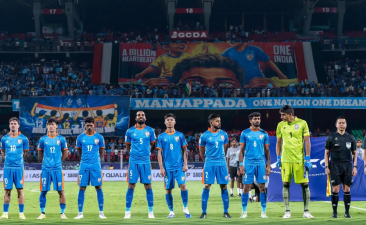
The All India Football Federation accepted an official FIFA invitation in May 2026 to compete in the inaugural FIFA ASEAN Cup, scheduled from September 21 to October 6, 2026. This brand-new international tournament aims to bring together South-East Asian nations alongside select regional invitees. The tournament structure received formal approval from the FIFA Council in March 2026 following an initial announcement by FIFA President Gianni Infantino at the ASEAN Summit in October 2025. For the Indian men’s national team, the competition provides critical competitive exposure following their failure to qualify for the Asian Football Confederation Asian Cup 2027.
Tournament Origin and Structural Blueprint
The tournament reflects FIFA’s blueprint to stimulate football development across emerging economic markets. It operates differently from existing sub-continental championships by integrating directly into the official FIFA international match calendar.
Conceptual Origin and Mandate
- The Arab Cup Model: The competition mirrors the structural format of the FIFA Arab Cup, which serves as a specialized regional tournament sanctioned directly by the global governing body to optimize commercial and athletic standards.
- FIFA Window Alignment: Unlike the traditional ASEAN Championship organized by the regional ASEAN Football Federation, this tournament takes place entirely within the designated three-week FIFA international window. This ensures professional clubs worldwide face a mandatory obligation to release selected national team players.
Two-Division Competitive Framework
The competition splits 14 participating member associations into two performance divisions based on their official FIFA world rankings. It features a decentralized hosting model to spread geographical visibility across South-East and East Asia.
| Dimension | Division 1 Details | Division 2 Details |
| Number of Teams | 8 Teams (Two groups of four) | 6 Teams (Two groups of three) |
| Primary Host Location | Indonesia (Group A; Group B venue TBD) | Hong Kong (All matches) |
| Projected Teams | Thailand, China, Vietnam, Indonesia, Philippines, India, Malaysia, Singapore | Hong Kong, Myanmar, Cambodia, Laos, Brunei, Timor-Leste |
| Knockout Stage Format | Direct placement finals (Group winners contest the title) | Direct placement finals (Group winners contest the title) |
| Champion Financial Reward | 1,000,000 USD | 300,000 USD |
Financial Architecture and Commercial Motives
FIFA has committed a substantial financial pool to guarantee structural viability for the participating member associations.
- Guaranteed Participation Fee: Every participating country receives a flat 125,000 USD baseline fee to offset administrative, travel, and training camp expenditures.
- Performance Incentives: The financial pool includes additional performance-based bonuses allocated for individual group-stage match wins or draws.
- Commercial Strategy: The structural design allows FIFA to commercialize high-potential broadcasting and consumer markets across India, China, and the ASEAN zone, which collectively represent over two billion people.
Strategic Implications for Indian Football
India’s inclusion as an elite invitee matches its long-term sporting objectives to transition away from localized South Asian Football Federation competition.
Overcoming the Continental Gap
The national team suffered elimination from the AFC Asian Cup 2027 qualification cycles, creating a multi-year void in official competitive tournament matchplay. Participation in this tournament secures a minimum of two to four high-intensity international matches against structurally sound East and South-East Asian opponents during the crucial September-October block.
FIFA Ranking Optimization
Because the matches take place within the coordinated FIFA international window, the fixtures carry maximum tier-status weight. Positive match results will yield direct improvements to India’s position within the FIFA World Rankings, aiding future seedings for FIFA World Cup qualification draws.
IASPOINT Booster Facts for UPSC
- All India Football Federation (AIFF): Founded in 1937 and headquartered in New Delhi, the AIFF is the national governing body for football in India. It secured affiliation with FIFA in 1948 and was a founding member of the Asian Football Confederation (AFC) in 1954.
- FIFA Council: The primary decision-making body of FIFA during the intervals of the larger FIFA Congress. It consists of 37 individuals: a President, 8 Vice Presidents, and 28 members elected by the member confederations.
- South Asian Football Federation (SAFF): A subset of the AFC consisting of India, Bangladesh, Bhutan, Maldives, Nepal, Pakistan, and Sri Lanka. India historically dominates this sub-confederation, necessitating outside invitations for tougher sporting exposure.
- The “Release Obligation” Rule: Governed by FIFA’s Regulations on the Status and Transfer of Players. Clubs are legally required to release registered players to national representative teams if the tournament or match falls within specified windows on the coordinated international calendar.