
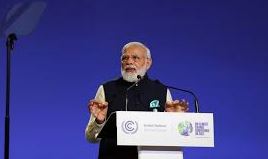
Prime Minister Narendra Modi offered in December 2023 at COP28 in Dubai to host the 2028 COP climate summit in India. This was a rare, early offer by a head of state to host the event five years in advance. However, India has decided not to pursue hosting COP33 due to evolving national climate positions and global negotiation challenges.
India’s Changing Climate Stance
India’s climate policy shifted towards prioritising national development over strict adherence to the Paris Agreement’s temperature goals. It questioned the 1.5°C and 2°C targets and emphasised adaptation alongside mitigation. India argued that rapid economic growth would enhance resilience to climate impacts. The country demanded full implementation of Article 9.1 of the Paris Agreement, requiring developed nations to “shall provide” climate finance, not just mobilise it.
Challenges in Hosting COP33
COP33 in 2028 will conduct the second Global Stocktake (GST) to assess progress on Paris targets, necessitating increased climate ambition. As host and president, India would be expected to promote enhanced emission cuts and global consensus. India’s recalibrated positions conflicted with this role, creating difficulties in balancing national interests with global expectations.
Impact of Global Climate Negotiations
India’s opposition to an early release of the IPCC AR7 report, expected to present a severe climate outlook, reflects concerns over increased pressure on developing countries. The widening divide between developed and developing nations has reduced trust and complicated consensus-building. The absence of the US from the Paris Agreement further weakened global climate action prospects.
Geopolitical and Energy Security Factors
India’s decision was influenced by geopolitical uncertainties and energy security concerns. Hosting COP33 would constrain India’s policy space amid these challenges. The country preferred to avoid potential conflicts arising from its leadership role in a GST year, which demands strong climate commitments.
What to Study for UPSC Exams?
- Paris Agreement and Article 9.1
- Global Stocktake Mechanism
- IPCC Assessment Reports
- Climate Finance Negotiations
Paris Agreement and Article 9.1
The Paris Agreement (2015) is a global pact to limit warming below 2°C, ideally 1.5°C. Article 9.1 mandates developed countries to provide financial resources to assist developing nations in climate mitigation and adaptation. This obligation is binding, emphasizing “shall provide” rather than voluntary support. The financial flows include grants, loans, and investments, aiming to mobilize $100 billion annually by 2020, a target yet to be fully met.
Global Stocktake Mechanism
The Global Stocktake (GST) is a five-yearly assessment under the Paris Agreement to evaluate collective progress toward climate goals. It informs parties to enhance ambition in mitigation, adaptation, and finance. The first GST occurs in 2023, with the second scheduled for 2028. It integrates scientific data, national reports, and stakeholder inputs to guide future commitments and policy adjustments globally.
IPCC Assessment Reports
IPCC Assessment Reports synthesize global climate science every 5-7 years, informing policy decisions. The Sixth Assessment Report (AR6) highlighted unprecedented human influence on climate and urgent emission cuts. The upcoming Seventh Assessment Report (AR7) is expected to present updated, potentially more severe climate projections. These reports are compiled by hundreds of scientists worldwide through rigorous peer review and consensus processes.
Climate Finance Negotiations
Climate finance negotiations focus on mobilizing funds from developed to developing countries for climate action. Key issues include the scale, sources, transparency, and delivery of funds. Disputes often arise over whether finance is new and additional or repurposed aid. The Green Climate Fund is a primary mechanism, but funding gaps and trust deficits persist between donor and recipient countries.
Last Modified: April 12, 2026