
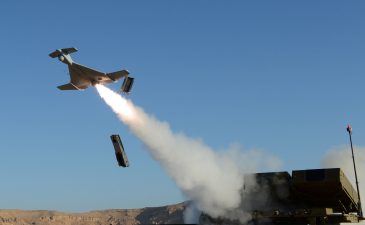
Recent military operations involving India have brought into light the increasing use of advanced unmanned combat aerial vehicles (UCAVs), particularly the HAROP drones. Following India’s targeted strikes on terror bases in Pakistan and Pakistan-occupied Kashmir, the Indian armed forces successfully intercepted attacks on military installations. This marks development in aerial warfare, showcasing the capabilities of modern loitering munitions.
What Are Loitering Munitions?
Loitering munitions are a class of weapons designed to remain airborne near a target before striking. They are also referred to as “suicide drones” or “kamikaze drones.” These systems carry an explosive payload and can autonomously identify and engage targets. Unlike traditional precision-guided munitions, which require exact target coordinates before launch, loitering munitions can operate with more flexibility.
Features of HAROP Drones
The HAROP drone, developed by Israeli Aerospace Industries, combines UAV and missile characteristics. It can remain airborne for up to nine hours, allowing it to locate and identify targets. The HAROP can navigate around communication challenges, such as jamming, enhancing its operational reliability. It can be launched from various platforms, including trucks and naval vessels.
Evolution from HARPY to HAROP
The HAROP is a modern evolution of the earlier HARPY system. Initially introduced in the 1980s, HARPY was known for its ability to strike targets without prior intelligence. The HAROP features an advanced electro-optical sensor, improving target acquisition capabilities. This allows the drone to perform wide-area scans and engage targets more effectively.
Combat Effectiveness
The HAROP has demonstrated high mission success rates in combat scenarios. Reports indicate a success rate of 98% in operational missions. This effectiveness is attributed to its advanced targeting systems and operational versatility. The capability to conduct precision strikes autonomously makes it a formidable asset in modern warfare.
Strategic Implications
The deployment of HAROP drones signifies a shift in military strategy. The ability to conduct strikes with high precision and minimal risk to personnel enhances operational effectiveness. This technology may alter the dynamics of conflict in the region, potentially influencing military strategies and international relations.
Future of Aerial Warfare
As countries invest in advanced drone technologies, the landscape of aerial warfare is evolving. Loitering munitions like HAROP represent advancement, providing nations with new tactical advantages. The integration of such systems into military arsenals could redefine engagement protocols and strategies in future conflicts.
Questions for UPSC:
- Examine the impact of unmanned aerial vehicles on modern warfare.
- Discuss the strategic advantages of loitering munitions in military operations.
- Critically discuss the evolution of drone technology from the HARPY to the HAROP.
- What are the implications of advanced military technology on international relations? Analyse with examples.
Answer Hints:
1. Examine the impact of unmanned aerial vehicles on modern warfare.
- UAVs enhance reconnaissance capabilities, providing real-time intelligence without risking personnel.
- They enable precision strikes, reducing collateral damage and improving mission effectiveness.
- UAVs can operate in contested environments, overcoming traditional air defense systems.
- They facilitate asymmetric warfare, allowing smaller forces to engage larger adversaries effectively.
- Integration of UAVs alters military strategies, emphasizing technology over sheer numbers in combat scenarios.
2. Discuss the strategic advantages of loitering munitions in military operations.
- Loitering munitions provide flexibility, allowing forces to wait for optimal engagement opportunities.
- They can autonomously identify and strike high-value targets, enhancing operational efficiency.
- These systems reduce the need for continuous surveillance, as they can remain airborne for extended periods.
- Loitering munitions can adapt to dynamic battlefield conditions, increasing their effectiveness in combat.
- They minimize risks to personnel by allowing remote engagement of threats.
3. Critically discuss the evolution of drone technology from the HARPY to the HAROP.
- The HARPY introduced the concept of loitering munitions, enabling strikes without prior target intel.
- HAROP evolved with advanced sensors, improving target acquisition and engagement capabilities.
- While HARPY relied on RF seekers, HAROP uses electro-optical sensors for enhanced precision.
- The operational range and endurance of HAROP surpass those of its predecessor, allowing for more complex missions.
- Both systems reflect the shift towards autonomous warfare, emphasizing technology in military operations.
4. What are the implications of advanced military technology on international relations? Analyse with examples.
- Advanced military technology can lead to an arms race, as nations strive to maintain strategic superiority.
- Countries with cutting-edge capabilities may exert influence over weaker nations, altering power dynamics.
- Technologies like UAVs can enable precision strikes, leading to more targeted military interventions and less collateral damage.
- Examples include the U.S. use of drones in counterterrorism, impacting regional stability and international norms.
- Advanced military tech can also drive alliances, as nations collaborate on defense technologies to counter common threats.