
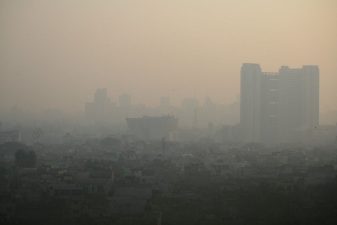
India faces a severe air quality crisis. A recent four-year study reveals alarming levels of particulate pollution in major urban areas. Conducted by Respirer Living Sciences, the analysis marks that all 11 monitored metropolitan cities have consistently exceeded the National Ambient Air Quality Standards for PM10 from 2021 to 2024. Despite various policy measures, pollution levels remain dangerously high.
Study Findings
The study found that northern cities like Delhi, Patna, Lucknow, and Chandigarh recorded the worst air quality. For instance, Delhi’s Anand Vihar station reported PM10 levels of 313.8 micrograms per cubic metre in 2024. Patna’s Samanpura area reached 237.7 micrograms per cubic metre. Both figures far surpass the national safety standard of 60 micrograms per cubic metre. Even cities known for better air quality, such as Bengaluru and Chennai, failed to meet safety norms consistently.
Contributing Factors
Multiple factors contribute to the air quality crisis. Vehicle emissions are source of pollution. Industrial operations and construction activities further exacerbate the situation. Additionally, waste burning and seasonal agricultural burning add to the particulate matter in the air. The study emphasises the need for a comprehensive approach to tackle these issues.
Need for Policy Reforms
Experts stress the importance of enforcing existing regulations more stringently. They advocate for an expanded air quality monitoring network. Tailored solutions for cities based on their unique pollution profiles are also crucial. The report calls for a shift in how urban development plans consider air quality.
Rethinking Urban Development
Ronak Sutaria, CEO of Respirer Living Sciences, marks the need for integrating air quality into urban planning. Clean air should not be treated as a standalone issue. It must be included in transportation, housing, energy, and waste management systems. This integrated approach is vital for sustainable urban development.
Public Health Implications
The persistent air quality crisis poses health risks. Residents in polluted cities face prolonged exposure to unhealthy air. This can lead to respiratory diseases and other health complications. The findings underline the urgent need for effective strategies to improve air quality.
Global Context
India’s air quality crisis is not unique. Many cities worldwide struggle with similar issues. However, the scale and persistence of pollution in Indian cities require immediate attention. Learning from global best practices can help in formulating effective solutions.
Future Directions
Addressing India’s air quality crisis requires a multi-faceted approach. This includes stronger regulations, public awareness campaigns, and technological innovations. Collaborative efforts among government, industry, and citizens are essential for lasting change.
Questions for UPSC:
- Examine the impact of urbanisation on air quality in major cities.
- Discuss the role of industrial emissions in contributing to air pollution.
- Critically discuss the effectiveness of current air quality regulations in India.
- What are the health implications of prolonged exposure to air pollution? Discuss with examples.
Answer Hints:
1. Examine the impact of urbanisation on air quality in major cities.
- Urbanisation increases vehicle density, leading to higher emissions and pollution levels.
- Construction activities associated with urban growth contribute to particulate matter.
- Inadequate infrastructure struggles to manage waste effectively, exacerbating air quality issues.
- Higher population density leads to increased energy consumption, further impacting air quality.
- Urban heat islands created by concrete and asphalt can worsen air pollution conditions.
2. Discuss the role of industrial emissions in contributing to air pollution.
- Industries release large quantities of pollutants, including particulate matter and gases, into the atmosphere.
- Manufacturing processes often lack adequate emission controls, leading to chronic air quality issues.
- Industrial zones are frequently located near urban areas, increasing exposure for residents.
- Regulatory non-compliance and insufficient enforcement allow industries to exceed emission limits.
- Shifts to cleaner technologies and practices are essential for reducing industrial pollution.
3. Critically discuss the effectiveness of current air quality regulations in India.
- Existing regulations often lack stringent enforcement, leading to persistent violations by polluters.
- Monitoring networks are insufficiently expanded, resulting in gaps in data and oversight.
- Policies are sometimes reactive rather than proactive, failing to address root causes of pollution.
- There is a need for tailored regulations that consider specific pollution profiles of different cities.
- Public awareness and stakeholder engagement are crucial for the success of regulatory measures.
4. What are the health implications of prolonged exposure to air pollution? Discuss with examples.
- Prolonged exposure can lead to respiratory diseases such as asthma and chronic bronchitis.
- Cardiovascular diseases are linked to high levels of particulate matter, increasing mortality rates.
- Children and the elderly are particularly vulnerable, facing heightened health risks.
- Long-term exposure can result in reduced lung function and developmental issues in children.
- Studies show correlations between air pollution and mental health disorders, denoting broader impacts.