
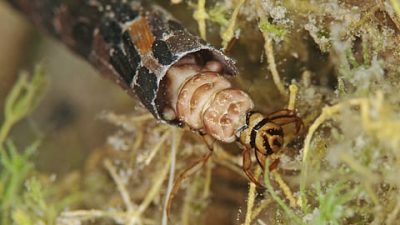
Recent research has revealed the alarming presence of microplastics in the larval casings of caddisflies. This discovery marks the long-standing issue of environmental contamination. Caddisflies are common insects found in freshwater ecosystems. They construct protective cases from natural materials. However, they have begun to incorporate microplastics into these structures. This finding, published in the journal “Science of The Total Environment”, indicates that microplastic pollution has been affecting freshwater species for over fifty years.
Caddisflies and Their Habitat
Caddisflies belong to the order Trichoptera. They are essential components of freshwater ecosystems, inhabiting lakes, rivers, and streams. During their larval stage, these insects create portable cases using natural materials. These materials include sand grains, small stones, and organic debris. The cases provide protection and camouflage from predators.
The Study and Its Findings
Researchers from the Naturalis Biodiversity Center in the Netherlands conducted a study on 549 preserved caddisfly casings. They analysed samples dating from 1971 to 2018. Notably, one sample from 1971 contained yellow fragments that were confirmed to be plastic. Another sample from 1986 included blue microplastic particles. This study is the first to identify microplastics in freshwater invertebrates using historical collections.
Implications of Microplastic Contamination
The incorporation of microplastics into caddisfly casings poses risks. Brightly coloured particles may increase visibility to predators like fish. This could heighten the risk of predation for the larvae. Additionally, the structural integrity of the casings may be compromised. Unlike natural materials, plastics are less durable in fast-flowing water. This could lead to increased vulnerability for the larvae.
Historical Context of Microplastic Pollution
Previous studies have documented microplastics in various aquatic species. However, this research predates those findings. It marks that microplastics have been a concern in remote, non-urban freshwater environments. The study puts stress on the importance of historical collections in understanding the timeline of plastic pollution.
Call for Further Research
The researchers emphasised the need for more studies to assess the full extent of microplastic contamination. They called for investigations into the cumulative effects on freshwater invertebrates. About these interactions is crucial for the conservation of aquatic ecosystems.
Significance of Natural History Collections
This research illustrates the value of preserving long-term time series in natural history collections. These collections provide vital information about environmental changes over time. They are vital for studying the impact of human activities on biodiversity. The ongoing rise in plastic production necessitates urgent action to mitigate its effects on freshwater ecosystems.
Questions for UPSC:
- Examine the impact of microplastics on freshwater ecosystems and their inhabitants.
- Discuss in the light of environmental policies, the measures needed to combat plastic pollution.
- Critically discuss the role of natural history collections in understanding ecological changes over time.
- Analyse the effects of plastic pollution on the food chain within aquatic environments.
Answer Hints:
1. Examine the impact of microplastics on freshwater ecosystems and their inhabitants.
- Microplastics have been found in the larval casings of caddisflies, indicating widespread contamination.
- These particles can compromise the structural integrity of protective casings, making larvae more vulnerable to predation.
- Brightly colored microplastics increase visibility to natural predators, potentially disrupting the food chain.
- Incorporation of plastics may expose organisms to harmful chemicals and toxic metals associated with plastics.
- Long-term exposure to microplastics can affect biodiversity and ecosystem health in freshwater habitats.
2. Discuss in the light of environmental policies, the measures needed to combat plastic pollution.
- Strengthening regulations on plastic production and waste management is essential to reduce environmental contamination.
- Promoting biodegradable alternatives to plastics can mitigate the impact on ecosystems.
- Implementing public awareness campaigns can educate communities about the effects of plastic pollution.
- Encouraging recycling and responsible disposal can help decrease plastic waste entering aquatic environments.
- International cooperation is crucial to address plastic pollution on a global scale, given its transboundary nature.
3. Critically discuss the role of natural history collections in understanding ecological changes over time.
- Natural history collections preserve long-term data essential for tracking environmental changes and species evolution.
- They provide historical context for current ecological issues, such as microplastic pollution in freshwater systems.
- Collections aid in understanding the impact of human activities on biodiversity over decades or centuries.
- Research utilizing these collections can inform conservation strategies and policy-making.
- They serve as a baseline for assessing changes in species distribution and ecosystem health due to environmental stressors.
4. Analyse the effects of plastic pollution on the food chain within aquatic environments.
- Microplastics can be ingested by aquatic organisms, leading to bioaccumulation through the food chain.
- Predators that consume contaminated prey may experience health issues, impacting their populations and reproductive success.
- Plastic particles can alter the behavior and physiology of affected species, disrupting predator-prey dynamics.
- Contaminants associated with plastics can transfer to higher trophic levels, posing risks to larger fish and mammals.
- Overall, plastic pollution can destabilize aquatic ecosystems, leading to reduced biodiversity and altered food web structures.