
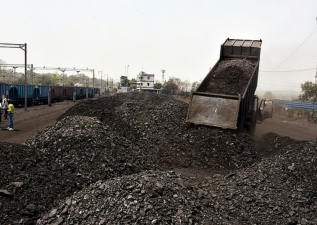
As India steps into 2026, the journey of its coal sector reads less like the tale of a sunset industry and more like that of a sector in strategic reinvention. Over more than two centuries, coal has mirrored India’s economic evolution — from colonial extraction to state control, from stagnation to reform, and now towards a technologically upgraded, cleaner, and more efficient future. Few sectors illustrate India’s capacity for course correction as vividly.
Coal and the making of industrial India
Coal mining in India began in 1774 at the Raniganj coalfield, when Sumner and Heatley extracted coal despite colonial scepticism about its quality. The sector gained momentum after the Howrah–Raniganj railway line opened in 1853, integrating mines with markets and laying the foundation for industrial expansion.
By the early 20th century, coal had become central to steam power, railways, and factories. However, concerns over safety, environmental degradation, and unscientific mining grew. State participation emerged with Singareni Collieries in 1920 and later the National Coal Development Corporation in 1956, giving coal its first structured public-sector framework.
Post-Independence hopes and policy missteps
India’s early leadership recognised coal as a strategic asset. During debates on the Coal Bearing Areas Bill in 1957, it was acknowledged that while India had reserves for centuries, production lagged behind global peers.
Nationalisation in the 1970s aimed to stabilise the sector but instead led to inefficiencies and stagnation. Compounding this was the Freight Equalisation Policy (1952–1995), which diluted the competitive advantage of mineral-rich States such as Jharkhand, Odisha, Chhattisgarh, and West Bengal by neutralising freight costs. This discouraged private investment and slowed regional development for decades.
Mounting stress and the need for a reset
By the early 2000s, India’s economic ambitions once again outpaced coal production. Structural bottlenecks, opaque allocation systems, and governance failures deepened. The crisis peaked when the Supreme Court of India cancelled over 200 coal block allocations, exposing systemic opacity and eroding investor confidence.
The sector needed not incremental change, but a foundational reset.
The post-2014 transformation
That reset began in 2014. Under Narendra Modi, the coal sector underwent its most far-reaching reform since Independence. The discretionary allocation regime was dismantled, transparent auctions became the norm, and commercial coal mining was opened up — shifting the sector from administrative control to market-driven efficiency.
Scientific mine planning, upgraded logistics, digital monitoring, and tighter governance restored trust. Investor confidence returned, States began earning sustained revenues, and import dependence stabilised despite record electricity demand.
Coal as a strategic energy anchor
Even as India pursues decarbonisation, coal remains central to energy security. It supplies around 70–79% of electricity and 55–60% of primary energy, ensuring baseload stability and affordable power for industry and households.
In 2024–25, India crossed the historic milestone of one billion tonnes of coal production and is targeting 1.5 billion tonnes by 2030. This scale underpins manufacturing competitiveness, employment, and resilience in an energy system still transitioning.
From fuel to force multiplier
Coal today is deeply embedded in India’s industrial strategy. It supports the National Steel Policy’s goal of 300 million tonnes of crude steel by 2030, powering sectors from infrastructure and defence to electric mobility.
Cement, aluminium, fertilisers, non-ferrous metals, and petrochemicals all rely on coal as a foundational input. Each wagon of coal fuels highways, rail lines, ports, factories, and housing — anchoring Make in India and MSME competitiveness.
Cleaner coal and technological reinvention
The most striking change is coal’s technological makeover. Public sector undertakings are integrating renewable energy, investing nearly ₹25,000 crore in 9 GW of green capacity, biomass co-firing, and early-stage carbon capture pilots.
Coal gasification, washed coal, digital mine monitoring, and the first-ever auctions of underground coal gasification blocks signal a move towards lower emissions and higher efficiency. Under PM Gati Shakti, over 650 million tonnes of coal are being evacuated through upgraded logistics corridors, reducing congestion and freight costs.
Markets, transparency, and the next phase
More than 257 million tonnes per annum of commercial mining capacity has already been auctioned, alongside over 60 major logistics projects. A proposed Coal Exchange aims to enable real-time price discovery and broader access, further modernising the sector.
These reforms have created a coal ecosystem that is larger, smarter, cleaner, and globally benchmarked — a far cry from its opaque past.
Coal’s place in Viksit Bharat 2047
Looking ahead, coal is set to coexist with renewables, green hydrogen, and emerging clean technologies. Rather than being phased out abruptly, it is being reshaped to support India’s development trajectory while lowering environmental impact.
For India, coal is no longer just a fuel of the past. It is a strategic bridge — sustaining growth, enabling industrial ambition, and buying time for a stable, just energy transition.
What to note for Prelims?
- Key milestones in India’s coal history
- Coal nationalisation and Supreme Court coal block verdict
- Commercial coal mining and auction mechanism
- Coal’s share in India’s energy mix
What to note for Mains?
- Coal sector reforms since 2014 and their impact
- Balancing energy security with climate commitments
- Role of coal in industrial and infrastructure growth
- Cleaner coal technologies and India’s energy transition