
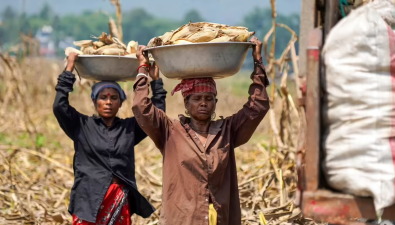
India’s ambitious National Policy on Biofuels achieved a major milestone as maize emerged as the single largest feedstock for domestic ethanol production by May 2026. Data from the All India Distillers’ Association (AIDA) for the first half of the Ethanol Supply Year (ESY) 2025-26 reveals that India supplied over 515 crore litres of ethanol to Oil Marketing Companies (OMCs), fulfilling nearly 49% of the total contracted volume of 1,059 crore litres. Grain-based distilleries drove this volume by contributing 333 crore litres, with maize-based ethanol leading the national pool at 182 crore litres. This transition marks a critical structural pivot from sugarcane to water-efficient cereal crops to sustain the country’s clean energy mandates.
Transition and Drivers of the Maize-Centric Shift
The diversification of the country’s biofuel matrix was accelerated by climate vulnerabilities and strategic pricing adjustments by administrative authorities.
Deficit in Sugarcane Yields
During the 2023-24 cropping cycles, erratic monsoon rainfall and prolonged dry spells caused a drop in sugarcane yields across major producing states like Maharashtra and Karnataka. To stabilize domestic retail sugar prices and preserve food security, the Central Government placed strict limits on diverting sugarcane juice and B-heavy molasses for fuel production.
Financial Incentives by OMCs
To counter the sugarcane deficit and keep distilleries operational, state-owned OMCs raised the procurement price of maize-based ethanol. By fixing the purchase rate at a premium of ₹71.86 per litre, the government made maize the most financially lucrative option for grain-based distillation units.
Agricultural Adaptation in Uttar Pradesh
As a leading agrarian state, Uttar Pradesh modified its crop diversification strategies to feed expanding grain distilleries. The state government set an official target to expand maize cultivation to 11.3 lakh hectares during the 2026-27 agricultural cycle, establishing a localized supply chain for biofuel manufacturing.
Feedstock Evaluation and Comparative Dynamics
Using maize offers clear ecological and logistical benefits over traditional sugar-producing cash crops.
Lower Hydrological Footprint
Sugarcane is a water-intensive crop that requires roughly 1,500 to 2,500 millimeters of water per crop cycle, causing severe depletion of local tables. In contrast, maize needs less than half of that water volume, making it an environmentally viable option for semi-arid and water-stressed cultivation blocks.
Year-Round Feedstock Supply
Sugarcane crushing is highly seasonal and confined to a winter window of 120 to 150 days, forcing sugar-to-ethanol plants to remain idle for long stretches. Maize has a short cultivation lifecycle of 90 to 110 days and can be harvested across Kharif, Rabi, and Zaid seasons, ensuring a continuous supply of raw material to distillation units.
Feedstock Contributions in ESY 2025-26
The structural breakdown of ethanol volumes delivered during the first half of the 2025-26 supply year highlights the dominance of grain-based inputs.
| Feedstock Category | Component Type | Volume Supplied (Crore Litres) |
| Grain-Based | Maize | 182 |
| Surplus Food Grains (FCI Rice) | 125 | |
| Damaged Food Grains | 26 | |
| Sugarcane-Based | Sugarcane Juice / Syrup | 130 |
| B-Heavy & C-Heavy Molasses | 52 | |
| Total Pool | All Combined Sources | 515 |
Macroeconomic and Next-Generation Dimensions
The integration of grain-based feedstocks into the commercial fuel ecosystem strengthens both macro-level fiscal health and new clean-tech applications.
Crude Import Substitution
By replacing a portion of conventional petrol with locally manufactured ethanol, India reduces its heavy reliance on imported crude oil, which fulfills over 85% of domestic fuel needs. This substitution helps conserve foreign exchange reserves and shields the economy from volatile global energy supply lines.
Flex-Fuel Vehicles and Advanced Mobility
Sustaining the mandatory 20% ethanol blending (E20) across all states opens the market for Flex-Fuel Vehicles (FFVs). These specialized internal combustion engines can run on any combination of petrol and ethanol up to 85%, paving the way for complete fuel substitution in transport systems.
Sustainable Aviation Fuel Infrastructure
The scaling up of grain-distilling capacity builds the raw-material base needed for Sustainable Aviation Fuel (SAF). Alcohol-to-Jet (ATJ) processing technologies convert commercial-grade ethanol into bio-jet fuel, helping the domestic aviation sector meet international carbon offset mandates.
IASPOINT Booster Facts for UPSC
- National Policy on Biofuels, 2018: Administered by the Ministry of Petroleum and Natural Gas (MoPNG). The policy divides biofuels into Basic Biofuels (1st Generation or 1G bio-ethanol and biodiesel) and Advanced Biofuels (2G ethanol, municipal solid waste to drop-in fuels, and 3G biofuels like algal fuels).
- Generation Classification: Ethanol derived directly from sugarcane juice, molasses, maize, and broken rice falls under the 1G category because it utilizes food-grade crop components. 2G ethanol relies on non-food biomass and agricultural waste like rice straw, wheat straw, and bagasse.
- Timeline of Blending Targets: The original national target aimed for 20% ethanol blending by 2030. Due to rapid infrastructure additions, the government advanced this deadline to the 2025-26 Ethanol Supply Year.
- The New ESY Cycle: The central government altered the operational timeline of the Ethanol Supply Year. It now runs from 1 November to 31 October of the subsequent year, aligning better with the national agricultural harvest and crop-crushing cycles.
- Botanical Taxon: Maize (Zea mays) belongs to the Poaceae grass family. It acts as a C4 plant, which utilizes a highly efficient photosynthetic pathway that fixes carbon at higher temperatures with lower water loss compared to C3 plants like rice and wheat.
- Co-Product Economics (DDGS): Distilling maize yields a valuable by-product called Dried Distillers Grains with Solubles (DDGS). Rich in protein and structural nutrients, DDGS is sold to poultry, dairy, and aquaculture feed industries, generating an extra revenue stream for distilleries.
- SDG Implementation: The expansion of alternative feedstocks for clean fuels helps achieve Sustainable Development Goal 7 (Affordable and Clean Energy), SDG 12 (Responsible Consumption and Production), and SDG 13 (Climate Action).