
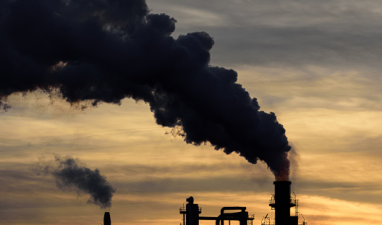
India has recently submitted its Biennial Update Report (BUR-4) as part of its climate commitments under the United Nations Framework Convention on Climate Change (UNFCCC). This report outlines the country’s greenhouse gas (GHG) emissions inventory and measures taken to reduce emissions. It reflects India’s progress towards its climate goals and marks the need for advanced technology for sustainable growth.
What is the Biennial Update Report (BUR)?
The Biennial Update Report is a requirement for developing countries under the UNFCCC. It details national circumstances related to climate, socio-economic factors, and forestry. The BUR includes a comprehensive inventory of GHG emissions, their sources, and natural sinks. It also updates national action plans, methods for measuring actions, and information on financial and technological support received for climate action.
Highlights of BUR-4
BUR-4 updates India’s third national communication and was submitted on December 30, 2023. It presents the national GHG inventory for 2020, showing that India is on track to meet its climate commitments. Between 2005 and 2020, India reduced its GDP emissions intensity by 36%. This metric measures GHG emissions per unit of economic output. In 2020, India’s total GHG emissions were 2,959 million tonnes of CO2 equivalent. After accounting for forestry absorption, net emissions were 2,437 million tonnes.
Emission Sources and Sectoral Contributions
The report reveals that CO2 emissions from fossil fuel combustion are the largest contributors to GHG emissions. Methane emissions from livestock and industrial processes also play roles. CO2 accounts for 80.53% of total emissions, followed by methane at 13.32%. The energy sector is the highest emitter, contributing 75.66% of total emissions, with electricity production alone responsible for 39%.
Status of India’s Climate Commitments
India updated its Nationally Determined Contributions (NDCs) in August 2022. Key targets include achieving 50% of installed electric power capacity from non-fossil fuel sources by 2030. India aims to create an additional carbon sink of 2.5 to 3 billion tonnes of CO2 equivalent through forest cover. As of October 2024, non-fossil fuel-based power generation capacity stands at 46.52%.
Technological Needs for Climate-Conscious Growth
India requires advanced technology to achieve low-carbon growth and adapt to climate impacts. The report marks barriers such as slow technology transfer and intellectual property rights. Key technologies needed include ultra-efficient photovoltaic cells, floating wind turbines, and carbon capture solutions for industries like cement and steel. In the water sector, solar and wind-powered desalination technologies are essential for arid regions.
Questions for UPSC –
- Discuss the significance of India’s Biennial Update Report in the context of global climate commitments.
- Critically examine the role of technology in achieving India’s climate targets and mitigating climate change impacts.
- Explain the implications of India’s GHG emissions inventory on its economic activities and energy policies.
- With suitable examples, discuss how India’s energy sector can transition towards sustainable practices while addressing climate change.
Answer Hints:
1. Discuss the significance of India’s Biennial Update Report in the context of global climate commitments.
- BUR is a mandatory report for developing countries under the UNFCCC, showcasing climate action efforts.
- It provides a comprehensive inventory of GHG emissions, their sources, and national circumstances.
- BUR-4 marks India’s progress towards its climate commitments, including a 36% reduction in GDP emissions intensity since 2005.
- It serves as a transparent mechanism to report on national action plans and the support received for climate initiatives.
- BUR-4 reinforces India’s commitment to global climate agreements, enhancing credibility in international negotiations.
2. Critically examine the role of technology in achieving India’s climate targets and mitigating climate change impacts.
- Advanced technologies are crucial for low-carbon growth and adapting to climate change effects.
- Barriers such as slow technology transfer and intellectual property rights hinder the adoption of necessary technologies.
- Key technologies needed include ultra-efficient solar cells, floating wind turbines, and carbon capture solutions.
- Technological advancements can enhance energy efficiency, reduce emissions, and promote sustainable practices across sectors.
- Investment in R&D and partnerships with developed nations can accelerate technology transfer and implementation.
3. Explain the implications of India’s GHG emissions inventory on its economic activities and energy policies.
- The GHG emissions inventory indicates the effectiveness of India’s climate policies and economic strategies.
- A 36% reduction in GDP emissions intensity suggests improved energy efficiency in economic activities.
- High emissions from the energy sector highlight the need for a transition to renewable energy sources.
- Policies must align with targets to reduce emissions while promoting economic growth and sustainability.
- About emissions sources helps in formulating targeted interventions for specific sectors like agriculture and industry.
4. With suitable examples, discuss how India’s energy sector can transition towards sustainable practices while addressing climate change.
- India aims for 50% of electric power capacity from non-fossil fuel sources by 2030, with a current share of 46.52%.
- Investment in renewable energy, such as solar and wind, is crucial for reducing dependence on fossil fuels.
- The ‘Perform, Achieve and Trade’ (PAT) scheme has successfully enhanced energy efficiency in industries, leading to energy savings.
- Examples of successful transitions include the growth of solar parks and wind farms across the country.
- Encouraging electric vehicles and improving public transportation can further reduce emissions in the transport sector.