
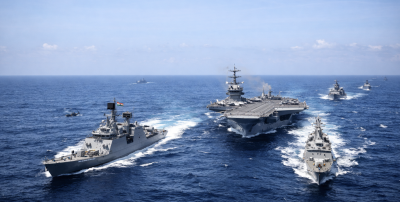
India’s 13th MILAN naval exercise held from 15 to 25 February 2026 marks a very important moment in Indo-Pacific maritime diplomacy. With 72 countries participating, the event demonstrates India’s expanding influence in the region. MILAN has evolved from a small regional drill into a global naval platform reflecting India’s MAHASAGAR vision of inclusive security and strategic autonomy. The shift from the Andaman and Nicobar Islands to Visakhapatnam enabled more complex operations and larger force deployments. MILAN 2026 also marks India’s indigenisation efforts with advanced domestically built warships playing key roles. This exercise puts stress on India’s commitment to a rules-based maritime order amid rising great-power competition.
Evolution and Strategic Importance of MILAN
MILAN began in 1995 as a modest regional exercise involving five navies. It aimed to build trust and improve professional ties. Over three decades, it grew into a major multilateral event with global participation. The 2026 edition attracted 72 navies, signalling India’s diplomatic reach and leadership. Moving the venue to Visakhapatnam expanded operational scope, allowing high-intensity drills and greater logistical support. MILAN now serves as a key platform for maritime cooperation and stability in the Indo-Pacific.
India’s MAHASAGAR Vision and Maritime Diplomacy
MAHASAGAR, meaning ocean in Hindi, is India’s updated maritime strategy. It builds on the SAGAR framework to emphasise strategic autonomy, inclusive security, and cooperative stability. MILAN is a practical expression of this vision, encouraging dialogue and joint action among diverse navies. The exercise promotes freedom of navigation and counters threats like piracy, terrorism, and illegal fishing. It also reassures smaller states of India’s role as a net security provider.
Indigenisation and Naval Capability Display
MILAN 2026 prominently features India’s indigenous naval platforms. The carrier INS Vikrant leads the operational component, supported by stealth frigates and destroyers built in Indian shipyards. This showcases India’s growing defence manufacturing strength and technological self-reliance. Operating these vessels alongside foreign navies in complex scenarios signals India’s capability as both a builder and partner in multinational security frameworks.
Geopolitical Context and Regional Stability
The Indian Ocean is a contested space with increased Chinese naval presence and infrastructure projects. MILAN addresses this by reinforcing a rules-based order and multilateral engagement. The exercise balances cooperation with strategic signalling to maintain maritime stability. It avoids rigid alliances, offering flexibility to participating states. MILAN strengthens interoperability and trust while projecting India’s role in shaping the Indo-Pacific’s future.
Topics for Prelims:
MILAN Naval Exercise
- Started in 1995 under Andaman and Nicobar Command.
- Initially involved five regional navies.
- Expanded to 72 countries by 2026.
- Shifted venue to Visakhapatnam for larger scope.
- Focuses on interoperability, maritime security, and diplomacy.
MAHASAGAR Vision
- India’s maritime strategy launched post-SAGAR framework.
- Emphasises strategic autonomy and inclusive security.
- Promotes cooperative stability in Indo-Pacific.
- Supports freedom of navigation and rule-based order.
- Guides India’s naval diplomacy and exercises like MILAN.
INS Vikrant
- India’s first indigenous aircraft carrier.
- Leads carrier battle group in MILAN 2026.
- Built at Cochin Shipyard.
- Symbolises India’s naval manufacturing capabilities.
- Operates advanced fighter jets and helicopters.
Questions for UPSC:
- Discuss the significance of maritime diplomacy in shaping the Indo-Pacific security architecture with reference to India’s naval exercises.
- Critically examine India’s MAHASAGAR vision in the context of its strategic autonomy and regional cooperation goals.
- Explain the role of indigenous defence manufacturing in enhancing India’s naval power projection and multilateral engagements.
- With suitable examples, discuss the impact of great-power rivalry on the Indian Ocean Region and India’s response through multilateral frameworks like MILAN.
Answer Hints:
1. Discuss the significance of maritime diplomacy in shaping the Indo-Pacific security architecture with reference to India’s naval exercises.
- Maritime diplomacy encourages cooperation, trust, and interoperability among diverse Indo-Pacific navies.
- India’s naval exercises like MILAN serve as platforms for multilateral engagement, reinforcing a rules-based maritime order.
- Exercises address traditional (piracy, terrorism) and non-traditional (illegal fishing, cyber threats) maritime challenges collectively.
- They enable India to project influence, build coalitions, and reassure smaller littoral states of inclusive security.
- Naval diplomacy balances competition and cooperation amid great-power rivalry, avoiding rigid alliances.
- MILAN’s expansion from regional to global participation reflects India’s growing diplomatic reach and leadership in maritime security.
2. Critically examine India’s MAHASAGAR vision in the context of its strategic autonomy and regional cooperation goals.
- MAHASAGAR builds on SAGAR, emphasizing India’s role as a central maritime power with strategic autonomy.
- It promotes inclusive security and cooperative stability across the Indo-Pacific without binding alliances.
- Supports freedom of navigation and the rules-based international maritime order.
- Encourages flexible multilateralism, enabling middle and smaller powers strategic space.
- Operationalized through naval exercises (e.g., MILAN), combining diplomacy and defence preparedness.
- Challenges include balancing great-power competition while maintaining autonomy and regional trust.
3. Explain the role of indigenous defence manufacturing in enhancing India’s naval power projection and multilateral engagements.
- Indigenous platforms like INS Vikrant symbolize India’s technological self-reliance and defence manufacturing strength.
- Domestic warships enable India to lead complex multilateral exercises, showcasing operational capability.
- Indigenisation reduces dependency on foreign suppliers, reinforcing strategic autonomy.
- Integration of indigenous assets with foreign navies enhances interoperability and diplomatic credibility.
- Demonstrates India’s emergence as a builder and partner in multinational maritime security frameworks.
- Boosts national defence industry and supports ‘Make in India’ initiative within strategic domains.
4. With suitable examples, discuss the impact of great-power rivalry on the Indian Ocean Region and India’s response through multilateral frameworks like MILAN.
- Increased Chinese naval presence via deployments, port access, and dual-use infrastructure intensifies regional competition.
- Great-power rivalry transforms maritime spaces from commons to contested geopolitical theatres.
- India counters by reinforcing a rules-based order, freedom of navigation, and inclusive security through MILAN.
- MILAN encourages multilateral cooperation without binding alliances, offering strategic flexibility.
- Exercises build interoperability and trust among regional navies, balancing China’s influence.
- India’s response combines capability projection, diplomacy, and partnership-building to maintain regional stability.