
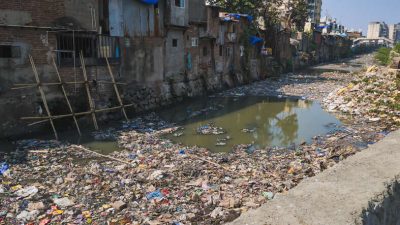
India has become adept at measuring its environmental crises. Air pollution is tracked daily through indices, heatwaves and floods command headlines, and climate extremes shape public debate. Yet when drinking water turns lethal, the response remains dangerously delayed, fragmented, and fleeting. The recent deaths and widespread illness in Bhagirathpura, Indore, caused by contaminated water supply, are not an exception. They are a symptom of a deeper and recurring governance failure.
Why the Indore tragedy is not an aberration
What unfolded in Bhagirathpura mirrors incidents across regions and political boundaries. In Mahisagar district of Gujarat, jaundice outbreaks were traced to contaminated borewell and municipal water. In Tiruvallur, Tamil Nadu, residents were hospitalised after consuming polluted supply water. Earlier, the 2014 hepatitis outbreak in Sambalpur, Odisha, exposed similar failures at scale.
These episodes point to a hard truth: unsafe drinking water in India is not a local lapse but a recurring national emergency, one that resurfaces briefly in public discourse only after lives are lost.
The staggering public health burden
Between 2005 and 2022, India recorded over 20.98 crore cases of major water-borne diseases — including acute diarrhoeal disease, typhoid, viral hepatitis, and cholera — resulting in more than 50,000 reported deaths. These figures, however, capture only reported morbidity.
According to the NITI Aayog’s Composite Water Management Index, nearly 2 lakh people die every year in India due to inadequate access to safe drinking water. Globally, India ranks 120th out of 122 countries on the Water Quality Index, with an estimated 70% of its water sources contaminated. Despite this, water quality rarely commands sustained political or administrative urgency.
The invisible economic cost of unsafe water
While the human cost is visible in hospital wards, the economic burden remains under-acknowledged. Water-borne illnesses lead to lost workdays, rising medical expenses, and declining productivity. Official estimates suggest that contaminated water affects nearly 37.7 million people annually, resulting in the loss of about 73 million working days.
This silent erosion of economic capacity disproportionately affects informal workers, daily-wage earners, and urban poor households, reinforcing cycles of vulnerability that rarely enter infrastructure cost-benefit calculations.
Where contamination really begins: the journey to the tap
Contrary to popular perception, most outbreaks do not originate at the water source. They occur along the distribution network. In Bhagirathpura and countless other localities, reports point to sewage mixing with drinking water pipelines — a chronic urban failure.
Municipal departments often operate in silos. Road construction agencies excavate without coordination with water and sewerage boards. In the absence of accurate, shared maps of underground utilities, heavy machinery cracks water pipes and ruptures adjacent sewer lines. When pressure drops in ageing pipelines, sewage is sucked into drinking water mains, contaminating supply long before any visible sign emerges.
Why urban missions fall short
The second phase of the “” aims to make cities “water secure.” Yet implementation remains skewed towards asset creation rather than safety assurance. New pipelines are laid while leaking, decades-old networks remain poorly governed.
India has invested heavily in the hardware of urbanisation but neglected the software — safety protocols, continuous monitoring, interoperable data systems, and institutional accountability. Coverage targets are met, but water quality at the tap remains uncertain.
The core governance failure
A fundamental institutional flaw lies at the heart of the crisis. Municipal bodies often act as the provider, the tester, and the judge of their own performance. The same entity that supplies water is responsible for testing its quality and certifying compliance.
Without an independent regulator empowered to mandate standards, audit systems, and penalise failures, testing data is rarely disclosed proactively. Contamination is acknowledged only after outbreaks cause visible harm. Governance thus remains reactive — fixing pipes after deaths rather than preventing contamination in the first place.
What preventive water governance demands
Addressing India’s drinking water crisis requires a decisive shift from emergency response to preventive governance:
- Comprehensive and shared mapping of underground utilities to prevent accidental cross-contamination
- Independent water quality regulators separating service provision from oversight
- Public disclosure of water testing data at the ward and household level
- Reorienting AMRUT 2.0 from infrastructure coverage to water safety at the tap
- Continuous monitoring rather than episodic testing triggered by outbreaks
Why this is no longer optional
India has learnt to measure the air it breathes with scientific rigour and public accountability. Drinking water deserves no less seriousness. Safe water is not merely a welfare concern; it is a constitutional obligation linked to the right to life and a foundational economic necessity.
Until governance frameworks treat water quality as a permanent public health priority rather than an episodic crisis, outbreaks like Bhagirathpura will continue — predictable for those who live with them, and invisible until tragedy strikes.
What to note for Prelims?
- Water-borne diseases linked to contaminated drinking water
- India’s ranking in global water quality indices
- Objectives and limitations of AMRUT 2.0
What to note for Mains?
- Why unsafe drinking water is a governance failure, not a technical accident
- Economic and social costs of water-borne diseases
- Need for independent water regulation in urban India
- Shifting from asset creation to safety-oriented urban water governance
chaitanya agarwal
January 30, 2026 at 8:03 pmDue to overdrawal of Groundwater from the top or first aquifer, land subsidence has been reported from various parts of the country, which may bring disaster for the coming generation. Increase of toxic elements like arsenic, lead, chromium, etc., may lead to dangerous diseases in the human body and also destroy the ecosystem.