
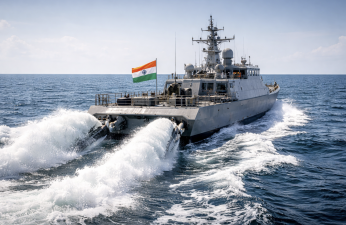
India has inaugurated a state-of-the-art Waterjet Production and Testing Facility in Goa, marking a significant step in maritime self-reliance. Commissioned by the Indian Coast Guard (ICG), the facility strengthens domestic capability in manufacturing and maintaining advanced waterjet propulsion systems used in high-speed patrol vessels. The development aligns with the Aatmanirbhar Bharat vision and positions India among a select group of nations with indigenous high-end marine propulsion infrastructure.
A Strategic Boost to Maritime Engineering
4
The facility was inaugurated by Director General Paramesh Sivamani on February 13, 2026. It enables India to manufacture, test, and sustain waterjet propulsion systems — critical components for fast interceptor boats and patrol vessels.
Waterjet propulsion offers:
- High-speed manoeuvrability.
- Shallow-water operability.
- Reduced underwater acoustic signature.
- Improved survivability for coastal security missions.
With this infrastructure, India becomes the third country after the United States and South Korea to host such an advanced production and testing ecosystem.
Operational Relevance for the Indian Coast Guard
4
The Indian Coast Guard currently operates more than 100 Marine Jet Propulsion (MJP) waterjet systems across its fleet, with 42 additional units planned for vessels under construction.
The new facility ensures:
- In-country life-cycle maintenance.
- Reduced downtime for critical vessels.
- Lower dependency on overseas servicing.
- Enhanced operational readiness in coastal waters.
Given India’s 7,500 km coastline and expansive Exclusive Economic Zone (EEZ), rapid-response maritime platforms are indispensable for anti-smuggling, anti-piracy, and search-and-rescue missions.
Strengthening Aatmanirbhar Bharat in Defence
The project reflects India’s broader emphasis on indigenisation in defence manufacturing. High-end propulsion systems were traditionally imported or serviced abroad, creating logistical and strategic vulnerabilities.
The new facility contributes to:
- Technology absorption within domestic industry.
- Strategic autonomy in maritime security.
- Reduced foreign exchange outflow.
- Enhanced resilience during geopolitical disruptions.
Sustained engagement since 2023 between Indian authorities and international partners has enabled knowledge transfer and technological collaboration.
Economic and Industrial Multiplier Effects
The initiative is expected to integrate local micro, small and medium enterprises (MSMEs) into the supply chain.
Key anticipated outcomes include:
- Expansion of precision manufacturing capabilities.
- Skilled employment generation.
- Development of specialised marine engineering expertise.
- Potential export of maintenance and testing services to South Asia.
The facility is envisioned as a regional hub, strengthening India’s position as a maritime engineering leader in the Indian Ocean Region.
Geopolitical and Security Implications
In the context of increasing maritime competition in the Indo-Pacific, coastal security infrastructure assumes strategic importance. The ability to domestically sustain fast patrol vessels enhances India’s capacity as a net security provider in the Indian Ocean.
Self-reliant propulsion capability reduces vulnerabilities linked to supply chain disruptions and sanctions, reinforcing long-term maritime preparedness.
What to Note for Prelims?
- Waterjet propulsion – high-speed marine propulsion system.
- Location – Goa.
- Inaugurated by – DG Indian Coast Guard, Paramesh Sivamani.
- India – third country after US and South Korea with such facility.
- Used in – Fast interceptor boats and patrol vessels.
What to Note for Mains?
- Role of indigenisation in maritime security.
- Aatmanirbhar Bharat in defence manufacturing.
- Importance of coastal security in the Indo-Pacific.
- Technology transfer and industrial ecosystem development.
- Strategic autonomy in critical defence infrastructure.