
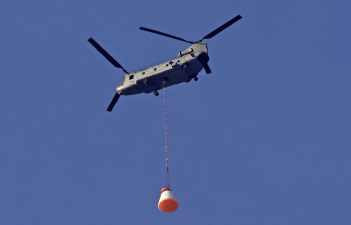
The Indian Space Research Organisation (ISRO) successfully conducted the second Integrated Air Drop Test (IADT-02) for the Gaganyaan mission at the Satish Dhawan Space Centre. The test validated critical crew safety systems for India’s first crewed spaceflight planned for 2027. ISRO confirmed that all mission objectives of IADT-02 were met.
Test Objectives and Execution
IADT-02 involved dropping a crew module mock-up from a high-altitude aircraft to simulate emergency escape and recovery scenarios. The test evaluated parachute deployment sequences, descent stability, and splashdown recovery operations. Parameters such as deceleration and landing accuracy in designated zones were closely monitored.
Crew Safety Systems Validated
The test focused on validating parachute systems and descent control mechanisms essential for astronaut safety during nominal re-entry and abort conditions. The successful completion of IADT-02 demonstrated the reliability of these systems under operational conditions.
Gaganyaan Mission Progress
IADT-02 is part of a series of safety and qualification tests including pad abort and crew escape trials. These tests form the backbone of ISRO’s efforts to ensure mission safety and reliability. Following IADT-02, ISRO plans further system-level tests and uncrewed missions before the crewed launch.
Technical and Operational Significance
The test reinforced ISRO’s capabilities in human spaceflight technology, particularly in recovery and emergency response systems. It marked a key milestone in the preparation for sending Indian astronauts, termed “Gagannauts,” on a short-duration orbital mission.
What to Study for UPSC Exams?
- Human Spaceflight Technology
- ISRO’s Gaganyaan Mission
- Crew Safety Mechanisms
- Space Mission Qualification Tests
Human Spaceflight Technology
Human spaceflight technology involves life support systems, crewed spacecraft design, and re-entry mechanisms. It includes advancements in microgravity effects on the human body and radiation shielding. Early developments date back to Vostok 1 in 1961, the first human orbital flight.
ISRO’s Gaganyaan Mission
Gaganyaan is India’s first crewed orbital spacecraft planned for 2027. It aims to send three astronauts on a 5-7 day mission. The project includes indigenous crew module design, emergency escape systems, and collaboration with international partners for astronaut training.
Crew Safety Mechanisms
Crew safety mechanisms encompass abort systems, parachutes, and impact attenuation technologies. These systems ensure astronaut survival during launch failures and re-entry. Modern designs use multi-stage parachutes and soft-landing airbags or retro rockets for controlled descent.
Space Mission Qualification Tests
Qualification tests validate spacecraft systems under simulated operational stresses. These include thermal, vibration, shock, and parachute drop tests. They ensure reliability and safety before manned missions and often replicate launch, orbit, and landing conditions.
Last Modified: April 11, 2026