
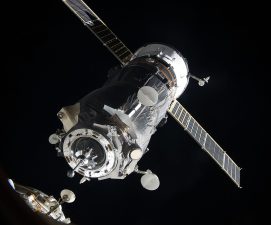
The Indian Space Research Organisation (ISRO) is set to achieve milestone with its SpaDeX docking mission. This mission aims to demonstrate the ability to dock two small satellites in space. If successful, India will join an elite group of countries capable of this complex manoeuvre. The mission is critical for future space exploration and the establishment of a space station.
About Docking
Docking is the process of bringing two spacecraft together in orbit. This can be done either manually or autonomously. It is essential for missions that require heavy payloads that cannot be launched in a single vehicle. Docking allows for the assembly of larger structures in space, such as space stations, and facilitates the transfer of crew and supplies.
Historical Context of Docking
The first successful docking occurred in 1966 with the Gemini VIII mission, which involved astronauts. The Soviet Union followed with an automated docking in 1967. China entered the arena in 2011 with its Shenzhou 8 mission. Each of these milestones has paved the way for more advanced space missions.
India’s Ambitions in Space
ISRO’s docking mission aligns with its vision to establish a space station by 2035 and conduct human missions to the moon by 2040. To achieve these goals, India requires robust docking capabilities. The Bharatiya Antariksh Station will involve assembling multiple modules in space, necessitating precise docking technology.
Mission Details
The SpaDeX mission involves two satellites, SDX01 (Chaser) and SDX02 (Target), launched on December 30. The docking experiment includes a series of manoeuvres to bring the satellites progressively closer. They will stop at various distances before finally docking. Once connected, the satellites will share power and operate as a single unit.
Challenges Faced
The docking mission has faced delays, initially scheduled for January 7 and then January 9. These postponements were due to identified abort scenarios and unexpected satellite drift. ISRO is conducting further simulations to enhance accuracy and ensure a successful docking.
Docking Mechanism
ISRO employs an androgynous docking mechanism, meaning both satellites have identical systems. This design is similar to the International Docking System Standard but uses fewer motors. New sensors and a sophisticated navigation processor will aid in precise docking.
Future Implications
A successful docking will enhance India’s capabilities in space exploration. It will support future missions, including Chandrayaan-4, which aims to return lunar samples. The technology developed here will also be crucial for human spaceflight missions.
Questions for UPSC:
- Critically discuss the significance of docking technology in the context of international space exploration.
- Examine the advancements in space technology from the 1960s to the present day.
- Estimate the impact of ISRO’s future missions on India’s position in global space research.
- What are the potential benefits of establishing a space station? How does this relate to current global space initiatives?
Answer Hints:
1. Critically discuss the significance of docking technology in the context of international space exploration.
- Docking technology enables the assembly of larger spacecraft, crucial for long-duration missions and space stations.
- It facilitates the transfer of crew and supplies between spacecraft, enhancing operational efficiency in space.
- Countries with docking capabilities can collaborate on international missions, encouraging global partnerships in space exploration.
- Successful docking missions demonstrate technological prowess and can enhance national prestige in the global space arena.
- Docking technology is essential for future missions to the Moon and Mars, where complex operations will be required.
2. Examine the advancements in space technology from the 1960s to the present day.
- The 1960s marked the beginning of crewed space missions with rendezvous and docking capabilities, exemplified by Gemini VIII.
- Automated docking technology was pioneered by the Soviet Union in the late 1960s, paving the way for uncrewed missions.
- Advancements in satellite technology, sensors, and navigation systems have improved the accuracy and reliability of docking procedures.
- Modern spacecraft utilize sophisticated algorithms and AI for autonomous docking, reducing the need for human intervention.
- International collaboration has led to standardized docking systems, enhancing interoperability among different countries’ spacecraft.
3. Estimate the impact of ISRO’s future missions on India’s position in global space research.
- ISRO’s advancements in docking technology will position India as a key player in international space missions.
- The establishment of a space station will boost India’s capabilities for scientific research and technology development.
- Successful lunar missions, such as Chandrayaan-4, will enhance India’s reputation in planetary exploration.
- India’s ability to conduct human spaceflight missions will demonstrate technological maturity and attract global partnerships.
- ISRO’s initiatives can inspire a new generation of scientists and engineers, encouraging domestic innovation in space technology.
4. What are the potential benefits of establishing a space station? How does this relate to current global space initiatives?
- A space station allows for long-term scientific research in microgravity, leading to advancements in various fields, including medicine and materials science.
- It serves as a platform for international collaboration, bringing together resources and expertise from different countries.
- Space stations can support missions to the Moon and Mars by serving as staging areas for crew and supplies.
- Establishing a space station aligns with global initiatives like the Artemis program, promoting sustainable human presence in space.
- It enhances national security and technological leadership by developing capabilities for independent space operations.