
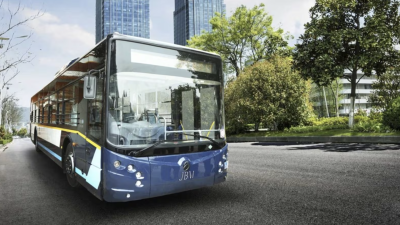
JBM Auto, a leading Indian automobile manufacturer, has announced plans to raise $500 million to boost its electric bus business. This move aligns with the growing global and domestic emphasis on sustainable transportation and the shift towards electric mobility. The funds will be utilised to enhance production capacity, invest in research and development, and expand the company’s footprint in the electric vehicle (EV) segment.
Overview of JBM Auto’s Electric Bus Business
JBM Auto has been actively involved in the development and manufacturing of electric buses, catering to the public transport sector. The company’s electric buses are designed to reduce carbon emissions and provide cost-effective, clean energy solutions for urban transportation. This fundraise will support the scaling up of manufacturing facilities and the introduction of advanced battery technologies.
Significance of the $500 Million Fundraise
The $500 million capital infusion is one of the largest funding rounds in India’s electric mobility sector. It will enable JBM Auto to accelerate its production capabilities and meet increasing demand from state governments and private operators. The investment will also be channelled towards innovation in electric drivetrains and charging infrastructure, crucial for the widespread adoption of electric buses.
Impact on India’s Electric Vehicle Market
India is witnessing a rapid transition towards EVs due to government incentives, stricter emission norms, and rising environmental concerns. JBM Auto’s expansion plans will contribute significantly to the growth of the electric bus segment, supporting India’s goal of achieving net-zero emissions by 2070. Enhanced electric bus availability can improve urban air quality and reduce dependence on fossil fuels.
Challenges and Future Prospects
While the electric bus market holds immense potential, challenges such as high initial costs, battery life, and charging infrastructure remain. JBM Auto’s fundraise aims to address these issues through technological advancements and strategic partnerships. The company’s success could set a precedent for other manufacturers and accelerate India’s electric public transport revolution.
What to Study for UPSC Exams?
- Electric Vehicle Policy in India
- Battery Technologies and Innovations
- Urban Public Transport Systems
- Climate Change Mitigation Strategies
- Renewable Energy Integration in Transport
Electric Vehicle Policy in India
India’s electric vehicle (EV) policy aims to promote adoption through subsidies, tax benefits, and infrastructure development. The Faster Adoption and Manufacturing of Hybrid and Electric Vehicles (FAME) scheme provides financial incentives for EV buyers and manufacturers. The policy targets reducing oil imports and cutting vehicular emissions. State governments also have EV policies with varied incentives. Charging infrastructure expansion and local manufacturing are key focus areas. The policy aligns with India’s goal of net-zero emissions by 2070.
Battery Technologies and Innovations
Battery technology for EVs primarily involves lithium-ion batteries due to high energy density and longevity. Solid-state batteries are emerging, promising higher capacity and safety. Battery management systems optimize performance and lifespan. Recycling and second-life applications address environmental concerns. Innovations focus on cost reduction, faster charging, and improved energy density. Battery supply chains depend on critical minerals like lithium, cobalt, and nickel.
Urban Public Transport Systems
Urban public transport includes buses, metros, trams, and shared mobility solutions. It reduces congestion, pollution, and travel costs. Electric buses are increasingly adopted for cleaner city transport. Integration with non-motorized transport and last-mile connectivity enhances effectiveness. Funding and infrastructure development are challenges. Smart technologies improve scheduling, ticketing, and passenger information systems.
Climate Change Mitigation Strategies
Mitigation strategies include reducing greenhouse gas emissions through renewable energy, energy efficiency, and sustainable transport. Carbon pricing, afforestation, and technological innovation support goals. International agreements like the Paris Accord guide national policies. Transitioning to electric mobility and clean energy sectors is critical. Adaptation and resilience-building complement mitigation efforts.
Renewable Energy Integration in Transport
Renewable energy integration involves powering transport with solar, wind, and other clean sources. Electric vehicles charged from renewables reduce carbon footprints. Hydrogen fuel cells offer another clean alternative. Grid modernization and smart charging optimize renewable use. Policies encourage renewable-powered charging infrastructure. Challenges include intermittency and storage solutions.
Last Modified: April 9, 2026