
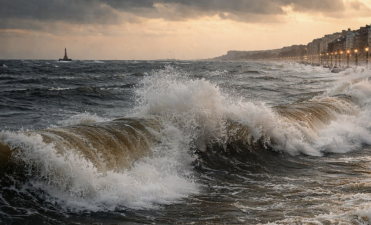
Kerala has declared flooding caused by tidal rise along its coastline as a State-specific disaster, marking the first such decision by any State in India. The move allows victims of tidal flooding to receive financial assistance similar to relief under the State Disaster Response Fund (SDRF). The decision recognises that repeated sea incursion has become a serious threat to life, livelihood, housing, and coastal infrastructure in several districts.
What Is Tidal Flooding?
Tidal flooding occurs when sea level temporarily rises above a threshold and inundates low-lying coastal areas. In Kerala, this is a recurring phenomenon along the Arabian Sea coast. It happens twice daily and becomes more severe during full moon and new moon phases. The impact increases when high tides coincide with coastal storms and spring tides. Areas such as Vypin, Chellanam, Edakochi, Perumbadappu, and Kumbalanghi face frequent seawater ingress.
Why Kerala Classified It As Disaster
Under normal SDRF norms, routine tidal rise is not treated as a disaster. However, Section 2(d) of the Disaster Management Act permits a natural phenomenon to be treated as a disaster if it causes loss of life, livelihood, and living conditions. Kerala argued that tidal flooding has crossed the level of a routine event and now causes repeated damage to homes, roads, fishing activity, and small trade. The State’s geography, including low-lying coastal plains and areas below sea level such as parts of Kuttanad, makes the problem more severe.
Impact On Coastal Communities
The issue affects at least 10% of Kerala’s population. Many settlements lie close to rivers, backwaters, canals, and floodplains, increasing vulnerability. Siltation and reduced depth of water bodies also worsen flooding. Unlike rainfall-related floods, tidal flooding can occur throughout the year, making it a persistent hazard for coastal residents, fishermen, and agricultural workers.
Other State-Specific Disasters In Kerala
Kerala has already notified coastal erosion, lightning, strong winds, soil piping, heatwave, sunstroke, sunburn, and human-wildlife conflict as State-specific disasters. It had also declared the MSE Elsa 3 shipwreck off the Kerala coast as a State-specific disaster because of environmental and economic risks.
Last Modified: April 28, 2026