
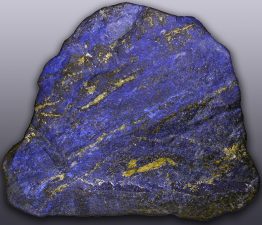
Lapis lazuli is a striking blue rock renowned for its vivid colour and historical significance. This semi-precious gemstone has captivated cultures for thousands of years. Its distinctive hue primarily comes from the mineral lazurite, which comprises 25-40% of the rock. The colour intensity is influenced by sulphur levels and structural variations within lazurite. The presence of calcite can diminish the blue tone, while pyrites contribute a golden sparkle.
Composition and Colour
Lapis lazuli’s vibrant blue is primarily due to lazurite. Sulphur content and structure play critical roles in determining its colour. Calcite can lessen the blue intensity, while pyrites add flecks of gold. Other minerals, such as diopside and sodalite, are present but in smaller amounts. This unique composition makes lapis lazuli a sought-after gemstone.
Geographical Distribution
Lapis lazuli is found in various countries, including Chile, Russia, and the United States. However, the highest quality stones originate from Afghanistan’s Badakhshan province. This region has a rich history of lapis lazuli mining that dates back over 6,000 years. The stones from Badakhshan are particularly prized for their deep blue colour and quality.
Historical Significance
The history of lapis lazuli is intertwined with ancient trade routes. Traders in India imported the stone from Badakhshan as early as 1000 BC. Archaeological findings from the Indus Valley Civilisation, including sites like Mohenjo-daro and Harappa, reveal the use of lapis lazuli in ornaments. The ancient Egyptians also valued the stone, using it in jewellery and as a cosmetic powder.
Artistic Uses
During the Renaissance, lapis lazuli was ground into ultramarine, a highly sought-after pigment for paintings. Artists used this expensive colour for its brilliance and depth. The gemstone’s historical use in art puts stress on its cultural and economic importance throughout history.
Name Origin
The name lapis lazuli derives from two languages. “Lapis” is Latin for ‘stone’. “Lazuli” comes from the Persian word “lazhward,” meaning ‘blue’. This etymology reflects the stone’s long-standing association with colour and value across different cultures.
Modern Context
Today, lapis lazuli remains popular in jewellery and decorative arts. Its appeal lies in its rich history and stunning appearance. The gemstone continues to be a symbol of luxury and beauty, appreciated by collectors and artisans alike.
Questions for UPSC:
- Discuss the significance of lapis lazuli in ancient trade and culture.
- Critically examine the geological processes that contribute to the formation of lapis lazuli.
- Explain the historical uses of lapis lazuli in ancient civilisations and their impact on modern art.
- Comment on the importance of lapis lazuli in the context of global gemstone trade and its economic implications.
Answer Hints:
1. Discuss the significance of lapis lazuli in ancient trade and culture.
- Lapis lazuli was a highly valued gemstone in ancient trade, particularly between Afghanistan and India.
- It was used in ornamental objects and jewelry, signifying wealth and status in various cultures.
- Found in archaeological sites like Mohenjo-daro and Harappa, it indicates its cultural importance in the Indus Valley Civilization.
- Ancient Egyptians utilized lapis lazuli for jewelry and cosmetics, showcasing its integration into daily life.
- The trade routes established for lapis lazuli influenced cultural exchanges and economic relationships in ancient times.
2. Critically examine the geological processes that contribute to the formation of lapis lazuli.
- Lapis lazuli is primarily composed of lazurite, which forms under specific metamorphic conditions.
- The presence of sulphur in lazurite is crucial for achieving its characteristic blue color.
- Calcite and pyrites also play roles; calcite can diminish the blue hue while pyrites add golden flecks.
- Geological processes involve high-pressure and high-temperature conditions that facilitate the formation of this rock.
- Other minerals like diopside and sodalite contribute to the overall composition but are less .
3. Explain the historical uses of lapis lazuli in ancient civilisations and their impact on modern art.
- In ancient civilisations, lapis lazuli was used for jewelry, ornamental items, and cosmetics, reflecting its value.
- During the Renaissance, it was ground into ultramarine pigment, a prized color in paintings.
- Its use in art brought into light the cultural significance and aesthetic appeal of lapis lazuli across history.
- Modern artists still reference lapis lazuli’s vibrant color and historical context in their works.
- The gemstone’s legacy continues to influence contemporary decorative arts and jewelry design.
4. Comment on the importance of lapis lazuli in the context of global gemstone trade and its economic implications.
- Lapis lazuli is a sought-after gemstone in the global market, valued for its unique color and historical significance.
- The primary source in Afghanistan has economic implications for local mining communities and international trade.
- Its rarity and demand contribute to its high market price, influencing the gemstone trade dynamics.
- The trade of lapis lazuli supports artisanal craftsmanship and promotes cultural heritage.
- Global interest in lapis lazuli can drive sustainable practices in mining and trade, impacting economic development.