
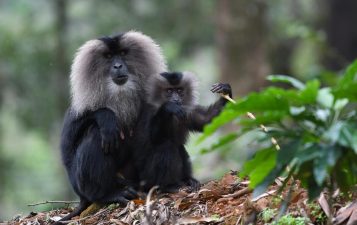
Recent research from the Centre for Wildlife Studies in Bengaluru has revealed findings about the lion-tailed macaque. This endangered species is endemic to the Western Ghats of India. The study, conducted in Silent Valley National Park, marks how human presence affects the behaviour and habitat use of these primates. With fewer than 4,000 individuals left, understanding their ecology is crucial for conservation efforts.
Study Overview
The study titled Highs and lows of arboreal life focused on two troops of lion-tailed macaques living in different zones of Silent Valley National Park. Researchers tracked one troop in the buffer zone and another in the core zone. They employed GPS tracking and advanced movement modelling to assess how these macaques utilise their habitat.
Findings on Habitat Use
The troop in the buffer zone maintained a smaller home range and predominantly occupied the mid-level forest canopy. They spent 94.2% of their time in this area. This behaviour suggests a strategic response to ecological pressures, including human disturbance and predation risks. Conversely, the core zone troop displayed more terrestrial behaviour. They frequently descended to the forest floor and occupied a larger home range.
Ecological Flexibility
The study uncovered an unexpected level of ecological flexibility in lion-tailed macaques. Historically viewed as strictly arboreal, these primates were observed exploring the ground even in undisturbed habitats. This adaptability may be a response to changing environmental conditions and resource availability.
Space Use and Resource Availability
Macaques demonstrated specific patterns in their space use, particularly around key resources such as fruiting trees. Their movement patterns reflect a balance between food acquisition and safety. The study suggests that these patterns are critical indicators of how animals respond to their environment.
Conservation Implications
The findings tell the importance of maintaining continuous canopy connectivity. The research advocates for incorporating three-dimensional space use into wildlife conservation strategies. Ensuring that macaques can safely navigate their habitat is essential for their survival.
Future Research Directions
Further studies are needed to explore the long-term impacts of habitat fragmentation and human encroachment on lion-tailed macaques. About their behavioural ecology will be vital for developing effective conservation policies.
Questions for UPSC:
- Examine the impact of habitat fragmentation on wildlife conservation strategies in the Western Ghats.
- Discuss the significance of ecological flexibility in animal behaviour with suitable examples.
- What is the role of canopy connectivity in primate conservation? Why is it essential for species like the lion-tailed macaque?
- Critically discuss the implications of human presence on wildlife behaviour in protected areas.
Answer Hints:
1. Examine the impact of habitat fragmentation on wildlife conservation strategies in the Western Ghats.
- Habitat fragmentation leads to isolated populations, reducing genetic diversity and increasing extinction risk.
- It disrupts animal movement patterns, impacting foraging and mating behaviors.
- Fragmented habitats can create edge effects, altering microclimates and species interactions.
- Conservation strategies must prioritize habitat connectivity to facilitate wildlife movement and resilience.
- Restoration of corridors and protected areas is essential to mitigate fragmentation effects.
2. Discuss the significance of ecological flexibility in animal behaviour with suitable examples.
- Ecological flexibility allows species to adapt to changing environments and resource availability.
- Examples include lion-tailed macaques utilizing both arboreal and terrestrial habitats for foraging.
- Species like raccoons exhibit flexibility by exploiting urban environments alongside natural habitats.
- This adaptability can enhance survival rates in the face of habitat loss or climate change.
- About flexibility aids in developing effective conservation strategies tailored to species needs.
3. What is the role of canopy connectivity in primate conservation? Why is it essential for species like the lion-tailed macaque?
- Canopy connectivity facilitates safe movement between habitats, reducing isolation of primate populations.
- It supports access to vital resources like food and mating opportunities, essential for population health.
- For lion-tailed macaques, maintaining canopy cover minimizes risks from ground predators and human disturbances.
- Disrupted connectivity can lead to increased mortality and decreased reproductive success.
- Conservation efforts must focus on preserving and restoring canopy links to ensure primate survival.
4. Critically discuss the implications of human presence on wildlife behaviour in protected areas.
- Human presence can lead to stress and altered behaviors in wildlife, impacting feeding and breeding.
- Animals may avoid certain areas, leading to reduced habitat use and resource access.
- Increased human activity can result in habitat degradation and increased risks from poaching.
- Protected areas must implement management strategies to mitigate human-wildlife conflict and promote coexistence.
- About these dynamics is crucial for effective wildlife management and conservation planning.