
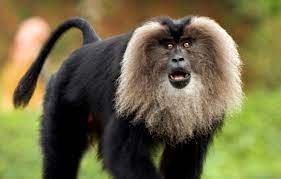
Conservationists have sporadically sighted the rare Lion-Tailed Macaque in the shared forests of Nadugani, straddling Tamil Nadu’s Nilgiris district and Kerala’s Nilambur. This Old World monkey, scientifically named Macaca silenus, possesses unique features like boundary-defining calls among males and a communication repertoire of 17 vocalizations. Recognizable by its mane-like grey face fur, this species gets its name from its lion-like tufted tail. Indigenous to India’s Western Ghats, especially in fragmented rainforests of Karnataka, Kerala, and Tamil Nadu, the Lion-Tailed Macaque faces endangerment due to habitat loss, leading to its “Endangered” IUCN status and CITES Appendix I classification.
Facts/Terms for UPSC Prelims
- Old World Monkey: A family of primates native to Africa and Asia, including macaques. The Lion-Tailed Macaque is part of this group, characterized by their geographical distribution and certain anatomical features.
- Boundary-Defining Calls: Distinct vocalizations used by male Lion-Tailed Macaques to establish territorial boundaries within their home ranges. These vocal cues contribute to social organization and communication among individuals.
- Rainforest Habitat: Dense forest ecosystems with high levels of precipitation. The Lion-Tailed Macaque’s survival is threatened due to the fragmentation and destruction of its rainforest home.
- Endemic: Native exclusively to a specific region or habitat. The Lion-Tailed Macaque is endemic to the Western Ghats, making its conservation particularly crucial for maintaining biodiversity.
- CITES Appendix I: A classification under the Convention on International Trade in Endangered Species of Wild Fauna and Flora, affording the highest level of protection to species facing the greatest risk from trade.