
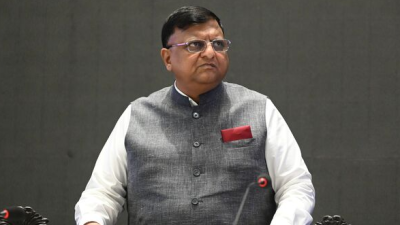
The West Bengal government appointed Manoj Agarwal, a 1990-batch Indian Administrative Service (IAS) officer, as the new Chief Secretary of the state on May 11, 2026. Agarwal replaces Dushyant Nariala, a 1993-batch IAS officer who was transferred to New Delhi to serve as the Principal Resident Commissioner for the state government. This major administrative change occurred right after the formation of the new state government under Chief Minister Suvendu Adhikari. Agarwal previously worked as the Chief Electoral Officer (CEO) of West Bengal and is scheduled to complete his service and retire in July 2026.
Administrative Profile and Career Highlights
Manoj Agarwal possesses extensive administrative experience spanning over three decades within the West Bengal state cadre.
Prior Ministerial Portfolios
Before his elevation to the top bureaucratic post, Agarwal managed several critical departments under the state administration. His assignments included serving as the Additional Chief Secretary of the Forest Department, and leading the departments of Food and Supplies, Fire and Emergency Services, and Personnel and Administrative Reforms. He also served early in his career as the Additional District Magistrate of Burdwan.
Tenure as Chief Electoral Officer
The Election Commission of India appointed Agarwal as the Chief Electoral Officer of West Bengal in early 2025. In this role, he was responsible for managing the complete voter data architecture and overseeing the 2026 West Bengal Legislative Assembly elections.
The Special Intensive Revision Exercise
During his tenure as the Chief Electoral Officer, Agarwal led a comprehensive cleanup of the regional voter registries through a Special Intensive Revision (SIR) program.
Statutory Framework
The voter data cleanup process is governed by the statutory provisions of the Representation of the People Act, 1950. The exercise ensures that electoral registries remain accurate, up-to-date, and free of defects before major democratic elections.
Scale of Deletions
The Special Intensive Revision program resulted in the removal of approximately 9.1 million voter entries from the state electoral rolls. The operational objectives and impact of the cleanup process include:
- Removal of Ineligible Records: Identifying and removing duplicate entries, entries for deceased individuals, and entries for individuals who migrated out of their voting jurisdictions.
- Burden of Proof: The framework required targeted documentation from voters to confirm their identity and residency status within strict administrative timelines.
- Administrative Impact: The large scale of voter deletions drew intense political attention from political parties regarding voter exclusion and the final processing of cases before appellate tribunals.
Constitutional and Administrative Role of the Chief Secretary
The Chief Secretary holds the highest rank within the state civil services and operates as the central institutional link for state administration.
Appointment Mechanism
The Chief Minister of the state selects the Chief Secretary. While seniority within the state IAS cadre serves as a primary reference point, the state government holds the executive discretion to select any suitable senior officer from the state empanelled list.
Executive Functions and Responsibilities
- Principal Advisor: Serves as the primary advisor to the Chief Minister on all policy matters, administrative operations, and inter-departmental issues.
- Cabinet Secretary: Manages the administrative planning for the state cabinet, records meeting minutes, and ensures follow-up actions on cabinet policy choices.
- Head of State Civil Services: Directs administrative control over all state departments, handles transfer and posting files for senior bureaucrats, and maintains internal discipline.
- Inter-Governmental Coordinator: Acts as the primary institutional link for communication and coordination between the State Government and the Union Government.
- Crisis Manager: Leads the state administration during emergencies, natural disasters, and internal security situations as the head of the state disaster crisis management committee.
Structural Bureaucratic Realignment
The appointment of the Chief Secretary is part of a broader structural change within the senior bureaucracy of West Bengal.
| Appointed Officer | Former Official Role | New Administrative Assignment |
| Manoj Agarwal (IAS) | Chief Electoral Officer, West Bengal | Chief Secretary, Government of West Bengal |
| Dushyant Nariala (IAS) | Chief Secretary, West Bengal | Principal Resident Commissioner, New Delhi |
| Subrata Gupta (Retired IAS) | Special Roll Observer, Election Commission | Administrative Advisor to Chief Minister Suvendu Adhikari |
IASPOINT Booster Facts for UPSC
- Constitutional Position: The office of the Chief Secretary is an administrative creation and is not explicitly detailed in the Constitution of India. The position grew out of British colonial governance patterns and was formalized across states over time.
- Comparison with Cabinet Secretary: While the Cabinet Secretary is the top civil servant in the Government of India, a state Chief Secretary possesses wider comparative powers. The Chief Secretary combines the state-level roles of a Cabinet Secretary, Home Secretary, and Finance Secretary under one singular office.
- Tenure Conditions: The position of Chief Secretary lacks a fixed statutory tenure. The officer serves based on the executive confidence of the state government, though the Central Government can grant service extensions upon formal request from the state.
- The Representation of the People Act, 1950: This Act provides for the allocation of seats in and the delimitation of constituencies for elections, the qualifications of voters at such elections, and the preparation of electoral rolls.
- Chief Electoral Officer (CEO) Status: Under Section 13A of the Representation of the People Act, 1950, the Chief Electoral Officer of a state is designated or nominated by the Election Commission of India in consultation with the State Government. The officer supervises the preparation, revision, and correction of all electoral rolls in the state.