
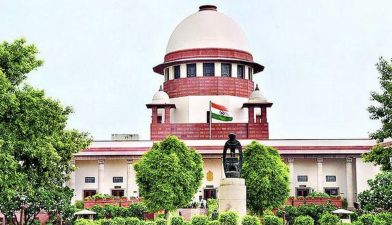
The Union Cabinet approved the introduction of The Supreme Court (Number of Judges) Amendment Bill, 2026, to increase the sanctioned strength of the Supreme Court of India from 33 to 37 judges, excluding the Chief Justice of India (CJI). This legislative proposal intends to expand the judicial capacity of the apex court to manage a mounting caseload and reduce pendency. The Bill exercises the powers conferred under Article 124(1) of the Constitution of India, which mandates that Parliament must prescribe the number of judges. It requires parliamentary approval before the new ceiling takes legal effect.
Constitutional and Statutory Framework
The strength of the highest court in India is regulated through a combination of constitutional mandates and parliamentary enactments.
Constitutional Authority
- Article 124(1): The Constitution originally stipulated a Chief Justice and not more than seven other judges. It explicitly empowers Parliament to increase this number by law.
- Parliamentary Monopoly: The executive branch cannot alter the sanctioned strength of the Supreme Court independently. Changes require a formal amendment Bill passed by both Houses of Parliament.
The Statutory Mechanism
- The Supreme Court (Number of Judges) Act, 1956: This is the principal central legislation used to alter the numerical strength of the apex court.
- Historical Increments: Parliament has amended this Act periodically to match the growing volume of litigation:
- 1956: Increased to 10 judges.
- 1960: Increased to 13 judges.
- 1977: Increased to 17 judges.
- 1986: Increased to 25 judges.
- 2009: Increased to 30 judges.
- 2019: Increased to 33 judges (excluding the CJI).
- 2026 (Proposed): Increasing to 37 judges (excluding the CJI), making the total sanctioned strength 38.
Administrative and Financial Implications
An increase in the judiciary’s size alters the institutional and financial overheads managed by the Union Government.
Financial Outlays
- Consolidated Fund of India: Under Article 125(1) and the Second Schedule of the Constitution, the salaries, allowances, and pensions of Supreme Court judges are charged directly to the Consolidated Fund of India under Article 266. These expenses are non-votable by Parliament.
- Infrastructure Scaling: The addition of four new judges necessitates the creation of new courtrooms, residential quarters, and secretarial staff, which are funded through the budgetary allocations of the Ministry of Law and Justice.
Operational Impact on the Apex Court
The expansion affects how the court structures its benches and disposes of complex legal questions.
Bench Allocations and Pendency
- Constitution Benches: Article 145(3) mandates that cases involving a substantial question of law as to the interpretation of the Constitution require a minimum of five judges. A higher overall strength allows the CJI to constitute these benches without paralyzing regular roster work.
- Division Benches: The bulk of appellate work is done by two-judge (Division) or three-judge (Full) benches. Four additional judges will allow the formation of two extra permanent benches to hear daily matters.
Comparative Roster Structure
The structural transformation of the Supreme Court’s maximum judicial capacity since its inception shows a steady upward trajectory.
| Year of Amendment | Sanctioned Strength (Excluding CJI) | Total Sanctioned Strength (Including CJI) |
| 1950 (Original) | 7 | 8 |
| 1956 | 10 | 11 |
| 1960 | 13 | 14 |
| 1977 | 17 | 18 |
| 1986 | 25 | 26 |
| 2009 | 30 | 31 |
| 2019 | 33 | 34 |
| 2026 (Proposed) | 37 | 38 |
IASPOINT Booster Facts for UPSC
- Appointment Authority: Supreme Court judges are appointed by the President of India under Article 124(2) through the Collegium system, which comprises the CJI and the four senior-most judges of the court.
- Qualifications for Appointment: To be eligible, a person must be a citizen of India and must have been a Judge of a High Court for at least five years, or an Advocate of a High Court for at least ten years, or a distinguished jurist in the opinion of the President.
- Removal Mechanism: A Supreme Court judge can only be removed from office by an order of the President passed after an address by each House of Parliament, supported by a majority of the total membership and a majority of not less than two-thirds of the members present and voting (Article 124(4)).
- Acting Chief Justice and Ad-hoc Judges: Article 126 allows the President to appoint an Acting CJI. Article 127 permits the CJI, with the prior consent of the President, to appoint High Court judges as ad-hoc judges of the Supreme Court if a quorum is lacking.
- Retired Judges Attendance: Article 128 enables the CJI, with the previous consent of the President, to request a retired Supreme Court or High Court judge to sit and act as a judge of the Supreme Court.