
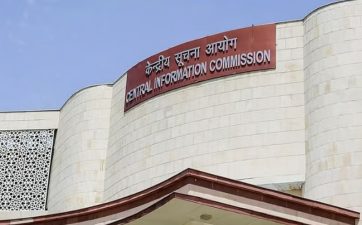
On 5 May 2026, the Central Information Commission (CIC) recommended that the Department of Personnel and Training (DoPT) include sub-caste details in the final selection lists of candidates for the Civil Services Examination (CSE) conducted by the Union Public Service Commission (UPSC). This recommendation emerged during a Right to Information (RTI) appeal that requested caste-wise details of Indian Administrative Service (IAS) candidates from the 1995 examination. The DoPT stated that old records were untraceable and that selection data is traditionally maintained only under broad categories—Scheduled Caste (SC), Scheduled Tribe (ST), and Other Backward Class (OBC)—rather than specific sub-castes.
Current Mechanism of Category Record Maintenance
The Union Government follows specific protocols for documenting the social categories of selected candidates in federal services.
Existing Data Practices
- Broad Categorization: The DoPT and UPSC record recruitment and reservation data strictly under macro categories specified in the Constitution: SC, ST, OBC, and Economically Weaker Sections (EWS).
- Public Availability: Final recommendation lists featuring these broad category allocations are accessible to the public for examinations conducted from 2017 onward.
- Absence of Sub-Caste Rosters: Central recruitment rosters do not register the specific sub-caste or endogamous group of an individual, limiting the data to the overarching constitutional category.
Central Information Commission Recommendation
The CIC order introduces a new discourse on data transparency in public employment and affirmative action.
Key Elements of the Recommendation
- Granular Transparency: The commission suggested that capturing and publishing sub-caste data alongside broad categories in future selection lists will improve transparency.
- Information Retrieval Challenges: The ruling highlighted structural gaps in public record management, as the executive could not trace thirty-year-old caste-specific recruitment files.
- Policy Consideration: The CIC directed the DoPT to evaluate the feasibility of modifying future vacancy and recommendation formats to reflect these granular identities.
Statutory and Constitutional Framework
The debate connects directly with the legal provisions governing public employment, affirmative action, and the right to information in India.
| Legal/Constitutional Provision | Core Mandate | Relevance to Sub-Caste Data |
| Article 16(4) of the Constitution | Permits the State to make reservation provisions for any backward class of citizens. | Forms the constitutional basis for category-based data collection in public posts. |
| Section 3 of the RTI Act, 2005 | Grants all citizens the right to secure information held by public authorities. | Legal tool utilized by citizens to demand granular selection and caste data. |
| Section 8(1)(j) of the RTI Act, 2005 | Exempts personal information that has no relationship to public activity or causes unwarranted invasion of privacy. | Often cited by departments to deny specific sub-caste identities of individual officers. |
| Public Records Act, 1993 | Mandates the permanent preservation of public records of national importance. | Relates to the untraceable nature of historical civil service selection data files. |
Implications of Granular Caste Data Collection
Documenting sub-caste data in central civil services impacts administrative workflows and policy evaluation.
Administrative and Policy Dimensions
- Data-Driven Affirmative Action: Availability of sub-caste data helps evaluate whether the benefits of reservation are evenly distributed or monopolized by dominant sub-castes within the SC, ST, and OBC blocks.
- Verification Logistical Burden: Validating hundreds of unique sub-caste certificates across different states will increase the verification timelines for the UPSC and verifying ministries.
- Standardization Challenges: A sub-caste may be classified as an OBC in one state and an SC in another, creating nomenclature complexities at the central compilation stage.
IASPOINT Booster Facts for UPSC
- Supreme Court Jurisprudence: In the landmark State of Punjab v. Davinder Singh case, a Constitution Bench ruled that states have the power to sub-classify Scheduled Castes to ensure equitable distribution of reservation benefits.
- Justice Rohini Commission: Formed under Article 340 of the Constitution, this commission examined the sub-categorization of OBCs to address the unequal distribution of reservation benefits among different sub-castes.
- Article 341 and 342: The President of India, in consultation with Governors, notifies the list of SCs and STs. Any inclusion or exclusion of a sub-caste from these central lists requires a law passed by Parliament.
- Nodal Ministry: The Department of Personnel and Training (DoPT) acts as the nodal agency for formulating policies on recruitment, regulation of service conditions, and reservation in central services.
- RTI Exemptions for UPSC: While civil service selection lists and cut-offs are public, raw interview marksheets and raw evaluation data before final results are subject to specific disclosure timelines protected under fiduciary capacity clauses.