
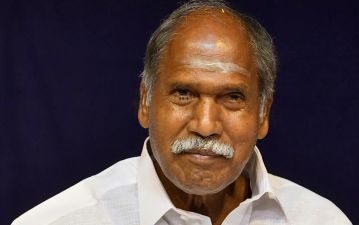
N. Rangasamy resigned as the Chief Minister of Puducherry on 7 May 2026 following the National Democratic Alliance’s (NDA) victory in the legislative assembly elections held on 9 April 2026. The political transition began when Lieutenant Governor K. Kailashnathan dissolved the 15th Assembly on 5 May 2026 to clear the path for the next government formation. Rangasamy, the founder of the All India N.R. Congress (AINRC), won from both the Thattanchavady and Mangalam constituencies, securing his fifth term as Chief Minister since 2001. Following statutory rules regarding dual representation, he subsequently resigned from the Thattanchavady seat to retain his position as the representative for Mangalam.
2026 Assembly Election Results and Seat Share
Performance of Major Alliances
The unicameral Legislative Assembly of Puducherry has 30 elected seats. The National Democratic Alliance won a simple majority by securing 18 seats, ensuring its return to power for a second consecutive term. Conversely, the Secular Progressive Alliance (SPA) faced a major defeat, with its key constituent parties failing to secure a viable numbers tally.
Party-Wise Breakdown
The 2026 election results showed a clear division of seats among regional and national parties:
| Party Name | Alliance | Seats Won |
| All India N.R. Congress (AINRC) | National Democratic Alliance (NDA) | 12 |
| Dravida Munnetra Kazhagam (DMK) | Secular Progressive Alliance (SPA) | 5 |
| Bharatiya Janata Party (BJP) | National Democratic Alliance (NDA) | 4 |
| Indian National Congress (INC) | Secular Progressive Alliance (SPA) | 1 |
| All India Anna Dravida Munnetra Kazhagam (AIADMK) | National Democratic Alliance (NDA) | 1 |
| Latchiya Jananayaka Katchi (LJK) | National Democratic Alliance (NDA) | 1 |
| Independent Candidates & Others | Unaligned / Other Alliances | 6 |
Constitutional and Legal Framework of Puducherry
Status under the Constitution
Puducherry is a Union Territory governed under Article 239A of the Constitution of India. This article was inserted via the Constitution (Fourteenth Amendment) Act, 1962, which empowers Parliament to create a legislature and a Council of Ministers for the territory. Unlike States, Union Territories operate under the direct administration of the President of India through an appointed administrator, designated as the Lieutenant Governor.
Executive and Legislative Structure
The Government of Union Territories Act, 1963 defines the framework of Puducherry’s administration. The Assembly consists of 30 directly elected members and 3 members nominated by the Central Government, bringing the total strength to 33. The nominated members enjoy the same voting rights as elected members, including the right to vote in budget sessions and no-confidence motions.
Power Dynamics Between the Chief Minister and Lieutenant Governor
The legislative powers of the Puducherry Assembly are co-extensive with those of States regarding matters listed in the State List (List II) and Concurrent List (List III), except for subjects like Public Order, Police, and Lands. The Council of Ministers, headed by the Chief Minister, aids and advises the Lieutenant Governor. However, Section 44 of the Government of Union Territories Act, 1963 states that in case of a difference of opinion, the Lieutenant Governor can refer the matter to the President for a final decision, holding interim discretionary powers to act immediately if necessary.
Resignation and Multi-Constituency Election Rules
Resignation Framework for Chief Ministers
When an election cycle concludes, the incumbent Chief Minister tenders their resignation to the Lieutenant Governor. This step is a constitutional formality required to dissolve the outgoing Council of Ministers. The individual continues to act as the caretaker Chief Minister until a new leader stakes a claim, proves a majority, and takes the official oath of office.
Multi-Constituency Representation Laws
Under Section 70 of the Representation of the People Act, 1951, an individual can contest from multiple seats but cannot hold more than one seat in a legislative body simultaneously. If a candidate wins two seats, they must resign from one constituency within 14 days of the declaration of the results. N. Rangasamy complied with this rule by surrendering the Thattanchavady seat and retaining the Mangalam seat.
IASPOINT Booster Facts for UPSC
- Special Position of Puducherry: Puducherry and Delhi are the only two Union Territories that historically feature their own Legislative Assemblies and send representatives to the Rajya Sabha. Jammu and Kashmir also has constitutional provisions for an assembly but awaits restoration of regular processes.
- Nominated Members Voting Rights: The Supreme Court of India ruled in the K. Lakshminarayanan v. Union of India (2018) case that nominated MLAs in Puducherry possess equal voting rights to elected MLAs, including during a motion of no-confidence.
- Origin of Puducherry: The territory comprises four distinct regions: Puducherry, Karaikal, and Yanam on the Bay of Bengal coast, and Mahe on the Arabian Sea coast. These regions were integrated into India following the De Facto transfer of French establishments in November 1954.
- The 14th Amendment Act, 1962: This amendment ratified the cession of French territories to India and created the enabling provision Article 239A for the establishment of the Puducherry Legislature.
- High Voter Turnout: The 2026 assembly elections in Puducherry recorded a historic voter turnout of approximately 89.87%, making it one of the highest participations in the electoral history of the Union Territory.