
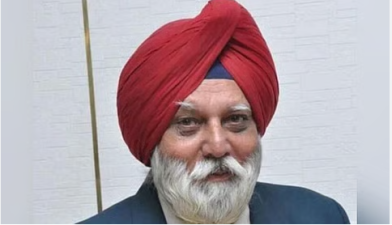
The Appointments Committee of the Cabinet approved the appointment of Justice Anupinder Singh Grewal, former Judge of the Punjab and Haryana High Court, as the President of the National Company Law Tribunal on 29 April 2026. Proposed by the Ministry of Corporate Affairs, this appointment breaks conventional protocol by selecting a senior puisne judge for a role historically reserved for retired Chief Justices of High Courts. Justice Grewal replaces Justice Ramalingam Sudhakar, who completed his tenure in early 2026 after serving from November 2021. Following this full-time appointment, the Delhi High Court dismissed a writ petition challenging the previous interim arrangement for the acting president.
Overview of National Company Law Tribunal
The National Company Law Tribunal is a specialized quasi-judicial body in India. The Central Government constituted it on 1 June 2016 under Section 408 of the Companies Act, 2013.
Mandate and Functional Scope
The tribunal possesses wide-ranging jurisdiction over corporate administrative disputes, insolvency resolutions, and structural reorganizations. It functions as the adjudicating authority for the following primary legal areas:
- Company law disputes and regulatory compliance under the Companies Act, 2013.
- Insolvency and bankruptcy proceedings concerning corporate entities and partnerships under the Insolvency and Bankruptcy Code, 2016.
- Corporate restructuring applications, including mergers, amalgamations, demergers, and capital reductions.
- Protection of minority shareholder interests by addressing petitions related to oppression and mismanagement.
Institutional Framework and Composition
The administrative and adjudicatory structure of the tribunal relies on a distinct legislative design to blend legal and commercial expertise.
Leadership and Membership Criteria
The tribunal consists of a President along with multiple Judicial and Technical Members. Section 409 of the Companies Act, 2013 specifies the statutory qualifications for these positions:
| Position | Statutory Qualifications | Service Tenure / Age Limit |
| President | Must be or must have been a Judge of a High Court for a minimum period of five years. | 5 Years or up to 67 years of age (whichever is earlier). Eligible for reappointment. |
| Judicial Member | Must be or must have been a High Court Judge; OR a District Judge for at least 5 years; OR an Advocate of a High Court for at least 10 years. | 5 Years or up to 65 years of age (whichever is earlier). Eligible for reappointment. |
| Technical Member | Must possess at least 15 years of professional experience/standing in fields like Corporate Law Service, Industrial Finance, Accountancy, or Management. | 5 Years or up to 65 years of age (whichever is earlier). Eligible for reappointment. |
Bench Structure and Benches
The tribunal operates through a system of institutional benches across India to handle territorial jurisdictions.
- Principal Bench: Located in New Delhi, presided over by the President of the tribunal.
- Regional Benches: Operating across major economic hubs including Mumbai, Kolkata, Chennai, Ahmedabad, Bengaluru, Chandigarh, Guwahati, Hyderabad, Jaipur, and Allahabad.
- Proceedings: Adjudication is conducted via benches comprising at least one Judicial Member and one Technical Member.
Statutory Power and Operational Principles
The tribunal enjoys extensive civil court powers but maintains procedural flexibility to ensure the rapid resolution of commercial bottlenecks.
Evidentiary Powers
Under the provisions of the Companies Act, the tribunal holds powers equivalent to a Civil Court under the Code of Civil Procedure, 1908, regarding specific actions:
- Summoning and enforcing the attendance of any person and examining them on oath.
- Requiring the discovery and production of financial documents and corporate books.
- Receiving evidence on affidavits.
- Issuing commissions for the examination of witnesses or documents.
Procedural Flexibility and Appeals
The tribunal is not strictly bound by the rigid technicalities of the Code of Civil Procedure, 1908. It is guided by the principles of natural justice and regulates its own procedure. Appeals against any order passed by the tribunal lie directly before the National Company Law Appellate Tribunal. Such appeals must be preferred within a statutory period of 45 days from the date of the order.
IASPOINT Booster Facts for UPSC
- Historical Origin: The Eradi Committee (1999) first recommended the setting up of a unified tribunal to handle corporate insolvency and winding-up cases to replace the Board for Industrial and Financial Reconstruction.
- Constitutional Validity: The constitutional validity of the tribunal system was upheld by the Supreme Court of India in the landmark R. Kumar vs. Union of India case (2010), provided the technical members do not outnumber or overpower the judicial component.
- Acting President Mechanism: In the event of a vacancy in the office of the President due to death, resignation, or retirement, the senior-most Judicial Member traditionally takes additional charge as the Acting President until a permanent appointment is made.
- NCLAT Qualification Distinction: Unlike the tribunal where a High Court Judge of 5 years can become President, the Chairperson of the Appellate Tribunal (NCLAT) must be or must have been a Judge of the Supreme Court or the Chief Justice of a High Court.