
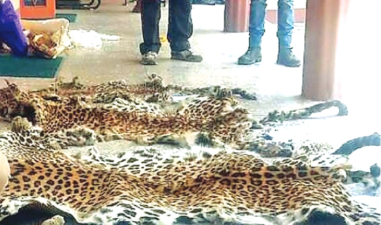
A New Delhi court has convicted a Jaipur art gallery owner for attempting to illegally export Shahtoosh shawls made from Tibetan Antelope hair. The case is for wildlife law enforcement in India because it involved coordinated action by the Wildlife Crime Control Bureau (WCCB), Central Bureau of Investigation (CBI), Customs, and the Wildlife Institute of India (WII). The offence was first detected in 2008, and the judgement was delivered in March 2026 after a long legal process.
Case Background
The accused, proprietor of M/s Indian Art Gallery, Jaipur, was found guilty of trying to export Shahtoosh shawls through Indira Gandhi International Airport, New Delhi. Shahtoosh is derived from the critically endangered Tibetan Antelope, also known as Chiru. The species is listed in Schedule I of the Wildlife (Protection) Act, 1972, which gives it the highest level of legal protection in India.
Detection and Investigation
- WCCB identified 1,290 shawls in an export consignment and suspected illegal Shahtoosh fibre.
- The matter was referred to the CBI, marking one of the earliest wildlife offences prosecuted through the agency.
- Customs preserved the seized material and maintained the evidence chain.
- WII forensic testing confirmed Tibetan Antelope hair in 41 shawls.
Legal Findings and Sentence
The court rejected the defence claim that the goods were only machine-made Pashmina shawls. It accepted the forensic evidence and the prosecution’s case that the accused knowingly attempted illegal export. The court sentenced him to three years of simple imprisonment and a fine of Rs. 50,000 under Section 49B(1)/51(1A), along with two additional years each under Sections 40 and 49, to run concurrently. The seized shawls will be confiscated by the government.
Significance for Wildlife Enforcement
This case underlines the importance of inter-agency coordination in wildlife crime cases. It also shows the role of scientific forensics in proving offences involving endangered species products. The judgement reinforces India’s domestic ban on Shahtoosh trade and its obligations under CITES, which has prohibited global trade in Shahtoosh since 1975.
Last Modified: April 27, 2026